If you have 5 million won in your account and spent 2.5 million won this month, do you have 2.5 million won left? If you have left out the money that came in during that time, there is no way to tell. A balance is the money remaining at a particular moment, and monthly spending is the money that went out over a period. Just because both are in won does not mean they are the same kind of number. When you read a household budget, attaching a date and the scope of the tally to each amount is the first step to less confusion.
This post uses only hypothetical transactions made up to aid understanding. First we pick a single Korean won deposit account and reconcile its balance, and in the third section we widen the scope to two accounts belonging to the same person. Valuations of stocks, real estate or foreign currency, and total wealth, are not covered. Monthly spending here also means money that actually left the account, as distinct from card spending or consumer expenditure in economic statistics.
1. Attach a point in time to balances and a period to deposits and withdrawals
If all that is written is "5 million won," it is hard to know what it describes. Writing "a balance of 5 million won in the selected account at the start of September 1" makes it the state at that moment. A figure like this is called a stock. By contrast, "3 million won deposited into the selected account from September 1 to 30" is movement that occurred over a month. A figure tallied over a set period is called a flow.
Think of the balance as a photograph and the transaction history as the record of what happened in between. Comparing the photo at the start of the month with the photo at the end shows how much the balance changed. But from those two photos alone, you cannot tell how many deposits came in along the way or where and how much went out. That is why the size of a change and the process that produced it belong in different columns.
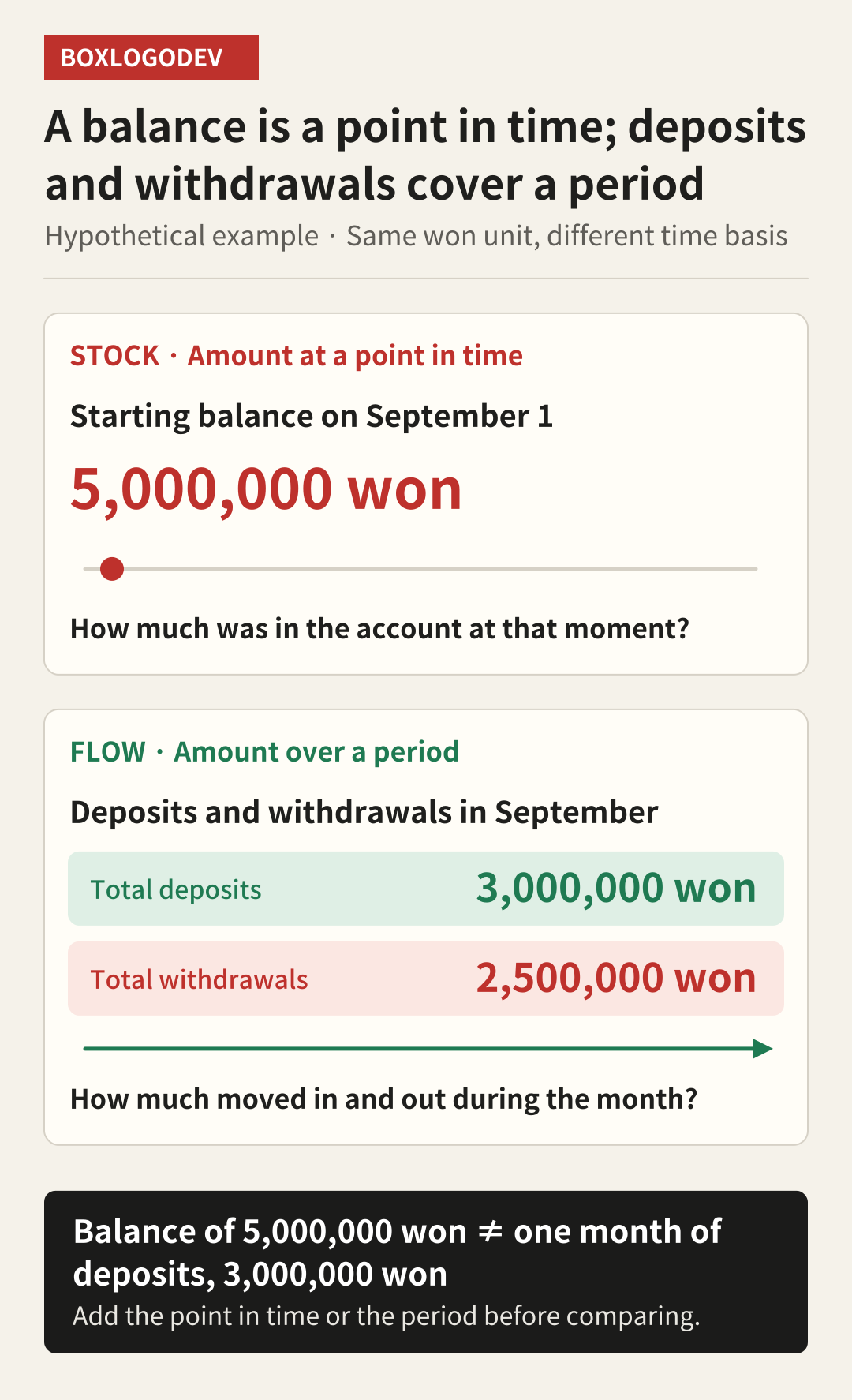
The date on which you checked the balance also matters. If you link the balance on September 20 with the withdrawals for all of September, transactions not yet reflected can get mixed in. When closing out a month, align the boundaries: the starting balance, the month's deposits and withdrawals, and the balance after the last day's transactions are reflected. A simple date label sets the scope of the calculation.
2. An increase of 500,000 won does not mean only 500,000 won came in
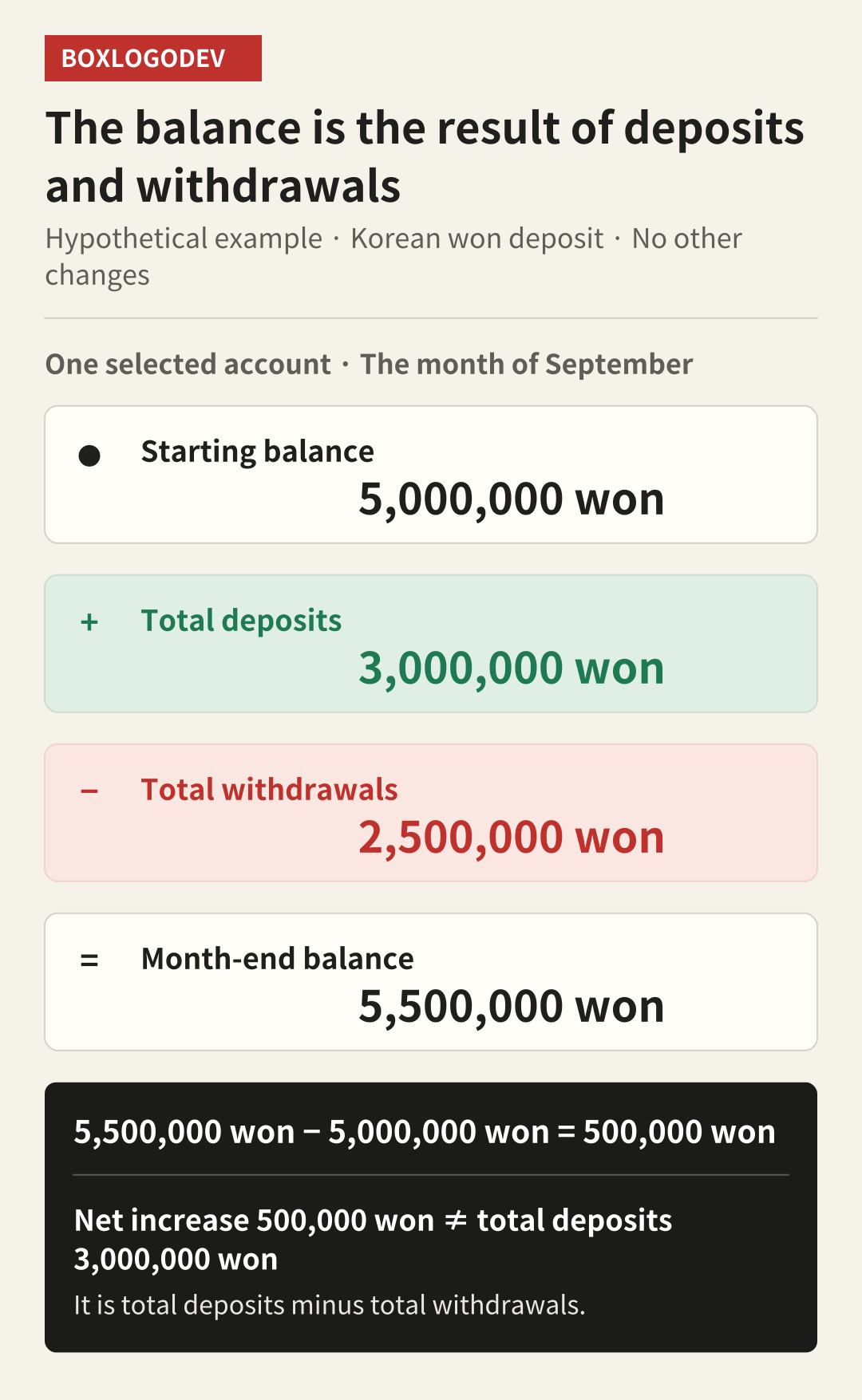
The balance of the selected hypothetical account is 5 million won at the start of September. Assume that over the month 3 million won came into this account and 2.5 million won went out of it. If there were no other deposits or withdrawals, the month-end balance is 5,000,000 + 3,000,000 − 2,500,000 = 5,500,000 won. Adding the money that came in to the starting balance and subtracting the money that went out connects it to the ending balance.
Here you must distinguish three different numbers. Total deposits are 3 million won, total withdrawals are 2.5 million won, and the net increase in the balance is 500,000 won. Saying "it grew by 500,000 won this month" is correct, but if you go on from that to say "500,000 won came in this month," you miss the scale of the money moving in and out. Starting from the same balance, if 1 million won comes in and 500,000 won goes out, the ending balance is likewise 5.5 million won.
Nor should all money that came into the account be called income. A salary deposit and a deposit of borrowed money both increase the account balance, but their economic meaning is different. The calculation in this post links money movements. To judge how much you earned or how much you consumed, the nature of each transaction has to be classified separately.
3. Money moved between your own accounts does not come from outside the total
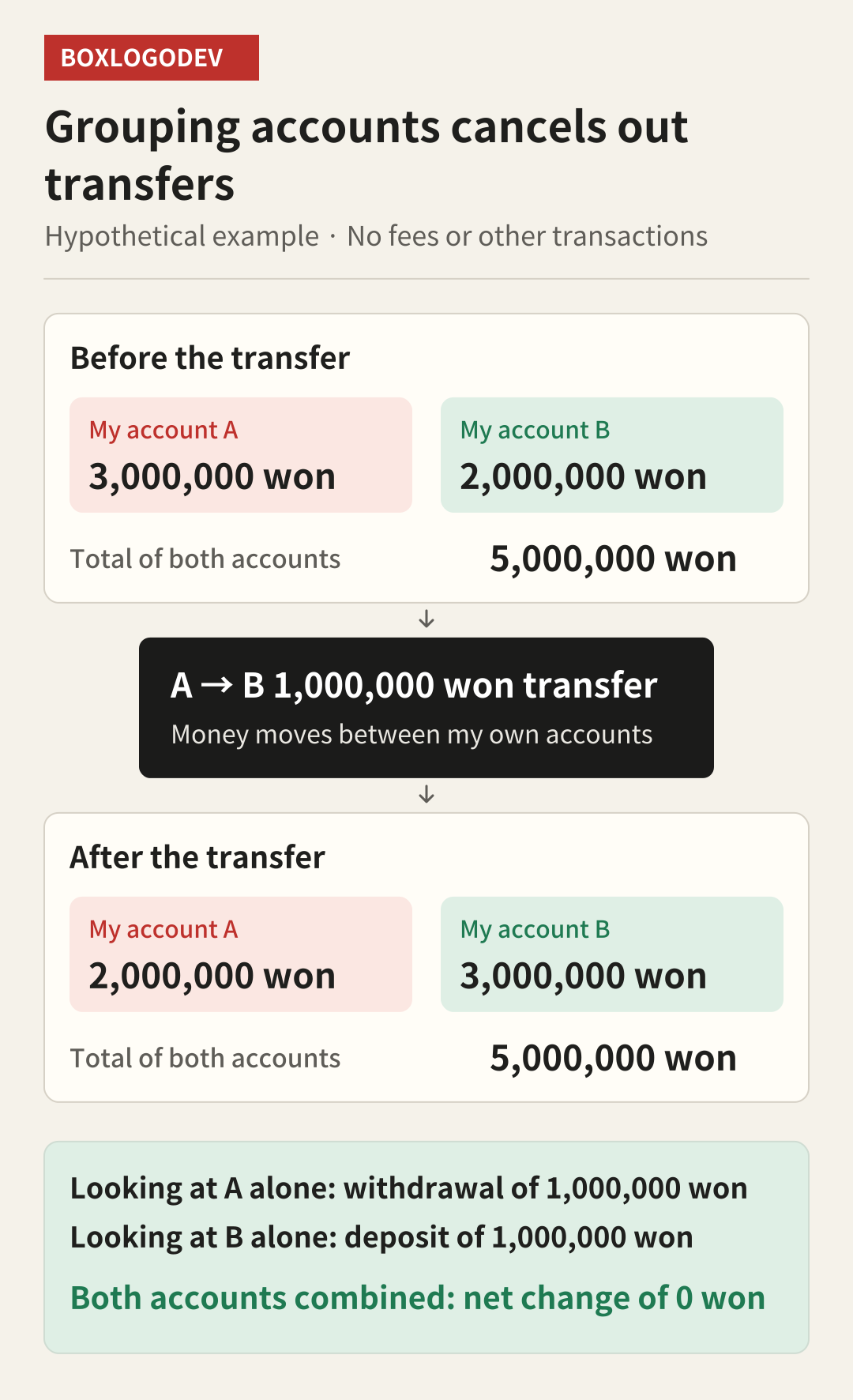
This time let us look at a separate transfer example with the scope widened to two accounts. Account A holds 3 million won and account B holds 2 million won, for a total of 5 million won. If 1 million won is moved from A to B, A has 2 million won and B has 3 million won. If there is no transfer fee and both sides have been updated, the total is still 5 million won.
Looking at account B alone, a deposit of 1 million won occurred. But for someone looking at A and B together, no new money appeared. Only its location within the managed scope changed. Each account's transaction history keeps its own withdrawal and deposit entry, but when calculating external deposits and withdrawals for the two accounts, this movement has to be identified separately.
If you record the deposit on one side as income and the withdrawal on the other as living expenses, the total balance may still add up while income and spending are both inflated. So pair the sending account with the receiving account, not just the transfer amount. But you also should not exclude something automatically just because the amounts match. Check whether the other account is within the scope of the tally and whether it really is the same transfer.
4. Do three month-end balances add up to a quarterly balance?
Distinctions are also needed when grouping monthly data. Adding the balances at the end of January, February and March can count the same money several times. If the question is "how much is left at the end of March," look at the end-of-March balance. The sum of three month-end balances is not the answer to that question.
On the other hand, if you want total withdrawals from the selected account from January to March, you can add up each month's withdrawals. But the account scope must be the same, and the periods must not overlap or leave gaps. If January counted only A and from February A and B were combined, the increase will include transactions from the newly added account. Before adding numbers, first check what was grouped on the same basis.
Not every calculation using a balance and monthly spending is wrong. Dividing a balance of 5 million won by monthly withdrawals of 2.5 million won gives 2 months. But that calculation carries the assumption that no new money comes in and the same amount goes out every month. It cannot be turned straight into a verdict about how long you can actually hold out or whether your emergency fund is sufficient.
5. When reconciling a household budget, check four columns first
When you tidy up your records at the end of the month, write the starting balance, total deposits, total withdrawals and ending balance side by side. When reconciling one account, include all of that account's deposits and withdrawals. If you look at several accounts combined, identify transfers within that scope and calculate the deposits and withdrawals that crossed its boundary. Keep the account scope of the four columns the same, and collect only the transactions reflected between the opening and closing balances. Keeping the original bank statements also lets you recheck the internal transfers you excluded.
If the calculated result differs from the ending balance, look for omissions, duplicates and tally dates rather than arbitrarily putting the missing amount into living expenses to make it match. For example, you can check whether you mixed up card purchase dates with the dates the card bill was debited from the account, or entered the same payment twice, once from the card history and once from the account withdrawals. In a task like this post's, reconciling account balances, record consistently based on the date transactions were actually posted to the account.
An account balance describes the state that remains now, and deposits and withdrawals describe the process that led to that state. Reading both together lets you answer "how much money is left" and "why that much is left" separately. The next time two numbers in your household budget seem not to match, before correcting any amounts, first align the point in time, the period and the account scope.