If a discount rate goes from 20% to 25%, can you say it is "5% cheaper"? For the same product with a list price of 100,000 won, the payment drops from 80,000 won to 75,000 won. The 5,000 won reduction is 6.25% of the previous payment. The gap between discount rates, the rate of increase of the discount rate itself, and the rate at which the actual price falls are all different numbers.
This post calculates with a hypothetical price tag, not an actual sale. The list price of one unit of the same product is fixed at 100,000 won, and we assume no shipping fee, no added tax, no reward points, no maximum discount cap and no rounding to the won. The first part covers changing the discount rate from 20% to 25%, and later we compare it with a separate condition in which an additional discount applies to the remaining price.
1. 5 percentage points and a 25% increase read the same change differently
A percentage is a ratio with the base set at 100. A 20% discount off the list price means taking 20 won off every 100 won and paying 80 won. A 25% discount takes 25 won off the same 100 won, and you pay 75 won. Only once you decide what is taken as 100 does the ratio connect to an amount.
The difference between two values already expressed as percentages, such as 20% and 25%, is written in percentage points. Subtracting 20 from 25 gives 5, so the discount rate rose by 5 percentage points. In tables and charts this is sometimes shortened to 5%p. This expression refers to the gap between marks on the discount-rate scale.
By contrast, "by what percent did the discount rate grow compared with before?" asks the question relative to the previous discount rate. The calculation is (25−20)÷20×100=25%. So "the discount rate rose 5 percentage points" and "the discount rate increased 25% from before" are both correct. They describe the same change, but the second statement has one more step: dividing by the previous value.
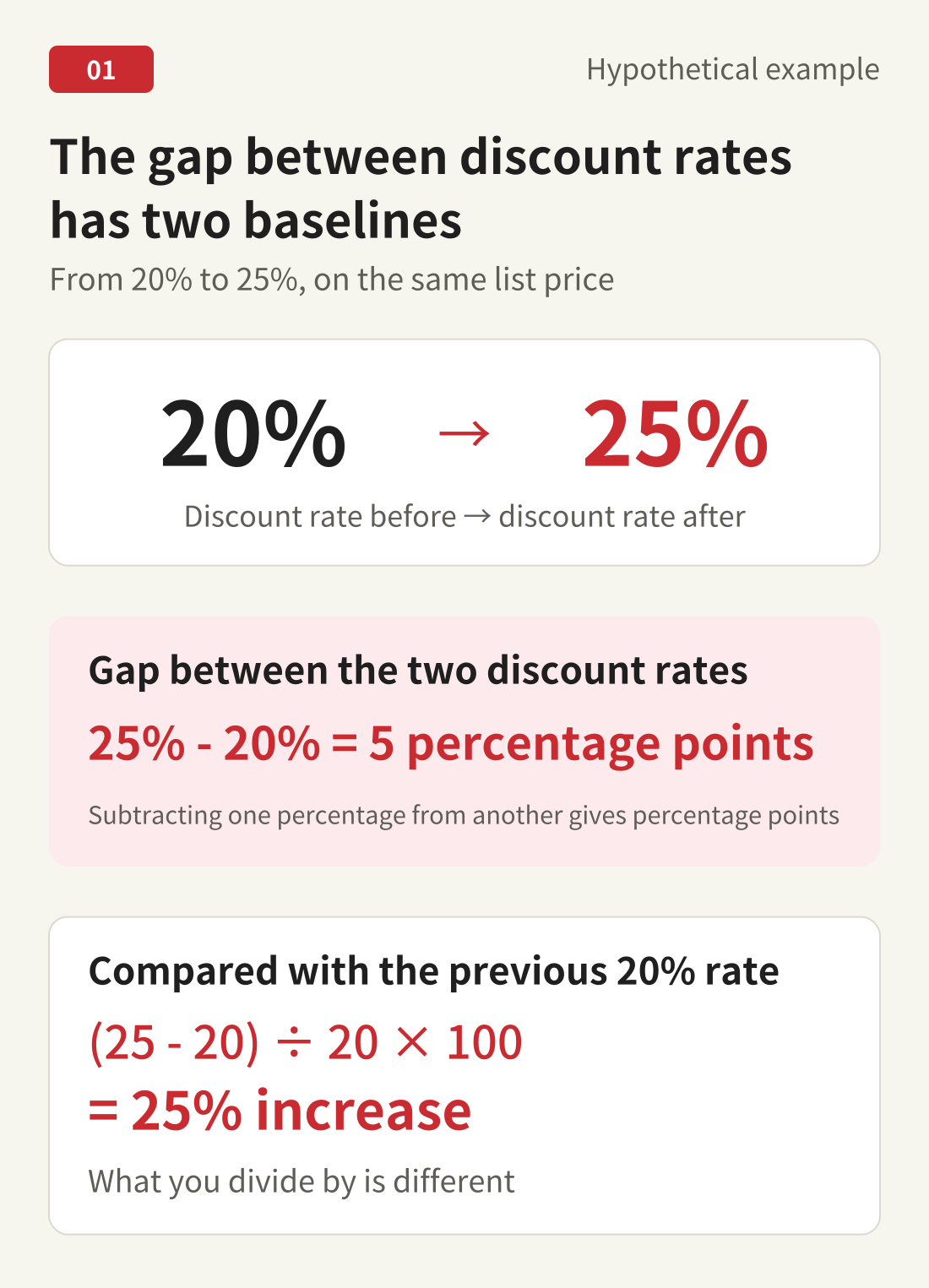
In the figure, first read the difference between 20% and 25%, then see what share of the previous discount rate of 20 that difference of 5 represents. The resulting 25% must not be written down as the rate at which the product's price was cut, because what was compared was the discount rate. Instead of leaving just "a 25% increase," writing what increased reduces confusion.
2. The money leaving your wallet falls by 6.25%
Taking 20% off a list price of 100,000 won gives a discount of 20,000 won and a payment of 80,000 won. Applying 25% to the same list price gives a discount of 25,000 won and a payment of 75,000 won. The discount grows by 5,000 won, and the payment falls by exactly that amount.
When calculating how much the price came down, the base is the 80,000 won you used to pay. Dividing the 5,000 won reduction by 80,000 won gives 0.0625, or 6.25%. Including the sign of the change, it is (75,000−80,000)÷80,000×100=−6.25%, and in words you can say "the payment fell 6.25%."
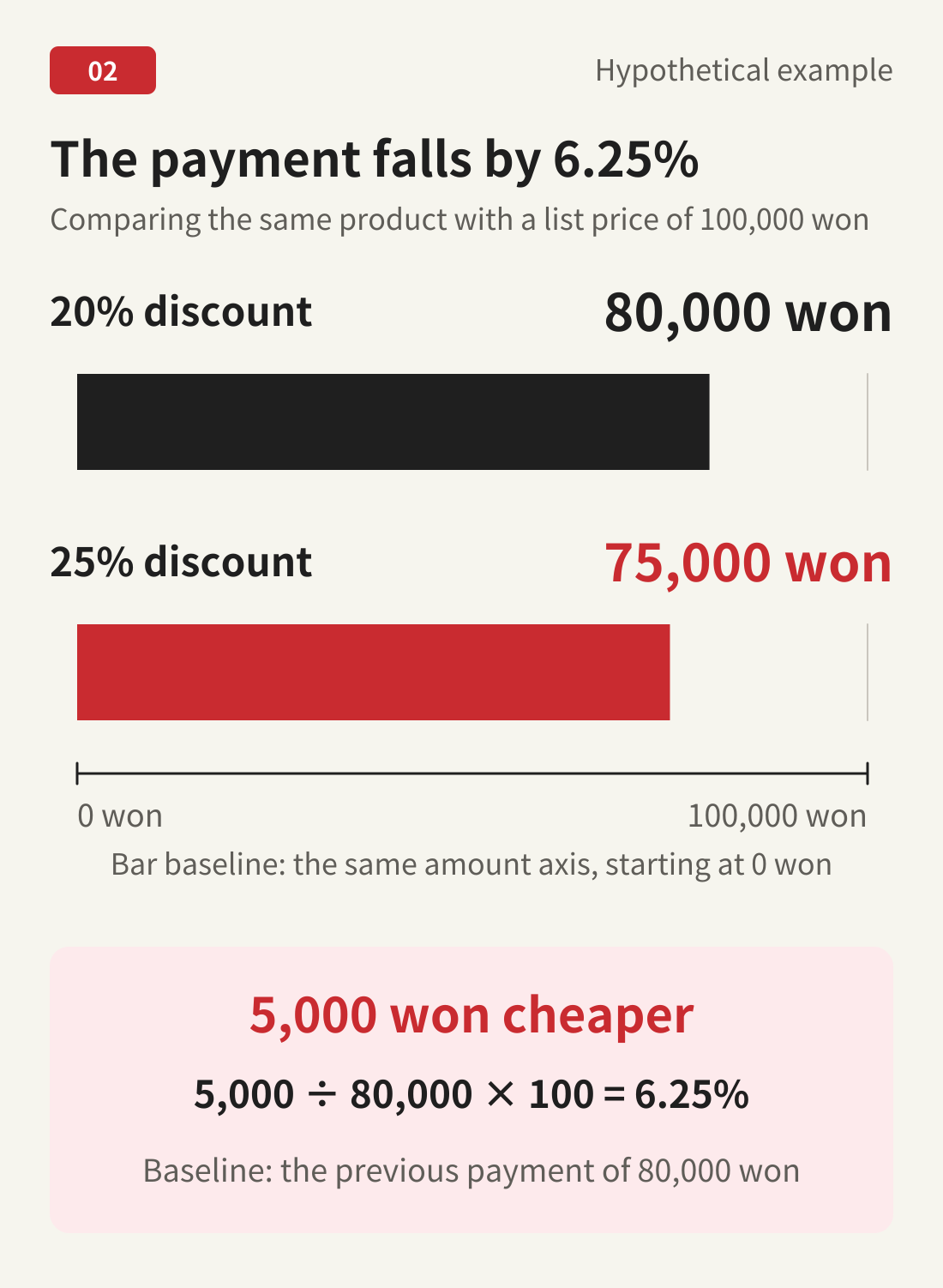
Dividing the same 5,000 won by the list price of 100,000 won gives 5%. That calculation is not wrong in itself. But the question it answers changes to "what additional share of the list price is discounted?" To describe the price change relative to the previous payment, you have to divide by 80,000 won. Change the denominator and the meaning changes with it.
When you note down numbers, try attaching the subject and unit, as in "discount rate +5%p, discount +5,000 won, 6.25% cheaper than the previous payment." It is easier to compare by first putting the two actual payments side by side than by looking at a single discount rate printed in large type. In a chart, also check whether the values are shown in the same unit and scale, and where the axis starts.
3. Why isn't 20% off plus an extra 5% off equal to 25%?
This time let us change the condition. Assume 20% is taken off the list price, and then an additional 5% is taken off the remaining price. The base for the first step is 100,000 won and the base for the second step is 80,000 won. Before adding the numbers in front of the two discount rates, first check which amount each step applies to.
Applying the first discount gives 100,000×0.8=80,000 won. The second discount is 80,000×0.05=4,000 won, and the final payment is 80,000×0.95=76,000 won. That is 24,000 won cheaper than the list price in total, so the overall discount rate is 24%. Even with two discounts, it does not equal taking 25% off the list price in one go.
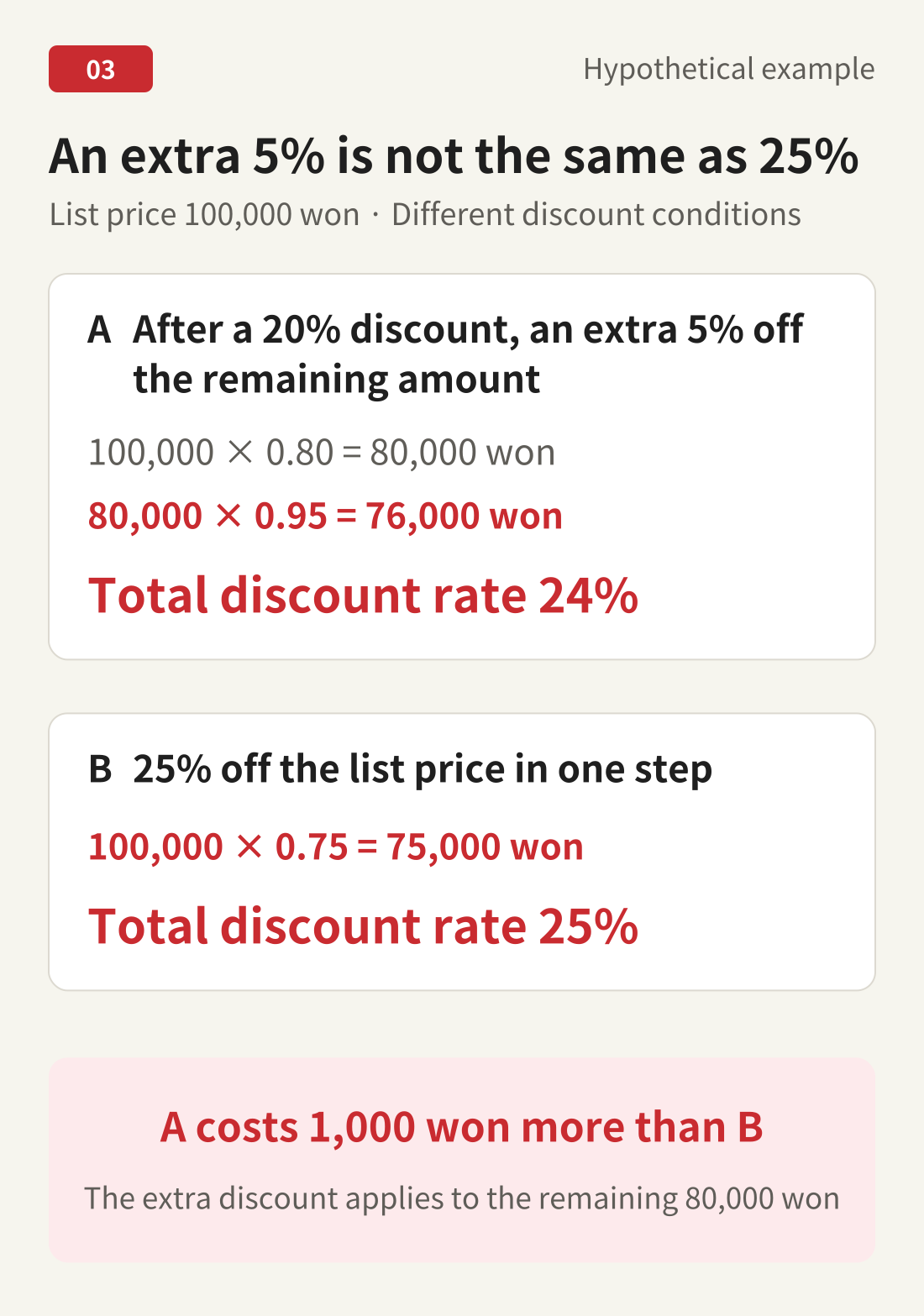
Following the two paths in the figure, the final prices are 76,000 won and 75,000 won, a difference of 1,000 won. In a sequential discount, the second discount is not 5,000 won, 5% of the list price, but 4,000 won, 5% of the amount that has already been reduced. If you write the combined discount rate as 25% just from the label "20%+5%," you miss this difference.
Conversely, if the condition is that both discounts are each calculated on the original list price and subtracted, the result can be different. In an actual promotion, the words "additional discount" alone do not settle the calculation method. Rather than applying the sequential condition in this example to every coupon, it is better to read what amount the discount applies to and in what order, and to check the final payment.
4. When the direction of comparison changes, so does the number you divide by
Suppose the discount rate goes back from 25% to 20%. The difference is a 5-percentage-point decrease. But the relative decrease in the discount rate is 5÷25×100=20%. That differs from the 25% relative increase earlier, when it went from 20% to 25%. This time the starting point was taken as 25.
For this reason, be careful with reasoning that just matches identical numbers, such as "up 25% then down 25% puts you back where you started." First write down which value moved to which, then divide by that starting value. When the starting rate is 0%, the usual relative increase cannot be calculated by division. In that case, simply state the two levels or the gap, as in "it changed from 0% to 5%" or "it rose 5 percentage points."
5. When reading a price tag, write down just three lines
On the first line, write the basis of comparison. Check whether it is the same product, quantity and list price, and what amount the discount rate applies to. On the second line, write the amount you will actually pay. Put the previous price and the new price side by side and calculate how much it fell. On the third line, work out the ratio you need. If you want the difference between discount rates, use percentage points; if you want to know how much cheaper it is than the previous payment, calculate the rate of decrease in the amount.
Reading today's hypothetical price tag in these three lines gives a list price of 100,000 won, a payment that goes from 80,000 won to 75,000 won, and a 6.25% decrease from before. The discount rate rose 5 percentage points. From now on, when you see a discount notice or a number involving a ratio, try writing down "what was compared with what" before looking at the percent sign. Even when the calculation gets long, the basis to come back to becomes clear.