💳 What is simple payment? The innovative technology driving smart spending
Modern life is changing fast. Whether you're buying a cup of coffee or taking the subway, a smartphone alone is now enough, no wallet needed. That's all thanks to "simple payment."
Today, I'll look at why simple payment has become an essential part of our lives, and sum up the latest news from July 2025 📱✨
🔍 Definition of simple payment
Simple payment (簡便決濟) literally means "a way of paying simply."
If you register your credit card or bank account information in advance on a mobile device such as a smartphone or tablet,
it is a service that lets you pay with just a fingerprint, iris scan, password or a single click.
In other words, there is no need for tedious certificate entry, repeated password entry or typing in card details.
🧠 Background: Simple payment and the development of fintech
The growth of "simple payment" is closely tied to the development of fintech.
Fintech, a combination of "financial" and "technology," applies digital technology to finance to provide more efficient and user-friendly services.
In the past, you could only make a transfer or payment by visiting a bank in person or using an accredited certificate,
but now everything is possible with a single smartphone.
And at the center of this is simple payment.
🌏 Trends in the global simple payment market
Around the world, too, simple payment continues to grow explosively.
- PayPal: America's leading simple payment platform. Because it let people pay easily with just an email address and password, it was hailed as an innovation from the moment it appeared.
- Alipay: A service created by China's Alibaba Group and the leading name in QR code payments.
- Apple Pay: Offers NFC-based biometric payments and has strengthened a UX aimed at the premium market.
It is also worth noting that most of these platforms started out at IT companies, not traditional financial institutions.
🇰🇷 What about Korea's simple payment services?
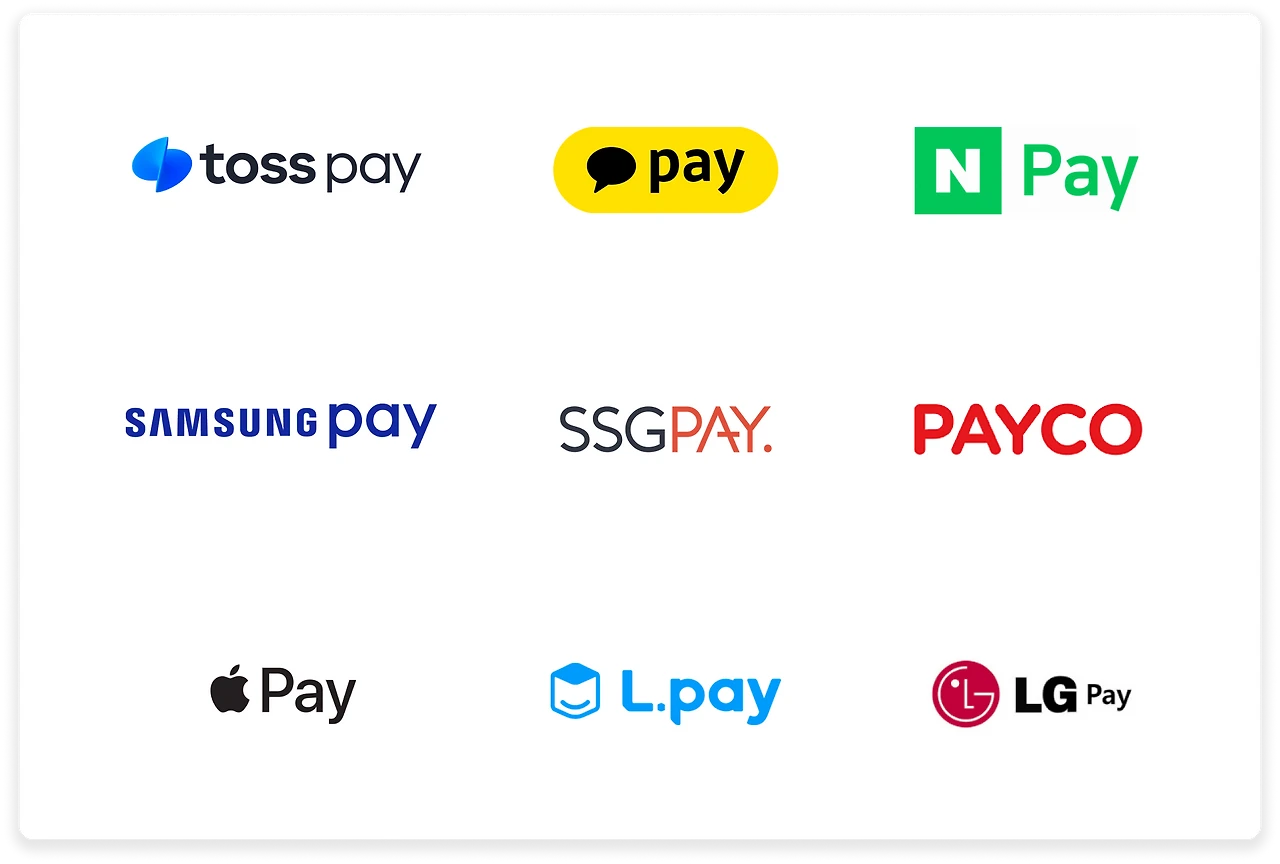
Korea also has a variety of simple payment services. Leading examples include:
- Kakao Pay 🟡
- Naver Pay 💚
- Toss 💙
- Services affiliated with large conglomerates, such as Samsung Pay, LG Pay and SK Pay
In addition, many online shopping malls (Coupang, 11st, etc.) are developing their own simple payment systems or integrating external services.
📰 Latest news, July 25, 2025 📅
✅ ① Strategic partnership between Konai and Naver Pay
On July 25, 2025, noteworthy news was announced in the simple payment industry.
Simple payment infrastructure company Konai teamed up with Naver Pay (Npay)
to build a system that lets users register and use Gyeonggi Province local love gift certificates (excluding Siheung and Seongnam) and Gimpo Pay in Naver Pay.
Now these local gift certificates can be registered and actually used with just the mobile app.
In particular, it includes various extra features such as earning points, checking payment history and automatically applying consumption coupons, greatly improving user convenience.
[News source: Newspim]
✅ ② Financial authorities strengthen "simple payment fee disclosure"
The Financial Services Commission plans to fully expand the simple payment fee disclosure system from November 2025.
- From the existing 11 companies → expanded to up to 18 companies
- Detailed items such as fee rates, settlement cycles and fee deduction structures to be disclosed
- The aim is consumer protection and greater transparency
Discussions on improving the structure of PG companies (payment gateways) are also under way,
signaling changes in the competitive landscape of the payment infrastructure market.
[Source: Maeil Business Newspaper]
🔐 Is security really okay?
Convenience is the strength of simple payment, but concerns about security follow as well.
However, the following security systems are being applied these days:
- FDS (Fraud Detection System)
- Biometric authentication such as fingerprint, face and iris recognition
- NFC-based encrypted communication
- Tokenization: the physical card details are not stored directly
So it is being designed to achieve high security even with a simple password entry.
💡 What is the future of simple payment?
Going forward, simple payment looks set to go beyond being just a means of payment and expand into every area of finance.
- AI-based financial planning
- Small-sum deferred payment (BNPL)
- Simple overseas remittance services
- Payments linked to digital assets
Through links with local gift certificates, collaboration with public institutions and automated checkout at online shopping malls,
simple payment is gradually establishing itself as core infrastructure of the digital economy.
✨ Closing summary
| Category | Key points |
|---|---|
| Definition | Fast payment without authentication using registered payment information |
| Global examples | PayPal, Alipay, Apple Pay |
| Domestic services | Naver Pay, Kakao Pay, Samsung Pay, etc. |
| Latest news | Local gift certificates linked with Naver Pay, expanded fee disclosure |
| Security features | FDS, biometric authentication, tokenization |
| Outlook | Expansion of AI, BNPL, digital wallets and public-sector-linked services |
✍️ Wrapping up
Is there a simple payment service you use? Now that Apple Pay has been introduced in Korea, there's a lot to look forward to... haha