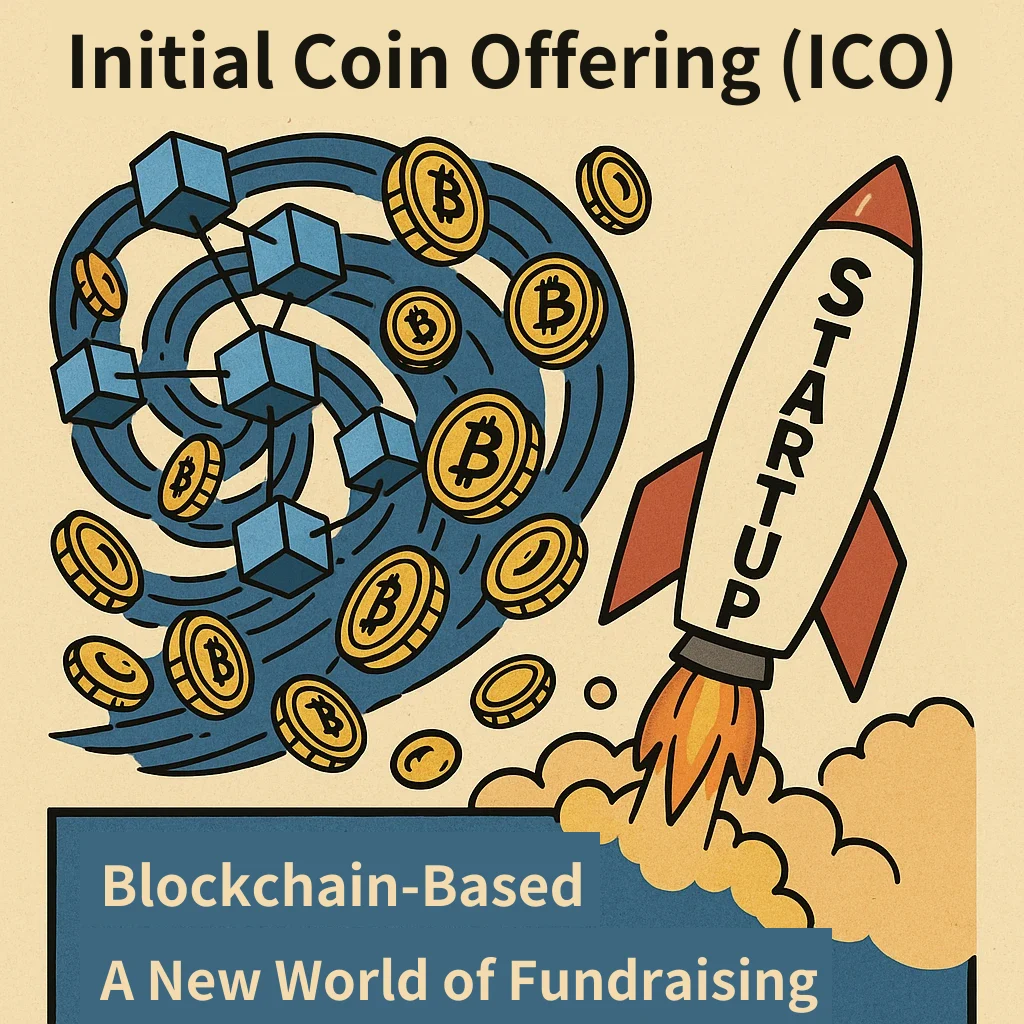
In the past few years, new forms of fundraising have emerged beyond traditional venture capital, bringing major changes to the startup investment ecosystem. At the center of this is the initial coin offering (ICO).
An ICO is similar in concept to an initial public offering (IPO), but it is a new kind of fundraising tool that differs considerably in how investment works and in the level of regulation. In particular, this approach, combined with blockchain technology, forms a new basis of trust between investors and startups, and it can be called an innovative attempt to go beyond the limits of traditional finance.
💡 What is an ICO?
An ICO is a way for a startup to raise funds by issuing blockchain-based cryptocurrency or digital tokens and selling them to investors. Simply put, instead of issuing shares, the company creates and sells digital tokens (coins). These coins can be exchanged for fiat currency (e.g., won, dollars) or existing cryptocurrencies (e.g., Bitcoin, Ethereum).
📊 IPO vs ICO
| Item | IPO | ICO |
|---|---|---|
| What investors receive | Shares (equity) | Coins/tokens |
| Regulation | Strict regulation by the government and financial authorities | Mostly inadequate regulation or self-regulatory standards |
| Issuance platform | Stock exchange | Blockchain network (mainly Ethereum) |
| Participants | Institutional/retail investors | Anyone (worldwide) |
Thanks to these features, ICOs have the advantages of a light regulatory burden and fast fundraising. But by the same token, investor protection is inadequate and the chances of fraud or failure are high, so they are classified as a "high risk, high return" structure.
🔗 Why Ethereum matters for ICOs
ICOs are mainly carried out on the Ethereum platform. Ethereum supports the development of various projects and DApps (decentralized apps) based on smart contracts, and its token standard called ERC-20 lets anyone issue tokens easily.
For example, a new blockchain-based game company could create an ERC-20-based game item coin and sell it through an ICO to secure development funds.
🏛️ What is the regulatory situation for ICOs in Korea?
In Korea, ICOs are currently banned. In 2017, the financial authorities banned domestic ICOs for reasons including investor protection and the potential for fraud, and although discussions on institutionalizing them have continued since then, no clear legal framework has been established yet.
The government may regulate ICOs in the future from the following two angles:
- The Act on the Regulation of Conducting Fund-Raising Business without Permission – the act of receiving funds from an unspecified number of people
- Securities-related laws – tokens are deemed securities if they are effectively a means of equity or profit participation
In the end, whether "legal ICOs" within the regulated system can be allowed in Korea as well depends on the policy direction of the financial authorities and the National Assembly.
📉 The risks must be considered too
ICOs are an innovative way to raise funds, but they also carry risks like these.
- ❌ Scam projects: cases where a company that doesn't actually exist runs an ICO and then embezzles the funds
- 📉 Lack of liquidity: cases where coins aren't listed on exchanges or trade in small volumes, making them hard to cash out
- 🔐 Security threats: technical risks such as smart contract hacks and theft from personal wallets
- 🧾 Opaque roadmaps: projects whose development schedules or expected results are vague
Therefore, ICO participants shouldn't simply expect "the coin price to rise" but should thoroughly check white paper analysis, the team's credibility, technical capabilities and so on.
🌍 How are global trends changing?
Some countries, such as the United States, Singapore and Switzerland, are overhauling their regulatory frameworks by absorbing ICOs into the regulated system or evolving them into security token offerings (STOs). In Europe, the EU blockchain regulation (MiCA) has been prepared, stepping up the setting of standards for trading ICOs, STOs, NFTs and more, and Asia is also moving toward gradual adoption.
✅ Final summary
- An ICO is a way of raising funds using blockchain-based digital assets.
- Unlike a traditional IPO, it issues coins/tokens rather than equity.
- It is currently banned in Korea, and institutional groundwork is needed going forward.
- It offers big opportunities to both tech-based startups and investors, but high risks exist too.
- Global financial regulation is gradually preparing to bring ICOs into the regulated system, together with STOs, DeFi and more.
🔖 Related keywords
Virtual currency, blockchain, cryptocurrency, Bitcoin, Ethereum, crowdfunding, fintech, ICO, startup fundraising, digital tokens, smart contracts, STO, MiCA