The boxes to check are spec items, not a vendor table. A service desk is only a service desk. Price lists and lowest-price columns stay closed.
This post was written for readers in Korea, so alongside the global gTLD rules it covers the Korean .kr/.한국 rules and Korean law. Korean statute and rule names are translated, and the Korean government and KRNIC sources are in Korean. Below, "the Act" means the Korean Act on Internet Address Resources, "the Rules" means KRNIC's Domain Name Management Rules, and "the Agency" means KISA.
1. The boxes this post covers
Domain boxes and hosting boxes are kept separate.
- Domain: TLD type, registry vs. registrar, term, renewal and expiry grace, transfer lock and AuthInfo, WHOIS/RDAP, Korean-script domain registration rules, dispute channels
- Hosting: box names written in the terms of service (shared, VPS, dedicated, cloud / data location / certificate type / backup, traffic, disk / uptime and SLA)
KISA, IANA, the ICANN accredited registrar list, KRNIC, ICANN Lookup and IDRC are places to verify. This post does not tell you to register or sign up there.
Not covered here: vendor ratings, lowest prices, coupons, or topics from issues 1–12.
2. TLD types
| Item | One-line official definition | Source |
|---|---|---|
| TLD (top-level domain) | IANA: the Root Zone Database represents the delegation details of top-level domains, including gTLDs (such as .com) and ccTLDs (such as .uk). The CA/B BR cites RFC 8499 and describes a TLD as "the zone one layer below the root." | S3, S14 |
| gTLD | ICANN: general-purpose domains such as .com, .net, .edu, and .org. Includes New gTLD Program names and names in other scripts. ICANN coordinates gTLD registration rules and policies. | S1 |
| ccTLD | ICANN New gTLD Glossary: the class of top-level domains reserved for countries, territories and geographic locations identified in the ISO 3166-1 Country Codes list. See the IANA Root Zone Database. | S2, S3 |
| .kr | IANA Delegation Record: Country-code top-level domain. ccTLD Manager = Korea Internet & Security Agency (KISA). Registration services URL: http://www.nic.or.kr/ WHOIS: whois.kr | S4 |
| .한국 | IANA: Country-code top-level domain designated for two-letter country code KR. Punycode xn--3e0b707e. ccTLD Manager = KISA. Registration date 2011-02-05. | S5 |
| National domain (.kr) term | KRNIC national statistics glossary: "the Latin-script national top-level domain that Korean nationals can register under the international standard (ISO-3166-410)" | S20 |
| National domain (.한국) term | KRNIC national statistics glossary: "the Korean-script national top-level domain that Korean nationals can register" | S20 |
ICANN/IANA refer to ISO 3166-1. The KRNIC statistics page writes "ISO-3166-410." Each is kept as its source writes it.
3. Registry vs. registrar
| Item | One-line official definition | Source |
|---|---|---|
| registry | ICANN: An authoritative master database of the domain names registered in a TLD. DNS obtains the authoritative name servers from the TLD registry. | S21 |
| registrar | ICANN: An organization through which individuals and entities (registrants) register domain names. It checks registry requirements and submits to the registry operator. | S22 |
| ICANN-accredited registrar | ICANN: a registrar that has signed the Registrar Accreditation Agreement. The list is on the ICANN website. | S22, S23 |
| Internet address management agency | Act Article 2(3): the Korea Internet & Security Agency under Article 52 of the Act on Promotion of Information and Communications Network Utilization and Information Protection, and corporations or organizations entrusted by it with internet address management, which perform work related to allocating and registering internet addresses. | S6 |
| Internet address management agent | Act Article 2: a party selected by the internet address management agency under Article 14(1) to carry out part of the allocation or registration work on its behalf. | S6 |
| Top-level domain registration business | Act Article 2: a business that handles registration for generic top-level domains or country-code top-level domains (excluding Korea's country-code top-level domains) on others' behalf. | S6 |
| Domain name registration agent | Rules Article 2(1): an internet address management agent under Act Article 2(6), selected by the Agency to carry out part of the domain name management work. | S7 |
| Registrant | Rules Article 2(2): a person who has registered a domain name with the Agency and is a user of internet addresses under Act Article 2(4). | S7 |
| .kr/.한국 application route | Rules Article 8: the application is submitted to the Agency through a registration agent, using information networks or other means. | S7 |
| Registration agent desk | KRNIC: "a registration agent is a company that has signed a registration agency contract with the Korea Internet & Security Agency under the Act on Internet Address Resources" | S24 |
The Act's "top-level domain registration business" covers gTLDs and foreign ccTLDs, excluding Korea's country-code top-level domains. Do not mix that box with .kr registration agents.
The ICANN accredited registrar list and KRNIC's registration agent list are places to verify.
4. Registration term · renewal · expiry grace
The gTLD consensus policies and the .kr Rules are separate boxes.
| Item | One-line official definition | Source |
|---|---|---|
| gTLD initial registration term | Base Registry Agreement §2.10(a): Registry Operator shall offer registrars the option to obtain initial domain name registrations for periods of one (1) to ten (10) years at the discretion of the registrar, but no greater than ten (10) years. | S25 |
| gTLD renewal term | Same section (b): renewals for periods of one (1) to ten (10) years … no greater than ten (10) years. | S25 |
| RAE | ERRP 1.1: Registrant at Expiration = the Registered Name Holder eligible to renew just before expiry. | S10 |
| Pre-expiry notices | ERRP 2.1.1: at least two notices before a gTLD registration expires, about one month before and about one week before. (Compliance interpretation: 26–35 days and 4–10 days) | S10 |
| Notice within 5 days after expiry | ERRP 2.1.2: if not renewed or deleted, one more expiry notice (with renewal instructions) within five days after expiry. | S10 |
| Deletion after expiry | ERRP 2.2.1: subject to consensus policies and the RAA, a registrar may delete a registration at any time after expiry. | S10 |
| DNS interruption of at least 8 days | ERRP 2.2.2–2.2.3: if deleted within 8 days after expiry, DNS resolution is interrupted from expiry until deletion; if deleted after 8 days, it is interrupted for at least 8 consecutive days before deletion. | S10 |
| RGP | ERRP 3.1: except for sponsored gTLDs, a 30-day Redemption Grace Period immediately after deletion. Deletion during the add-grace period is not subject to RGP. | S10 |
| No transfer during RGP | ERRP 3.2: during RGP, DNS is inactive and transfer attempts are prohibited (with exceptions such as ICANN-approved bulk transfers). RGP is shown in RDDS. | S10 |
| Fee disclosure | ERRP 4.1: renewal fees, post-expiry renewal fees and redemption/restore fees are disclosed to a reasonable extent at registration. | S10 |
| .kr/.한국 cancellation ground (fees) | Rules Article 11(1)(3): the full registration fee remains unpaid 30 days after the end-of-use date, regardless of public holidays. | S7 |
| .kr/.한국 suspension | Rules Article 11(2): suspended for 30 days before cancellation, regardless of public holidays. Article 11(3): if the ground is resolved during suspension, the suspension is lifted and the domain is not cancelled. | S7 |
| .kr user fees | Rules Article 13(1): applicants and registrants pay the registration agent the fee set by the registration agent. | S7 |
| .kr agent-to-Agency fees | Rules Article 13(2): registration agents pay the Agency the fees in Appendix 2. Appendix 2 is not the retail price to users. | S7 |
No article of the Rules was found on the number of years available for an initial .kr registration (whether 1–10 years). It is marked only as a box in the registration agent's terms.
5. Transfer lock · AuthInfo
gTLD transfers and .kr transfers get separate rows. Where an "authorization code" is involved, for gTLDs it is AuthInfo; for .kr it is the verification email that KRNIC describes.
| Item | One-line official definition | Source |
|---|---|---|
| clientTransferProhibited | ICANN EPP: a client status that tells the registry to reject requests to transfer the domain to another registrar. | S26 |
| serverTransferProhibited | ICANN EPP: prevents transfer from the current registrar to another, for reasons such as disputes, requests or redemptionPeriod. | S26 |
| AuthInfo | Transfer Policy I.A.5.2: the registrar provides a unique AuthInfo to the Registered Name Holder. Without self-service, it must be provided and the lock removed within 5 calendar days of the initial request. | S9 |
| Conditions for setting a lock | Transfer Policy I.A.5.1: ClientTransferProhibited is set only at registration or at the RNH's request, with the conditions and explicit consent in the registration agreement. | S9 |
| Deadline to remove a lock | Same section: without self-service, removed within 5 calendar days of the initial request. | S9 |
| No refusal over payment disputes alone | Transfer Policy I.A.5.4: AuthInfo may not be withheld, nor the lock kept, solely because of a payment dispute. | S9 |
| 60 days after creation | Transfer Policy I.A.3.7.5: a transfer request within 60 days of the creation date may be denied. | S9 |
| 60 days after a transfer | Transfer Policy I.A.3.7.6: a new transfer request within 60 days (or a shorter period) after a completed transfer may be denied. | S9 |
| 60 days after a Change of Registrant | Transfer Policy II.C.2: a 60-day inter-registrar transfer lock after a Change of Registrant. Opt-out is possible before the lock. | S9 |
| gTLD term on transfer | Transfer Policy I.A, Effect on Term of Registration: when a holder-authorized transfer completes, the existing registration is extended by one year. The total remaining term may not exceed ten years. | S9 |
| .kr registration agent transfer | KRNIC: "changing the registration agent of a .kr/.한국 domain." "When applying for a transfer, you must extend the term of use by one year." The procedure has 10 steps, including an application to the receiving agent, a verification email and receipt by KISA. | S8 |
| .kr AuthInfo | No primary definition. KRNIC's official transfer page describes a verification email. | S8 |
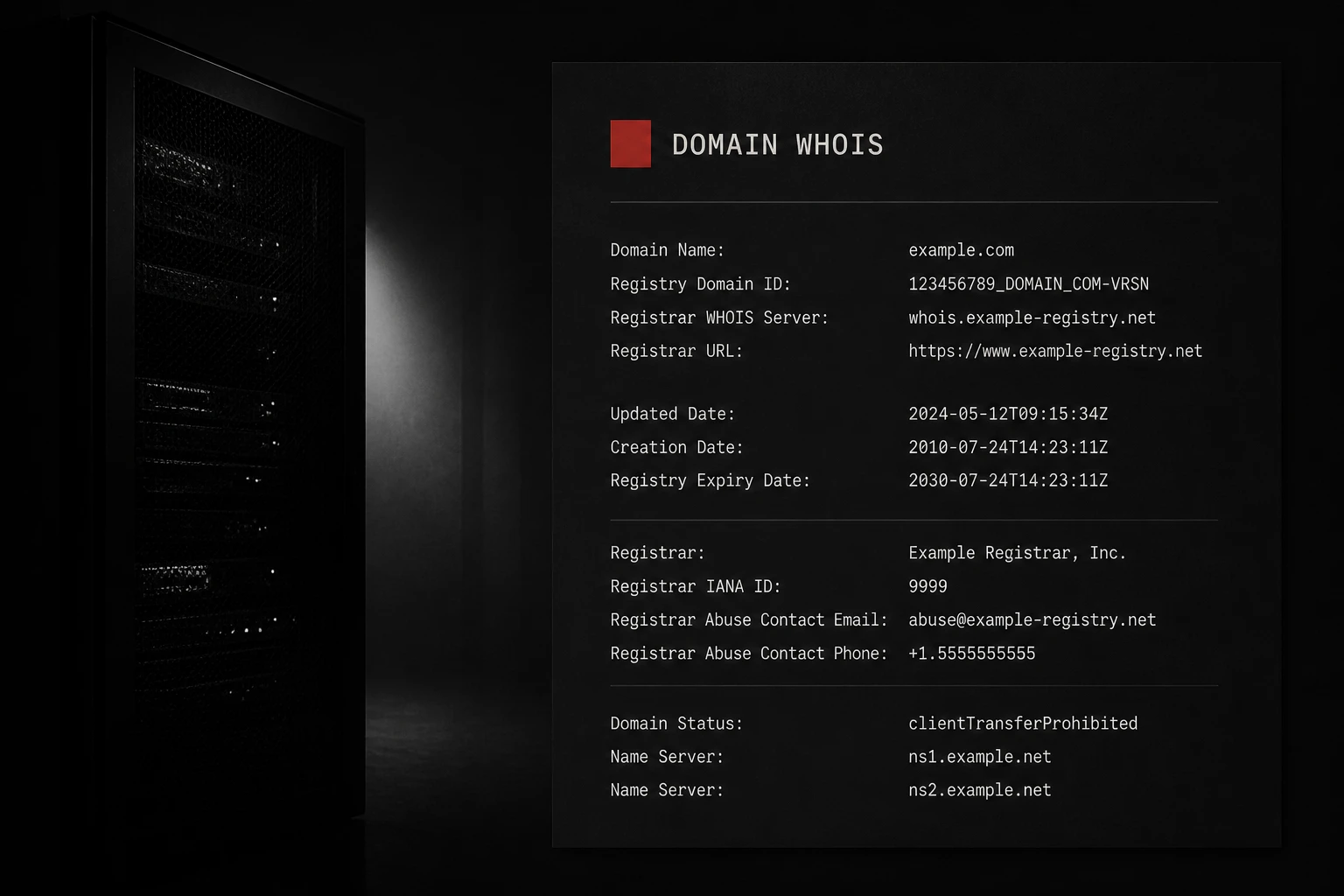
6. WHOIS / RDAP
| Item | One-line official definition | Source |
|---|---|---|
| RDAP | ICANN: Registration Data Access Protocol. Developed by the IETF. Replaces WHOIS. Internationalization, secure access and authoritative server discovery. | S11 |
| gTLD WHOIS sunset | ICANN announcement of 2025-01-27: from 2025-01-28, RDAP is the definitive source of gTLD registration data. WHOIS services are sunset. | S27 |
| Remaining WHOIS exceptions | ICANN RDAP page: after 2025-01-28, gTLD registries and registrars are no longer required to provide WHOIS. Exceptions: .com, .name, .post. | S11 |
| Registration Data Policy | ICANN Consensus Policy on how gTLD registries and accredited registrars handle registration data (collection, transfer, publication, retention). Effective 2025-08-21. | S12, S28 |
| ICANN Lookup | The RDAP-based lookup that ICANN points to: https://lookup.icann.org/en | S27 |
| .kr WHOIS scope | Rules Article 25(2): (1) domain name (2) registrant name and address (3) administrative contact name, phone number and email (4) name servers (5) registration agent name (6) registration date, last modified date and end-of-use date | S7 |
| .kr WHOIS exceptions | Rules Article 25(1): (1) the domain name search service (WHOIS service) provided by the Agency (2) where a law specially provides (3) where a government agency requests information in a form that cannot identify a specific individual to carry out duties under the relevant law. | S7 |
| whois.kr | IANA .kr / .한국 Registry Information: WHOIS Server whois.kr | S4, S5 |
The scope of gTLD personal data masking is not described as "industry practice." Only the box from the Registration Data Policy text is used.
From KRNIC's fee comparison table, only the box-name definition "privacy: a service that replaces domain name registration details with the registration agent's details" is used. The vendor comparison table is not included. (S29)
7. Korean-script domains
| Item | One-line official definition | Source |
|---|---|---|
| What .한국 is | KRNIC: a Korean-script domain you can use as a website address by adding ".한국" after the Korean expression you want. Structure: second level (Korean.한국). | S30 |
| .한국 registration rules (the Rules) | Rules Article 5(3): Korean (Unicode precomposed Hangul syllables), Latin letters, digits and hyphens. Length 3–63 characters, or 1–17 characters if Korean is included. May not start with a hyphen or "xn--," or end with a hyphen. | S7 |
| .한국 registration rules (guide page) | KRNIC .한국 page: 17 characters or fewer, at least one Korean character, no hyphen at the start or end, no consecutive hyphens in the 3rd and 4th positions. | S30 |
| Second-level Korean.kr | Rules Article 5(2): Latin letters, Korean, digits and hyphens. 3–63 characters, or 2–17 characters if Korean is included. | S7 |
| Third-level kr | Rules Article 5(1): Latin letters, digits and hyphens. 2–63 characters. | S7 |
| Registration condition (address) | Rules Article 4(1), main text: applicants and registrants must have an address in Korea. | S7 |
| No unique identifiers | Rules Article 5(4): another person's unique identifying information under Article 19 of the Enforcement Decree of the Personal Information Protection Act, and another person's phone number, cannot be registered as a domain name. | S7 |
| .한국 email | KRNIC .한국 page: "Email with a .한국 domain is currently not available." | S30 |
Rules Article 5(3) (1–17 characters) and the KRNIC guide page (17 characters or fewer) are listed side by side.
8. Disputes
The UDRP and Korea's internet address dispute resolution (KR-DRP) are not the same system. Split the box by TLD.
| Item | One-line official definition | Source |
|---|---|---|
| UDRP | ICANN: incorporated into the registration agreement. Covers disputes with third parties (not the registrar) over registration and use. For trademark-based disputes, the registrar does not cancel, suspend or transfer before agreement, court action or arbitration. Abusive registrations are brought to an approved dispute-resolution provider. | S31, S32 |
| UDRP scope | ICANN: All registrars must follow the UDRP. | S32 |
| Internet Address Dispute Resolution Committee | Act Article 16(1): an Internet Address Dispute Resolution Committee is established to mediate disputes over the registration and use of internet addresses. | S6, S34 |
| KR-DRP | IDRC: bad-faith registration and use of .KR and .한국 domains, among others, under the Act on Internet Address Resources. | S34 |
| Dispute clause in the Rules | Rules Article 12: an application may be made to the Committee under Act Article 18. Once a mediation application is received, changes to registration details may be restricted. | S7 |
| Transfer registration exception (2026.7.1.) | Rules Article 4(1), proviso: where a transfer mediation under Act Article 20(2)–(3) is concluded, a court judgment is issued, or an arbitral award is made, the transfer can be registered regardless of a domestic address. | S7, S34 |
| Mediation language | IDRC: with the amendment of Article 13 of the Internet Address Dispute Mediation Detailed Rules, from 2026-01-01 proceedings can be held in a language other than Korean when needed. | S34 |
| UDRP Asia desk | IDRC: IDRC – ADNDRC Seoul Office. | S34 |
Only the desk, the governing law and the covered TLDs are listed.
9. Hosting product type names
Shared / VPS / dedicated / cloud (as hosting product names) have no primary definition in Korean law or from KISA, the Ministry of Science and ICT or ICANN. Only the box names are kept.
Legal terms are kept in separate boxes from product names in the terms of service.
| Item | One-line official definition | Source |
|---|---|---|
| Shared hosting | No primary definition | — |
| VPS | No primary definition | — |
| Dedicated server | No primary definition | — |
| Cloud (hosting product name) | No primary definition | — |
| Integrated information and communications facility operator | Information and Communications Network Act Article 46(1)(1): a party that operates and manages integrated information and communications facilities to provide information and communications services for others. | S13 |
| Integrated facility operators, etc. | Same article: parties under item 1 or item 2 (those that directly operate and manage integrated facilities for their own services) that meet the Presidential Decree's criteria. They have protective-measure obligations. | S13 |
| Size criteria in the Enforcement Decree | Information and Communications Network Act Enforcement Decree Article 37: item 1 operators have a computer room floor area of 500 ㎡ or more. (Item 2 combines floor area, revenue and number of users.) | S35 |
| Outage reporting | Information and Communications Network Act Article 46(6): when service is interrupted for the period set by Presidential Decree due to disasters or similar events, the status, cause, emergency measures and recovery plans are reported without delay to the Minister of Science and ICT. | S13 |
This post does not say that integrated information and communications facilities are the same as all web hosting.
10. Data location · cross-border transfer
What the law sets out are requirements. It does not declare that "overseas servers are illegal." The box is: "Does the privacy policy state the countries personal data is transferred to and where it is stored?"
| Item | One-line official definition | Source |
|---|---|---|
| Cross-border transfer | Personal Information Protection Act Article 28-8(1): personal information must not be provided (including access), entrusted for processing, or stored overseas (a "transfer" in this section). It may be transferred if one of the provisos applies. | S16 |
| Conditions for transfer | Items of the same paragraph: separate consent from the data subject; provisions of law, treaties or agreements; entrustment or storage needed to conclude or perform a contract (statutory requirements); certification under a Commission notice; recognition of an equivalent level of protection in a country or international organization. | S16, S17 |
| Items to disclose when obtaining consent | Article 28-8(2): items transferred; country, timing and method; name of the recipient (company name and contact details); purpose of use and retention period; how to refuse, the procedure and the consequences. | S16, S17 |
| Disclosure in the privacy policy | Personal Information Protection Commission: for cross-border transfers, disclose the legal basis in the privacy policy, and for consent-based transfers, the details of the consent (Enforcement Decree Article 31(1)(2)). | S17 |
| Direct collection from overseas | Personal Information Protection Commission: a party overseas collecting personal information directly from data subjects is not a "cross-border transfer" under this article. | S17 |
11. SSL/TLS certificate type names
Only the type names are listed. No CA products are recommended.
| Item | One-line official definition | Source |
|---|---|---|
| domain-validated (DV) | CA/B Forum BR §1.2 OID 2.23.140.1.2.1. Object Registry: Certificate issued in compliance with the TLS Baseline Requirements – No entity identity asserted. | S14, S15 |
| organization-validated (OV) | OID 2.23.140.1.2.2. Object Registry: Organization identity asserted. | S14, S15 |
| individual-validated (IV) | OID 2.23.140.1.2.3. Object Registry: Certificate issued in compliance with the TLS Baseline Requirements – Individual identity asserted. | S14, S15 |
| Extended Validation (EV) | EV Guidelines: the minimum requirements for a CA to issue an EV Certificate. Certain software may display the Subject Organization information. Incorporates the BR by reference. | S36 |
| Maximum Subscriber Certificate validity | BR Relevant Dates: from 2026-03-15, the maximum validity period of Subscriber Certificates is 200 days. Later dates follow the BR table (2027-03-15: 100 days, 2029-03-15: 47 days). | S14 |
Validity periods are only stated together with the BR's table of effective dates.
12. Backup · traffic · disk
Backup, traffic and disk are items that hosting terms use as box names. The material this post received contains no official or primary document stating capacity or transfer numbers as an industry standard.
13. SLA / uptime
| Item | One-line official definition | Source |
|---|---|---|
| Availability (E.800) | ITU-T E.800: Availability of an item to be in a state to perform a required function at a given instant of time or at any instant of time within a given time interval, assuming that the external resources, if required, are provided. | S18 |
| SLA (E.800) | ITU-T E.800 (2008) 3.3.6: A service level agreement is a formal document listing a set of performance characteristics and target values (or range) to be delivered for a service or portfolio of services by the service provider. | S18 |
| Service Availability (E.860) | ITU-T E.860: percentage of time (SA%) during which the contracted service is operational at the respective Service Access Points. Operational = the service can be used at the quality level stated in the SLA. SA% = 100% − UA%. | S19 |
If the terms have an "uptime" or "availability" box, check only whether the terms define it, state the measurement period and list the exclusions. No specific percentage is given as an industry standard.
14. Checklist
Domain
| # | Item | One-line official definition | Source | Check |
|---|---|---|---|---|
| D1 | TLD class | gTLD / ccTLD (ICANN, IANA) | S1–S3 | [ ] |
| D2 | .kr / .한국 or not | IANA delegation, KISA as ccTLD Manager | S4, S5 | [ ] |
| D3 | Registry vs. registrar | registry / registrar; statutory management agency / management agent | S6, S21, S22 | [ ] |
| D4 | Registration and renewal term | gTLD 1–10 years (Base RA). .kr user term is a box in the agent's terms | S25, S7 | [ ] |
| D5 | Expiry grace | gTLD ERRP notices, 30-day RGP. .kr 30-day suspension before cancellation | S10, S7 | [ ] |
| D6 | Transfer lock | gTLD ClientTransferProhibited and AuthInfo. .kr follows the KRNIC transfer procedure | S9, S8, S26 | [ ] |
| D7 | WHOIS/RDAP | gTLD RDAP and Registration Data Policy. .kr items in Rules Article 25 | S11, S12, S7 | [ ] |
| D8 | Korean-script domain rules | Rules Article 5, IANA .한국 | S7, S5, S30 | [ ] |
| D9 | Dispute channel | UDRP or internet address dispute resolution (KR-DRP) | S31–S34 | [ ] |
| D10 | Domestic address condition (.kr/.한국) | Rules Article 4, main text and proviso | S7 | [ ] |
Hosting
| # | Item | One-line official definition | Source | Check |
|---|---|---|---|---|
| H1 | Product type name | Shared/VPS/dedicated/cloud: no primary definition, box names only | — | [ ] |
| H2 | Integrated information and communications facility | Whether the Article 46 term of the Network Act appears in the terms or notices | S13 | [ ] |
| H3 | Data location and cross-border transfer | Article 28-8 requirements of the Protection Act and privacy policy notice | S16, S17 | [ ] |
| H4 | Certificate type name | DV/OV/IV/EV (CA/B Forum) | S14, S15, S36 | [ ] |
| H5 | Backup, traffic, disk | Box names in the terms. No industry-standard numbers | — | [ ] |
| H6 | SLA and uptime | E.800/E.860 terms. Only the target values in the terms. Do not assert a specific percentage | S18, S19 | [ ] |
15. Where to verify
| Desk | URL | What it does |
|---|---|---|
| IANA Root Zone Database | https://www.iana.org/domains/root/db | TLD delegation, type and manager |
| IANA .kr | https://www.iana.org/domains/root/db/kr.html | ccTLD Manager, WHOIS |
| IANA .한국 | https://www.iana.org/domains/root/db/xn--3e0b707e.html | Punycode, delegation |
| ICANN accredited registrar list | https://www.icann.org/en/accredited-registrars | The list |
| ICANN Lookup | https://lookup.icann.org/en | RDAP lookup |
| KRNIC Rules | https://www.nic.or.kr/jsp/infoboard/law/domManRule.jsp | .kr/.한국 registration, cancellation, WHOIS |
| KRNIC registration agent transfer | https://nic.or.kr/jsp/business/management/domain/transInfo.jsp | Transfer procedure |
| whois.kr | whois.kr | The WHOIS server listed by IANA |
| Internet Address Dispute Resolution Committee | https://www.idrc.or.kr/ | KR-DRP |
| law.go.kr | https://www.law.go.kr | Act on Internet Address Resources, Network Act Article 46, Personal Information Protection Act Article 28-8 |
Sources
- [S1] ICANN Acronyms: gTLD. https://www.icann.org/en/icann-acronyms-and-terms?nav-letter=g&page=1
- [S2] ICANN New gTLDs Glossary. https://newgtlds.icann.org/en/applicants/glossary
- [S3] IANA Root Zone Database. https://www.iana.org/domains/root/db
- [S4] IANA Delegation Record for .KR. https://www.iana.org/domains/root/db/kr.html
- [S5] IANA Delegation Record for .한국. https://www.iana.org/domains/root/db/xn--3e0b707e.html
- [S6] Act on Internet Address Resources (current, lsId=009627). https://www.law.go.kr/lsInfoP.do?ancYnChk=0&lsId=009627 / as published by KRNIC: https://www.nic.or.kr/jsp/infoboard/law/law.jsp
- [S7] Domain Name Management Rules (amended 2026.7.1.). https://www.nic.or.kr/jsp/infoboard/law/domManRule.jsp
- [S8] KRNIC domain name registration agent transfer. https://nic.or.kr/jsp/business/management/domain/transInfo.jsp
- [S9] ICANN Transfer Policy. https://www.icann.org/en/contracted-parties/accredited-registrars/resources/domain-name-transfers/policy
- [S10] ICANN Expired Registration Recovery Policy. https://www.icann.org/en/contracted-parties/consensus-policies/expired-registration-recovery-policy/expired-registration-recovery-policy-21-02-2024-en
- [S11] ICANN RDAP. https://www.icann.org/rdap
- [S12] ICANN Registration Data Policy. https://www.icann.org/resources/pages/registration-data-policy-2024-02-21-en/
- [S13] Information and Communications Network Act Article 46 (effective 2026.7.7., Act No. 21305). https://www.law.go.kr/LSW/lsLawLinkInfo.do?chrClsCd=010202&lsId=000030&lsJoLnkSeq=1000924720&print=print
- [S14] CA/Browser Forum TLS Baseline Requirements. https://cabforum.org/working-groups/server/baseline-requirements/requirements/
- [S15] CA/Browser Forum Object Registry. https://cabforum.org/resources/object-registry/
- [S16] Personal Information Protection Act Article 28-8. https://www.law.go.kr/lsInfoR.do?chrClsCd=010202&efYd=20251002&lsiSeq=270351&urlMode=lsInfoP
- [S17] Personal Information Protection Commission guide to cross-border transfers. https://pipc.go.kr/np/default/page.do?mCode=D060040010
- [S18] ITU-T E.800 (2008-09). https://www.itu.int/rec/T-REC-E.800-200809-I/en
- [S19] ITU-T E.860 (2002-06). https://www.itu.int/rec/T-REC-E.860-200206-I/en
- [S20] KRNIC internet address resource statistics glossary. https://www.nic.or.kr/jsp/popup/statInfo.jsp
- [S21] ICANN Acronyms: registry. https://www.icann.org/en/icann-acronyms-and-terms/registry-en
- [S22] ICANN Acronyms: registrar. https://www.icann.org/en/icann-acronyms-and-terms/registrar-en
- [S23] ICANN Accredited Registrars. https://www.icann.org/en/accredited-registrars
- [S24] KRNIC: What is a registration agent? https://nic.or.kr/jsp/business/management/domain/regAgencyInfo.jsp
- [S25] ICANN Base Registry Agreement §2.10. https://itp.cdn.icann.org/en/files/registry-agreements/base-registry-agreement-21-01-2024-en.html
- [S26] ICANN EPP Status Codes. https://www.icann.org/resources/pages/epp-status-codes-2014-06-16-en
- [S27] ICANN Update: Launching RDAP; Sunsetting WHOIS, 2025-01-27. https://www.icann.org/en/announcements/details/icann-update-launching-rdap-sunsetting-whois-27-01-2025-en
- [S28] ICANN Registration Data Policy Now In Effect, 2025-08-21. https://www.icann.org/en/announcements/details/icann-registration-data-policy-now-in-effect-for-contracted-parties-21-08-2025-en
- [S29] KRNIC note on registration agent fees and services. https://nic.or.kr/jsp/popup/agencyFeePop.jsp
- [S30] KRNIC: What is a .한국 domain? https://nic.or.kr/jsp/resources/domainInfo/hkDomainInfo.jsp
- [S31] UDRP Policy. https://www.icann.org/resources/pages/policy-2024-02-21-en
- [S32] UDRP overview. https://www.icann.org/en/contracted-parties/consensus-policies/uniform-domain-name-dispute-resolution-policy/uniform-domain-name-dispute-resolution-policy-01-01-2020-en
- [S33] (Removed) KISA page 1020705 returned an error on 2026-08-18. The ADNDRC box uses S34, IDRC.
- [S34] Internet Address Dispute Resolution Committee. https://www.idrc.or.kr/
- [S35] Information and Communications Network Act Enforcement Decree (current, lsId=004797) Article 37. https://www.law.go.kr/LSW/lsInfoP.do?chrClsCd=010202&urlMode=lsInfoP&lsId=004797
- [S36] CA/B Forum EV Guidelines. https://cabforum.org/working-groups/server/extended-validation/guidelines/