The first book in Minumsa's World Literature series is volume 1 of Ovid's Metamorphoses. Gods and people turn into trees, animals, stones and birds one story after another, so on a first reading even the names blur together. You do not need to memorise the plot. Hold on to three things and you will not get lost: how much of the original this volume covers, what a character feels just before the change, and who is telling the story at that moment.
Books 1–8 of fifteen, in eight titled parts
Ovid (43 BC–c. AD 17) was a Roman poet. The Metamorphoses is a long poem in fifteen books, written in dactylic hexameter, the metre of epic, and it was essentially complete around AD 8, when he was exiled to Tomis on the Black Sea. In the opening lines the poet says he will sing of forms changed into new bodies, one unbroken song from the first beginning of the world down to his own time. And so the stories start in Chaos and move through the flood, the loves and angers of the gods and the adventures of heroes, down to the history of Rome.
The Minumsa edition, translated into Korean by Yi Yun-gi, appeared in two volumes in 1998. Volume 1 prints Books 1–8 and gives each a title, from “Part 1: Everything began in Chaos” to “Part 8: The age of humans”. These titles belong to the translation; other editions and English versions simply number them Book I, Book II and so on. Books 9–15 continue in volume 2 of the series.
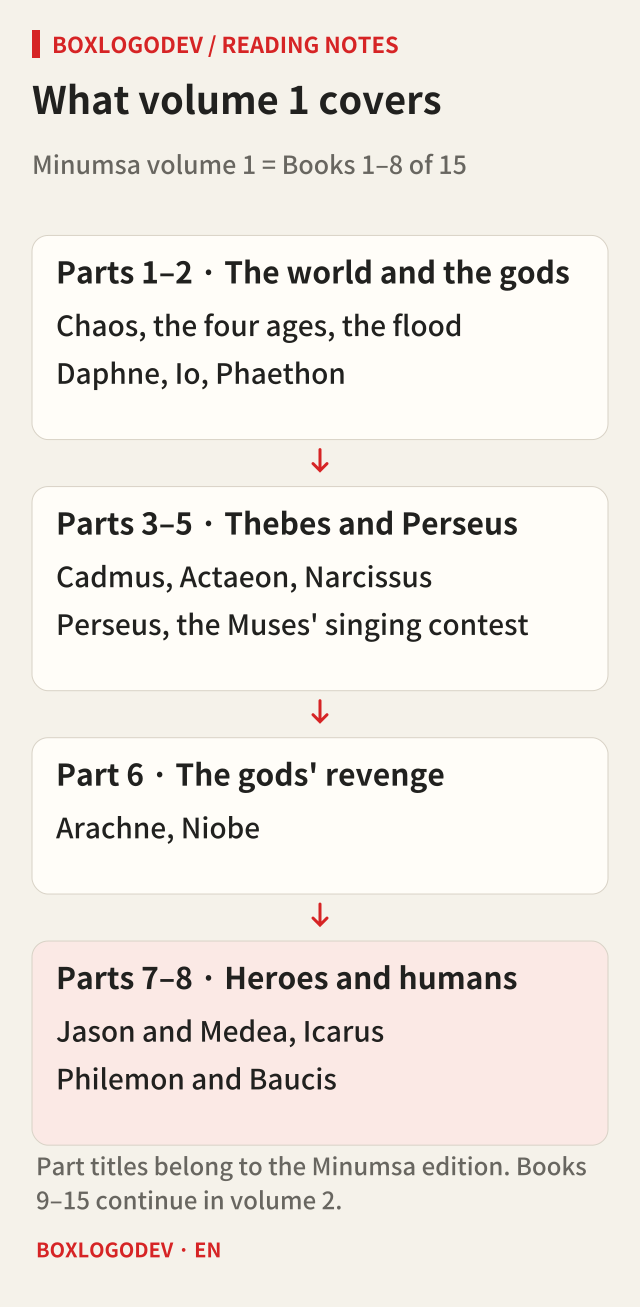
The shape of volume 1 at a glance
Parts 1 and 2 cover the beginning of the world and the age of the gods. Earth and sea separate out of chaos, the ages of gold, silver, bronze and iron follow, and a flood sweeps away corrupted humankind. The survivors, Deucalion and Pyrrha, throw stones over their shoulders and the stones become people. Daphne turning into a laurel as she flees Apollo, Io turned into a heifer, and Phaethon falling from the chariot of the sun are all in this opening stretch.
Parts 3 to 5 follow the house of Cadmus, the founder of Thebes, then Perseus and the Muses. Here Actaeon, turned into a stag, is hunted by his own hounds, and Narcissus falls for his reflection while Echo is reduced to a voice. In Part 6, “The gods' revenge”, Arachne, who matched her weaving against a goddess, and Niobe, who boasted of her children and lost them all, are punished. In Parts 7 and 8 the stage shifts to heroes and ordinary people: Jason and Medea, Icarus falling on his wings of wax, and Philemon and Baucis, a poor couple who welcome gods disguised as travellers.
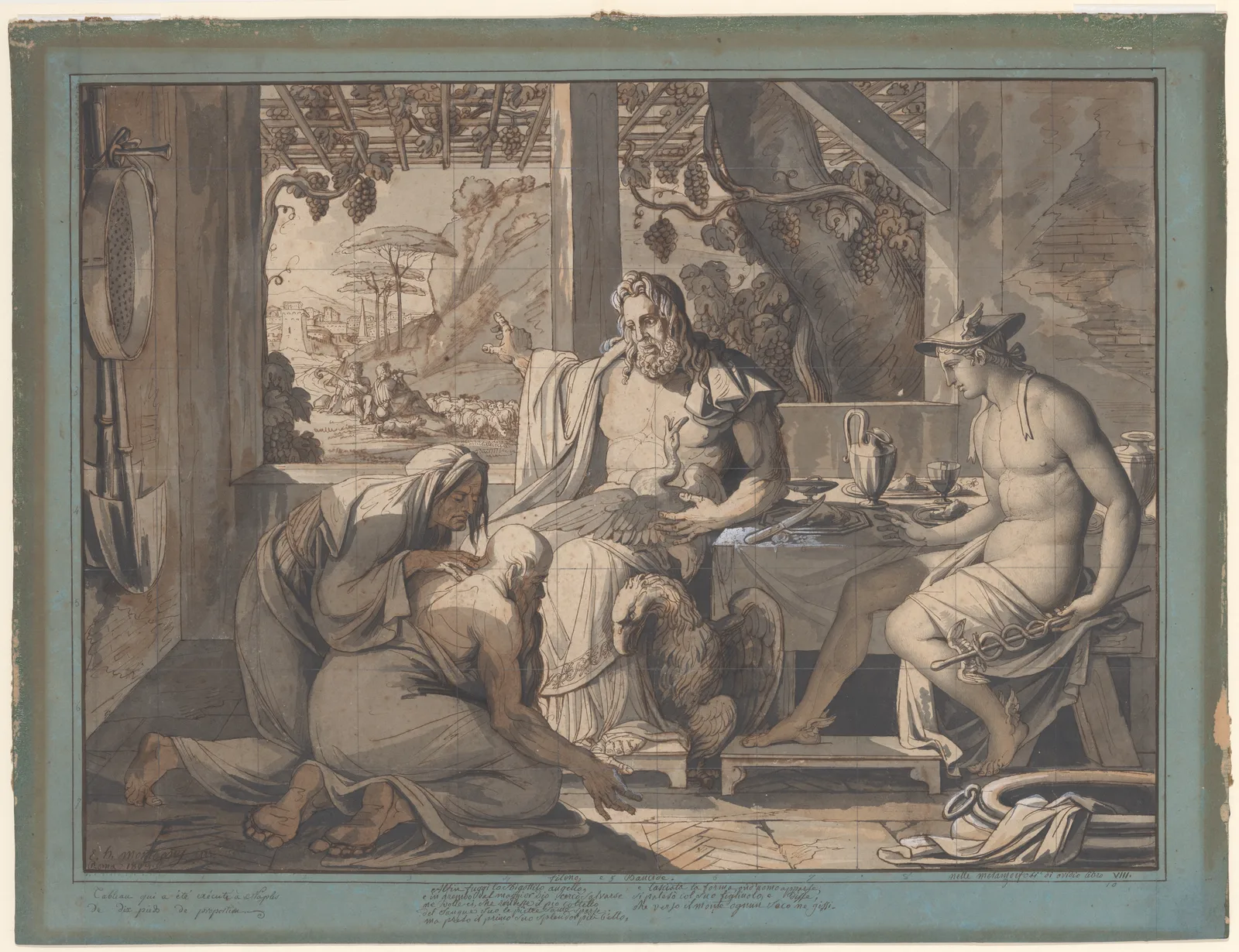
Watch the moment before the change
A transformation in this book usually takes only a few lines. But in the lines just before it, one character's feeling has always been pushed to its limit. The change is the moment that feeling sets into the shape of a body.
In Part 1 Lycaon, testing whether his guest Jupiter is really a god, serves him human flesh and becomes a wolf: his savagery surfaces as fur and teeth. Also in Part 1, Daphne, chased to exhaustion, prays to her father, a river god; her feet become roots and her arms branches. Here the change is an escape, not a punishment. In Part 6 Arachne refuses to give way on her skill and goes on spinning as a spider, and Niobe turns to stone in her grief, yet tears still run from the stone.
So rather than noting who turned into what, write down what the character was feeling just before. You will see how differently punishment, rescue and pity are handled inside the same form of change.
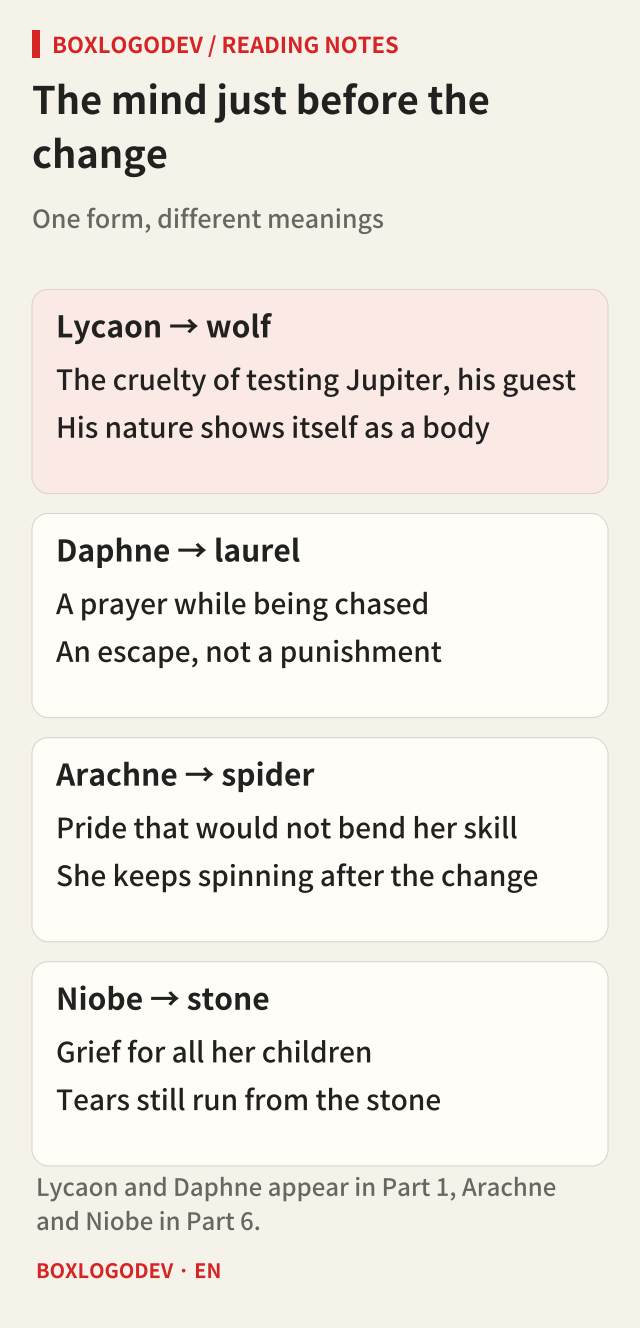
Follow who is telling the story
Characters in this book often begin telling stories of their own. In Part 4 the daughters of Minyas refuse to join the rites of Bacchus and stay home weaving, taking turns telling tales; the love story of Pyramus and Thisbe is one of them. When they finish, the daughters themselves become bats. In Part 5, Calliope, one of the Muses, sings of Ceres and Proserpina in a singing contest with the daughters of Pierus, and the losers become magpies.
When a story seems to end, step back and ask who is telling it and why it is being told now. Scenes that looked like separate myths line up into one thread, and you see the book's design: even the tellers end up transformed.
If you are reading it for the first time
- Read one part a day and you will finish volume 1 in eight days. For each part, pick one transformation and write a single line: who, into what, and what they felt just before.
- The same gods appear under Roman and Greek names: Jupiter is Zeus, Juno is Hera, Minerva (Pallas) is Athena, Bacchus is Dionysus. Note which names your translation uses the first time each appears.
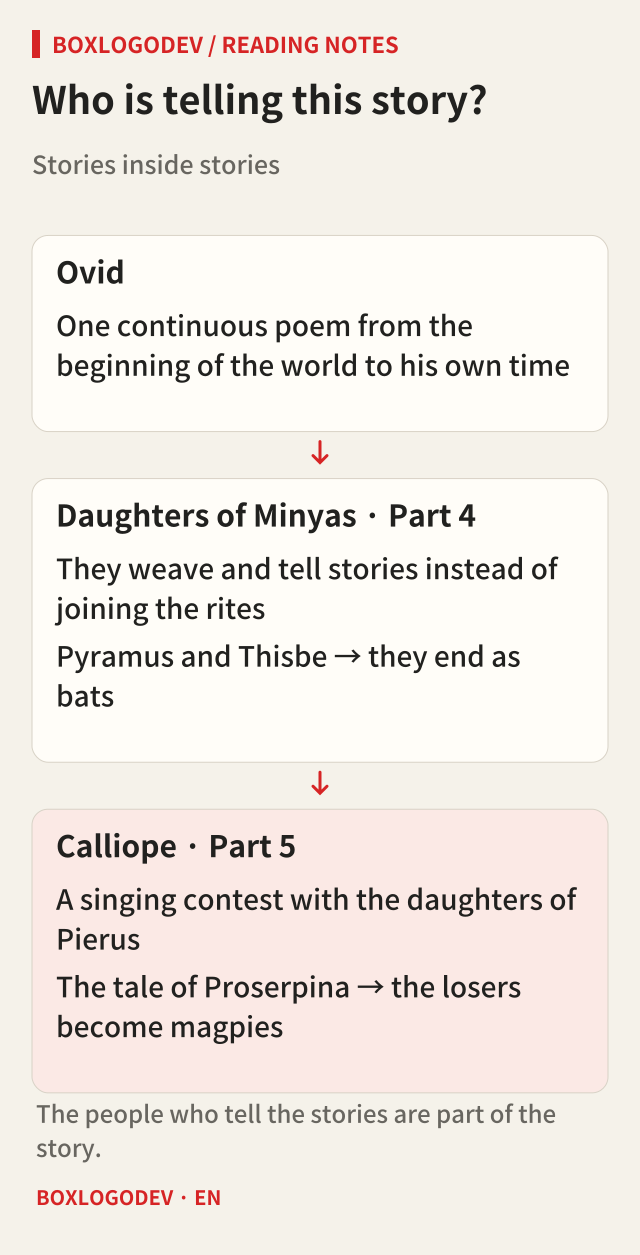
- When a scene stays with you, look up paintings of it. Daphne, Narcissus and Icarus have been painted again and again in Western art.
By the time you close volume 1, a transformation starts to look less like a marvel and more like the final shape a person's character or feeling arrives at. Read with that in mind and the stories of volume 2 come much closer.
Add your perspective.
Share a question, another approach, or something you have tried.
Checking sign-in…
Loading comments…