The second book in Minumsa's World Literature series is volume 2 of Ovid's Metamorphoses. Volume 1 started in Chaos and passed through the age of gods and heroes; volume 2 starts with the death of Hercules, passes through the Trojan War and ends in Rome, in the age of Augustus that the poet lived in. After this guide you will be able to read volume 2 with three things in view: where myth turns into history, who is telling each story, and what the final transformation is.
Books 9–15 of fifteen, in seven titled parts
Like volume 1, Minumsa's volume 2 was translated into Korean by Yi Yun-gi and published in 1998. It prints Books 9–15 of the original as seven parts, from “Part 9: Hercules and others” to “Part 15: The ascension of Caesar and others”, followed by a translator's afterword. As in volume 1, the part titles belong to the translation; English editions simply number them Book IX to Book XV.
One thing is worth knowing before you start this edition. In a text reproduced in the publisher's description of the book, the translator explains that he worked from an English version, and that he turned the poem, originally in verse, into third-person prose to make it easier to read. Proper names follow the Latin forms, since the author was Roman, with Greek and English forms added where he felt they were needed: Jupiter appears alongside Zeus, for example. So the Korean text cannot be matched line by line against a verse translation, but it is easy to follow as a story.
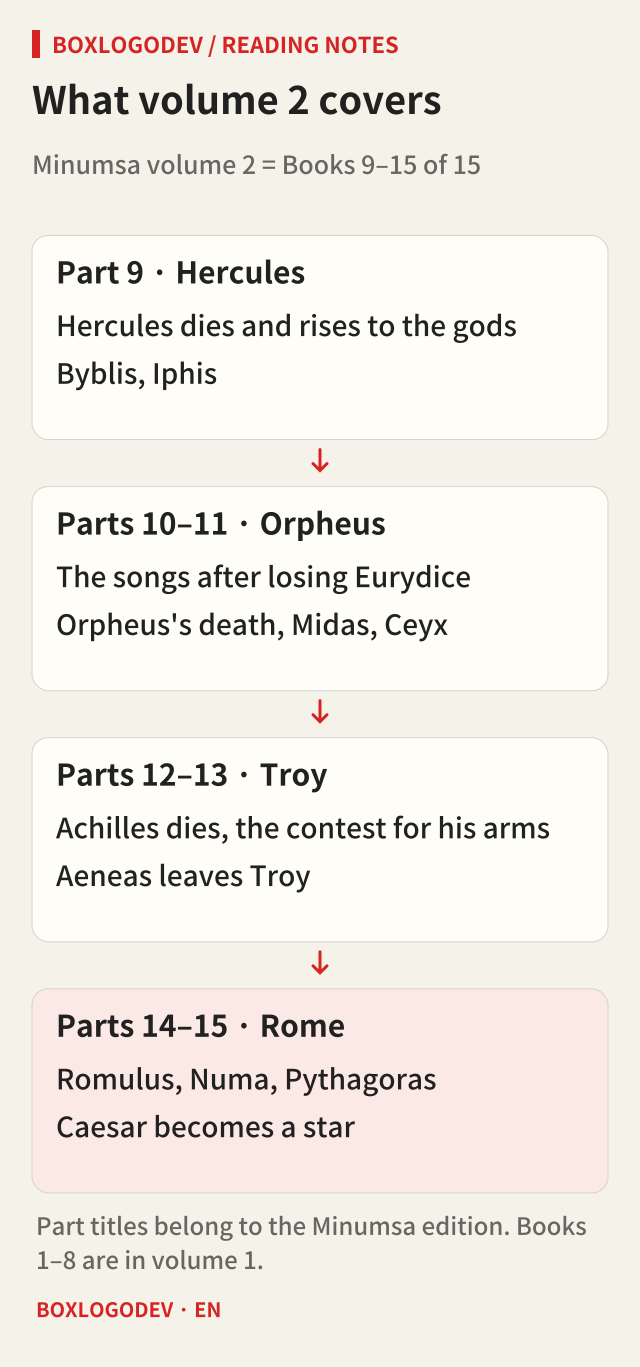
The shape of volume 2 at a glance
Part 9 is the end of Hercules. His wife Deianira sends him the garment stained with the blood of the dying centaur Nessus; when the poison burns into his body, Hercules climbs onto a funeral pyre. The same part tells of Byblis, who loves her brother and becomes a spring, and of Iphis, who becomes a man on the day of her wedding.
Parts 10 and 11 belong to Orpheus. Having lost his wife Eurydice a second time by looking back as he led her out of the underworld, he sings in the mountains, and at the start of Part 11 he is killed by the women of Thrace. Then comes Midas, who is given the power to turn whatever he touches into gold, comes to loathe it, and later ends up with the ears of an ass; and Ceyx, drowned in a shipwreck, with his wife Alcyone, who follows him and becomes a kingfisher.
In Parts 12 and 13 the stage moves to Troy. Achilles dies, and Ajax and Ulysses (Odysseus) compete in speeches for his arms. When Troy falls, Hecuba is turned into a dog and Aeneas leaves the city; this is why the Minumsa edition calls Part 13 “The age of exiles”. In Parts 14 and 15 Aeneas reaches Italy and becomes a god, and the story comes down through Romulus and Numa to the death of Julius Caesar.
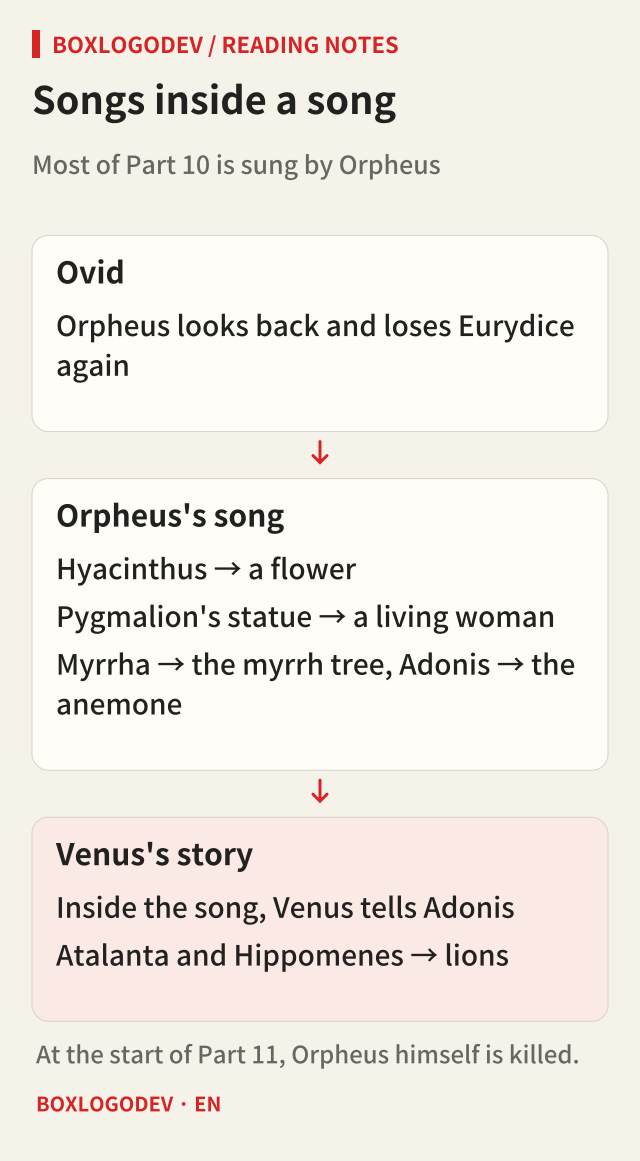
Follow the songs Orpheus sings
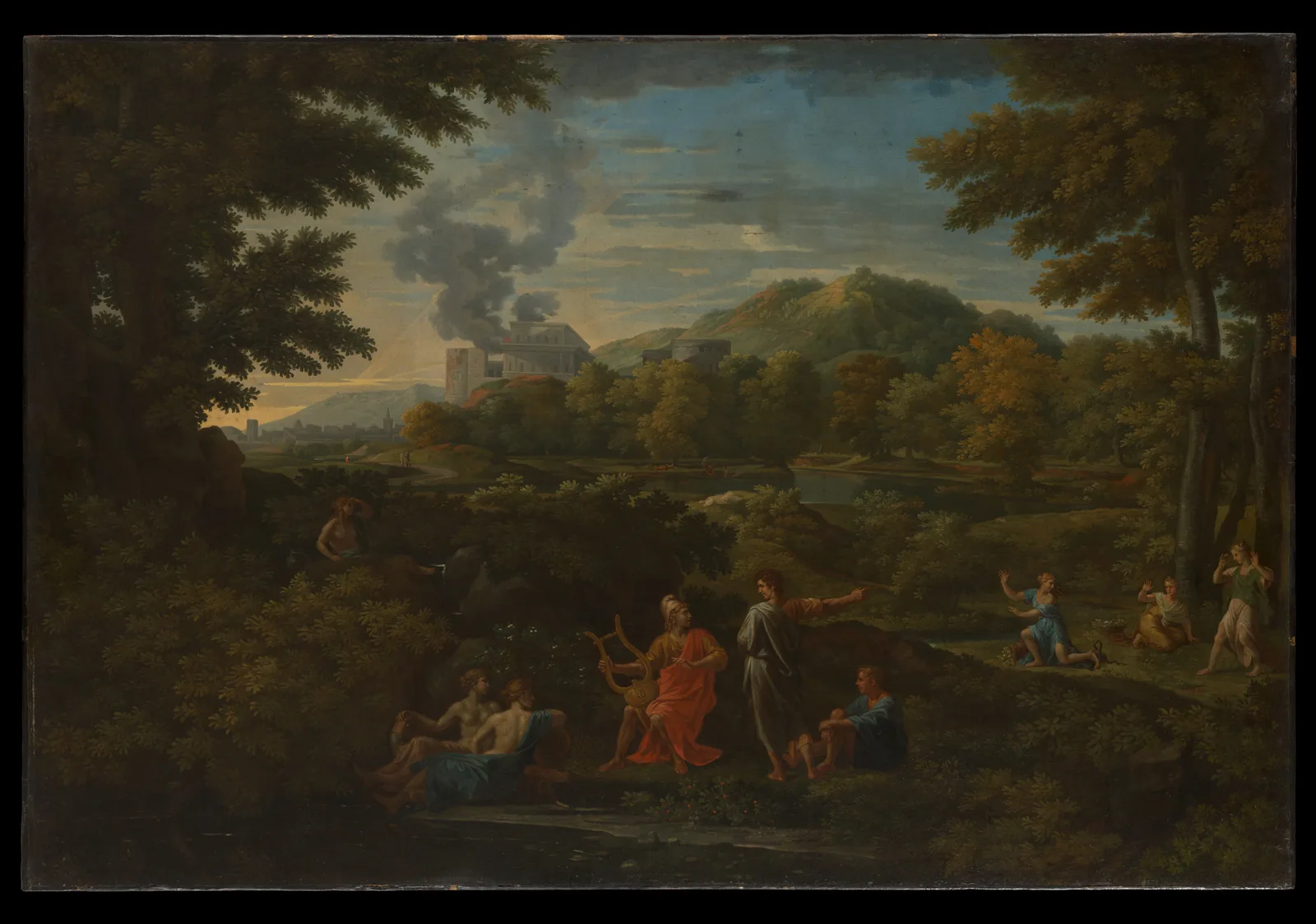
Much of Part 10 is in the voice of Orpheus, not Ovid. When the grieving Orpheus plays his lyre on a hillside, the trees gather round, and he sings of Hyacinthus, loved and lost by Apollo, who becomes a flower; of the statue Pygmalion carved, which becomes a living woman; of Myrrha, who becomes the myrrh tree, and her son Adonis, who becomes the anemone. Inside that song, Venus in turn tells Adonis how Atalanta and Hippomenes were turned into lions. The stories are nested three deep.
Notice that a man singing about lost love sings mostly of love and loss. As with the daughters of Minyas and Calliope in volume 1, knowing who is telling the story shows why these particular stories have been gathered together. The scene in Part 12 where the old Nestor recalls Caeneus, who was changed from a woman into a man, can be read with the same eye.
The changes start pointing to the sky
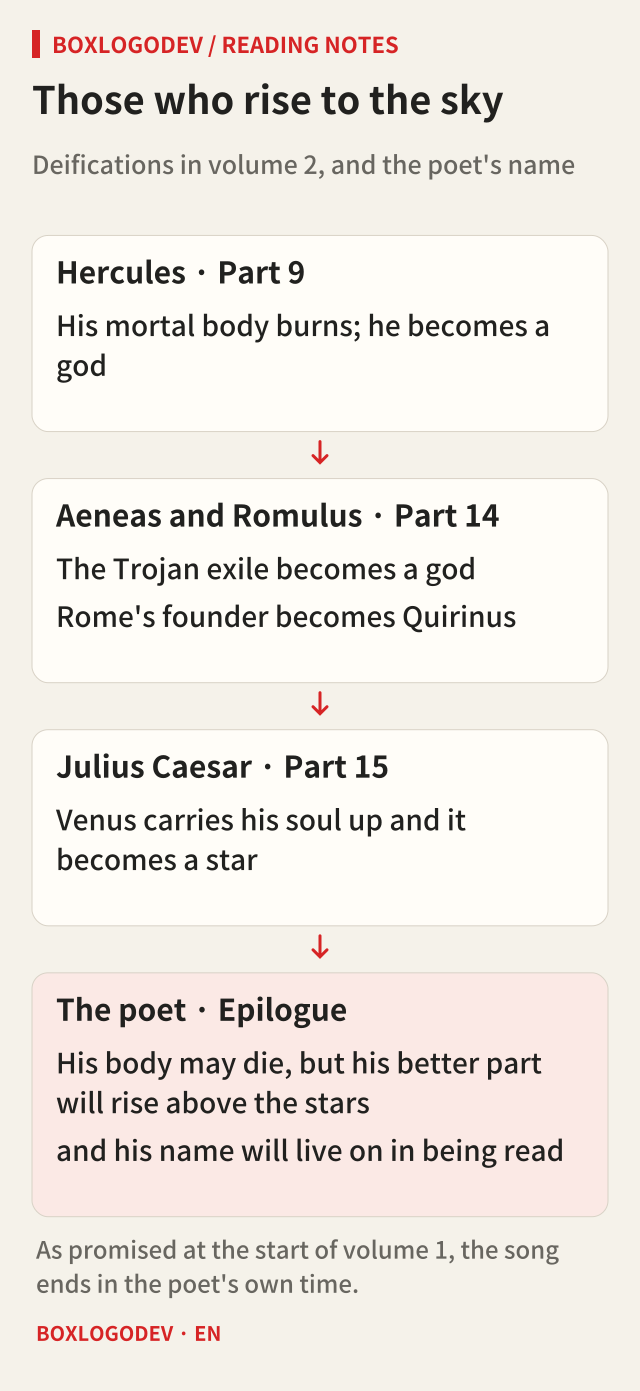
In volume 1, transformations mostly moved downwards, people becoming trees, animals or stones. Towards the end of volume 2 the direction changes. In Part 9, on the pyre, the fire consumes the mortal body Hercules had from his mother; like a snake that has shed its old skin he is renewed, and Jupiter carries him up among the stars in his chariot. In Part 14 Aeneas, the exile from Troy, becomes a god, and Romulus, the founder of Rome, becomes the god Quirinus. In Part 15 Julius Caesar is killed in the Senate house; Venus takes up his soul and carries it to the sky, where it becomes a star trailing fire. The poet then goes on to praise Augustus, Caesar's adopted son and the ruler of his own time.
At the start of volume 1 the poet said he would sing from the beginning of the world down to his own time. Volume 2 is where that promise is kept. Follow the line by which figures of myth become the ancestors of Rome and Rome's ancestors become gods, and the long poem shows itself not as a loose collection of myths but as one genealogy running into the Roman present.
Pythagoras's long speech and the last transformation
Part 15 has a passage in which Numa, the second king of Rome, hears the teaching of the philosopher Pythagoras. Pythagoras says that everything changes but nothing perishes. The soul moves from one body to another, the elements turn from fire into air, water and earth, and being born is only beginning to be something other than before, while dying is ceasing to be the same thing. A book that has told transformation after transformation gives, in its final part and through one character, an account of transformation itself.
And the book ends in the poet's own words. He says he has finished a work that neither the anger of Jupiter nor fire nor iron nor time can destroy. His body may die whenever it will, but his better part will rise above the stars, his name will not be erased, and wherever Roman power reaches he will be read on people's lips. Right after Caesar becomes a star, the poet says his own name will rise higher than the stars. The last transformation in volume 2 can be read as the poem carrying on by being read.
If you are reading it for the first time
- Read one part a day and you will finish volume 2 in a week. For each part, write one line naming who is telling the story; the places where the voice shifts, to Orpheus, Nestor or Pythagoras, become easy to see.
- Mark the scenes where someone rises to the sky (Hercules, Aeneas, Romulus, Caesar) and read them side by side with the poet's closing words.
- If the names from volume 1 have faded, skim its first two parts again before you begin. The epilogue of volume 2 answers the promise made at the opening of volume 1.
When you close volume 2, the question left is what stays unchanged. Ovid's answer is neither a body nor a city but a story that goes on being read. Whether he was right is best judged by a reader opening the book two thousand years later.
Add your perspective.
Share a question, another approach, or something you have tried.
Checking sign-in…
Loading comments…