Volume 8 of Minumsa's World Literature series collects eight stories by Thomas Mann under the title Tonio Kröger, Tristan, Death in Venice. Each of the three title stories has a writer at its centre, and each of those writers only watches, from a distance, the “life” he is drawn to. Tonio Kröger stands in the dark outside the glass door of a ballroom, Spinell, the writer in “Tristan,” turns away from a healthy baby, and Aschenbach in “Death in Venice” meets his end in a beach chair. After this guide you will be able to compare where the artist stands in each story and follow how the same distance becomes a letter for one man and a downfall for another.
Eight stories, four translators
The Minumsa edition came out in August 1998 and runs to 608 pages. It was translated jointly by Im Hong-bae, Ahn Sam-huan, Han Sung-ja and Park Dong-ja; the publisher's page does not say who translated which story. The contents run “Tonio Kröger,” “Mario and the Magician,” “The Fall,” “The Will to Happiness,” “Little Herr Friedemann,” “The Clown,” “Tristan” and “Death in Venice,” followed by Ahn Sam-huan's essay on Mann as a “lost bourgeois” and a chronology. The original title is given as Tristan, the 1903 collection in which “Tonio Kröger” first appeared in book form.
Thomas Mann was born in 1875 into a merchant family in Lübeck in northern Germany. The family declined after his father's death, and in 1901, at twenty-five, he made his name with the novel Buddenbrooks. He published the collection containing “Tonio Kröger” and “Tristan” in 1903 and “Death in Venice” in 1912, and received the Nobel Prize in Literature in 1929. “Mario and the Magician” dates from 1930, making it the latest piece in the book. Mann died in Zurich in 1955. Quotations and scene summaries here are the author's own translations and paraphrases of the German text.
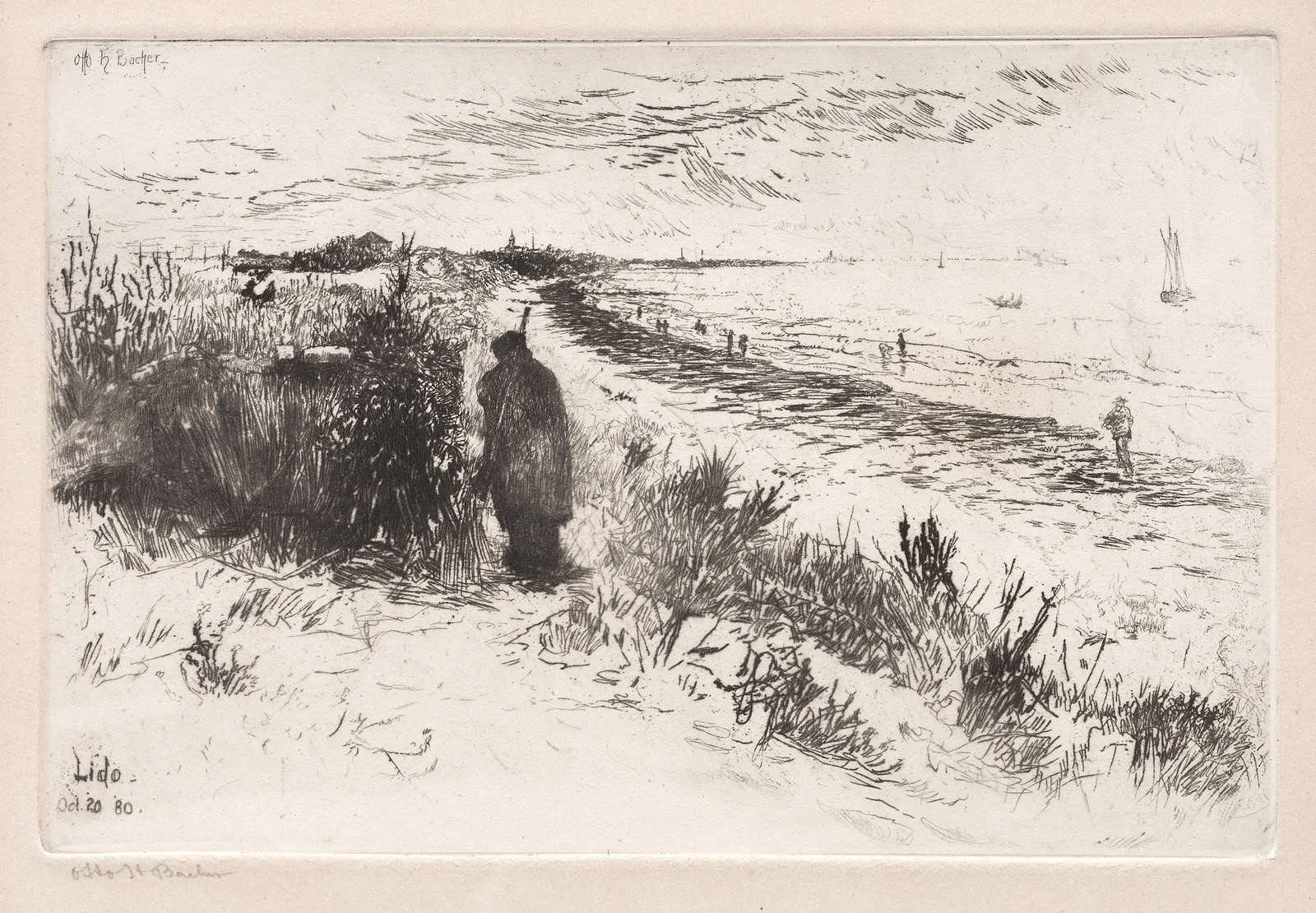
“Tonio Kröger”: two dances
“Tonio Kröger” is a novella in nine chapters. In Chapter 1 the fourteen-year-old Tonio loves his blond, blue-eyed friend Hans Hansen. He urges Schiller's Don Carlos on him, but Hans would rather talk about his books on horses. In Chapter 2 Tonio loses his heart to the blonde Ingeborg Holm and, lost in thought at dancing class, dances the ladies' figure, the moulinet. Everyone laughs, and the dancing master calls him “Fräulein Kröger.” When his family declines, Tonio leaves home, lives in big cities and in the south, and becomes a celebrated writer.
Chapter 4 is almost all conversation. In a studio in Munich Tonio tells the Russian painter Lisaweta Ivanovna at length how far the artist stands from life. When he has finished, she calls him a bourgeois gone astray. From Chapter 5 Tonio travels north. In his home town, after thirteen years, his family house has become a public library, and because he carries no papers he is taken for a swindler wanted by the Munich police. He does not reveal that he is the son of Consul Kröger. Then, at a seaside hotel in Denmark, the scene from Chapter 2 comes round again.
READING NOTES
The nine chapters of Tonio Kröger
From his home town to Munich, then north again
Chapters 1–3 · a boy in his home town
- He loves Hans Hansen and urges Don Carlos on him.
- At dancing class he is laughed at in front of Ingeborg.
- He leaves for big cities and the south and becomes a writer.
Chapter 4 · a studio in Munich
- He pours out the artist's isolation to the painter Lisaweta.
- Lisaweta: "You are a bourgeois gone astray."
Chapters 5–8 · the journey north
- Home after thirteen years: his house is a public library.
- He is taken for a wanted swindler.
- At a Danish seaside hotel he watches a dance through a glass door.
Chapter 9 · a letter to Lisaweta
- "I stand between two worlds and am at home in neither."
- He promises to keep his love for ordinary people.
The home town is never named in the text. Quotations are the author's translations from the German.
A glass door, a gravel path, a beach chair
In Chapter 8 a party of day-trippers fills the hotel for a dance. Among them are two people who look exactly like Hans and Ingeborg; the story makes clear that they are the same type rather than the same people. Tonio slips onto the unlit veranda and watches the dancing from outside the glass door. He works out what he might say to them but never says it. Their language, the story says, was not his. He speaks to one person only: a pale girl who falls while dancing. He helps her up and tells her she should not dance any more. She recalls Tonio himself, laughed at for getting the dance wrong in Chapter 2.
Spinell in “Tristan” is a writer staying at the sanatorium Einfried. He presses Gabriele, a merchant's wife with a disease of the trachea, to play the piano her doctors have forbidden, and she plays the piano score of Wagner's Tristan und Isolde. Her condition then worsens. Spinell writes a long letter to her husband, who is under the same roof, and the husband comes to his room and berates him for having courage only on paper. Afterwards Spinell walks out into the garden, meets her son Anton laughing out loud in his pram, and turns and walks away, with the steps of a man hiding that inside he is running.
Gustav von Aschenbach in “Death in Venice” is a famous writer, ennobled on his fiftieth birthday. At a hotel on the Lido in Venice he becomes captivated by Tadzio, a boy of about fourteen from a Polish noble family. Throughout the novella he never speaks to the boy or touches him; he whispers that he loves him only when he is alone at night. When a clerk at an English travel agency tells him that cholera is spreading in the city, he drafts in his head the words he could say to warn the family, but he repeats to himself that one must keep silent, and stays. On the last day he sits in a beach chair, watching the boy walk out along a sandbar in the sea, and dies.
READING NOTES
Where the three artists stand
Each one watches life; none of them walks up and speaks
Tonio Kröger · a dark veranda
- From outside a glass door he watches two who resemble Hans and Ingeborg.
- He thinks of something to say but never says it.
- He speaks only to a pale girl who falls.
Spinell · the gravel path of a sanatorium
- He has Gabriele play Tristan on a piano she was told not to play.
- He writes a long letter to her husband under the same roof.
- Before a laughing, healthy baby he turns and walks away.
Aschenbach · a beach chair on the Lido
- He never speaks to Tadzio or touches him.
- He learns of the cholera and does not warn the family.
- He dies in his chair, watching the boy out by the sea.
Tonio Kröger and Tristan date from 1903, Death in Venice from 1912.
The mirror in “Death in Venice”
How Aschenbach comes apart shows most clearly when two scenes are set side by side. In Chapter 3, on the boat to Venice, he notices a man joking among a group of young men, in a red tie and a jaunty hat. Seen closer, he is old: the red of his cheeks is rouge, and the brown hair under his straw hat with its coloured band is a wig. Aschenbach watches him with horror. In Chapter 5 he lets the hotel barber dye his hair black and rouge his cheeks. When he leaves the barber's, his tie is red and his straw hat is ringed with a coloured band. The barber tells him he can now fall in love without a qualm.
So the novella cannot be read simply as a hymn to beauty. It is the story of a writer who has held to discipline and form all his life laying down judgement and responsibility before an obsession with a fourteen-year-old boy, while the narrator watches the process coolly. Mann stayed with his wife Katia at the Grand Hôtel des Bains on the Lido in 1911, and a Polish boy he saw there, Władysław Moes, is known as the model for Tadzio. Moes was in fact ten at the time. Aschenbach's appearance is said to be based on a photograph of the composer Gustav Mahler.
There is one small link as well. One evening Tadzio appears in a dark blue sailor jacket with gold buttons: the very jacket Hans Hansen wears in Chapter 8 of “Tonio Kröger.”
READING NOTES
The mirror in Death in Venice
The man he sees in Chapter 3 is Aschenbach himself by Chapter 5
Chapter 3 · the boat to Venice
- An old man among young ones: red tie, jaunty straw hat.
- The red of his cheeks is rouge, his brown hair a wig.
- Aschenbach watches him with horror.
Chapter 5 · the hotel barber
- The barber dyes his grey hair black and rouges his cheeks.
- He leaves in a red tie, his straw hat ringed with a coloured band.
- "Now the gentleman can fall in love without a qualm."
Tadzio's dark blue sailor jacket with gold buttons is the one Hans Hansen wears in Tonio Kröger.
What to mark as you read
First, doors, windows and glass. Tonio is outside a glass door, Spinell on a gravel path looking up at a sanatorium window, Aschenbach in a beach chair. Mark where each character watches from, and you will see who goes in and who stays outside to the end.
Second, clothes and make-up. Hans's sailor jacket, the red tie of the old man on the boat, the red tie Aschenbach wears out of the barber's. Mann shows his characters changing through what they wear before he says it.
Third, music and dance. “Tonio Kröger” has the dancing class and the waltz at the ball, “Tristan” has Wagner's longing motif, and “Death in Venice” has the flute that sounds through Aschenbach's dream. Wherever music appears, a character loses a little more self-control.
In the book, “Tonio Kröger” is followed by “Mario and the Magician” from 1930, then the early stories, “Tristan” and “Death in Venice.” If you want to read the three title stories first, take them in the order “Tonio Kröger,” “Tristan,” “Death in Venice,” which is also the order in which they were written.
If you do just one thing
Read the ball in Chapter 8 of “Tonio Kröger” and the final beach scene of “Death in Venice” one after the other. In both, a man watches the figure he loves from a distance. Tonio goes back to his room and weeps, and in the next chapter writes to Lisaweta that he will keep his love for ordinary people. Aschenbach never rises from his chair. The same distance becomes, for one man, the promise of his next work and, for the other, the end; that difference is the thread that ties this book together.
Add your perspective.
Share a question, another approach, or something you have tried.
Checking sign-in…
Loading comments…