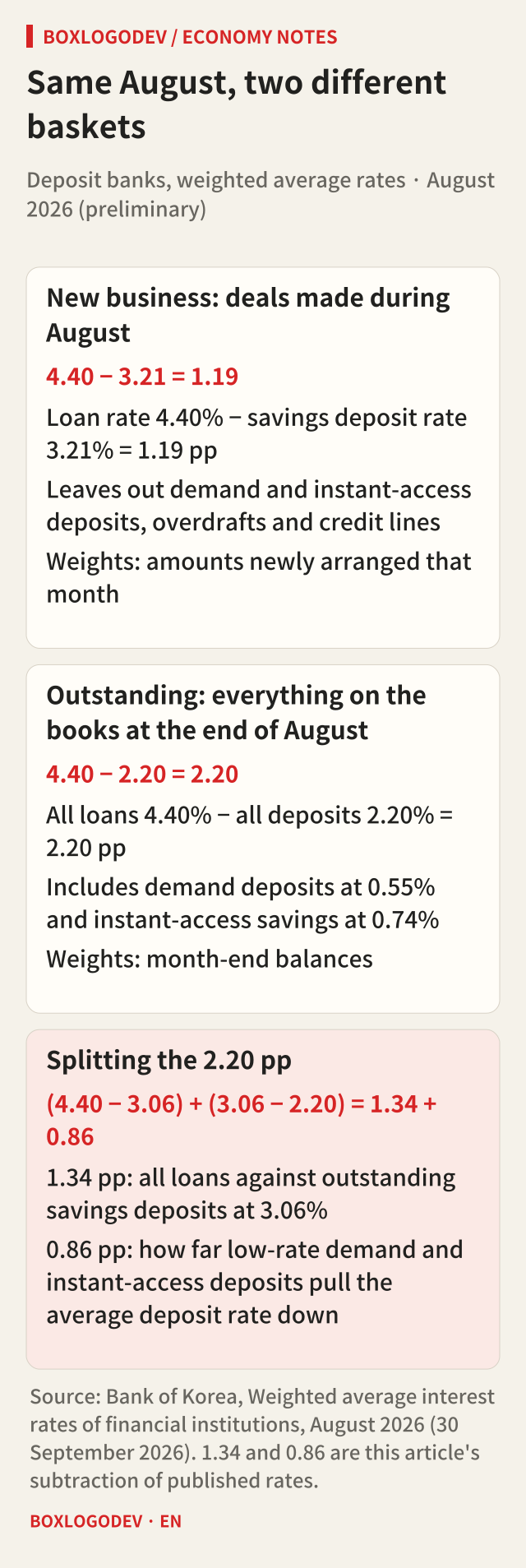
The Bank of Korea's release on weighted average interest rates for August 2026, published on 30 September 2026, gives the gap between banks' lending and deposit rates twice. Measured on deals made during August it is 1.19 percentage points. Measured on balances still on the books at the end of August it is 2.20 points. Same banks, same month, and one is almost double the other. When a headline says the loan-deposit spread widened or narrowed, the story depends on which number it means. This month the new-business spread widened by 0.13 points from July while the outstanding spread narrowed by 0.02.
After reading this you will be able to say what each number averages and why the outstanding-basis spread is always the larger one. Using only the figures in the release, we split the 2.20 points into two pieces, and a small calculation shows why outstanding rates move slowly.
The spread is the difference of two weighted averages
The loan-deposit spread is the rate a bank charges on loans minus the rate it pays depositors. The Bank of Korea's glossary of economic and financial terms calls it the essential source of bank income and adds that, depending on the purpose, it can be measured on new business or on outstanding balances. Both rates are weighted averages: each deal's rate is multiplied by its amount, the products are summed and divided by the total amount, so larger deals pull the average harder.
The two bases differ in what they average. The new-business basis averages the rates on deposits and loans arranged during the month, weighted by those new amounts. It shows the latest rate trend and is useful to someone about to open a deposit or take out a loan. It leaves out demand deposits and instant-access savings deposits on the funding side, and overdrafts and credit-line loans on the lending side. That is why the release's new-business spread is the loan rate minus the savings deposit rate.
The outstanding basis averages the rates on every deposit and loan left on the bank's books at the end of the month, weighted by month-end balances. It includes everything the new-business basis leaves out. The Bank of Korea describes it as giving comprehensive information on financial institutions' income through the spread.
Splitting the 2.20 points in two
The August outstanding figures show why. The rate on all loans is 4.40% a year and on all deposits 2.20%. Within those deposits, demand deposits average only 0.55% and instant-access savings deposits 0.74%. Without those two, the outstanding savings deposit rate is 3.06%.
So the 2.20 points can be split like this. All loans at 4.40% minus savings deposits at 3.06% gives 1.34 points. The 0.86-point gap between the 3.06% savings rate and the 2.20% all-deposit rate is how far deposits that pay almost no interest drag the average deposit rate down. 1.34 + 0.86 = 2.20. The 1.34 points is fairly close to the new-business 1.19, which means most of the difference between the two bases comes from including or excluding low-rate deposits. The rest arises because the new-business basis holds only that month's deals while the outstanding basis includes deals struck long ago.
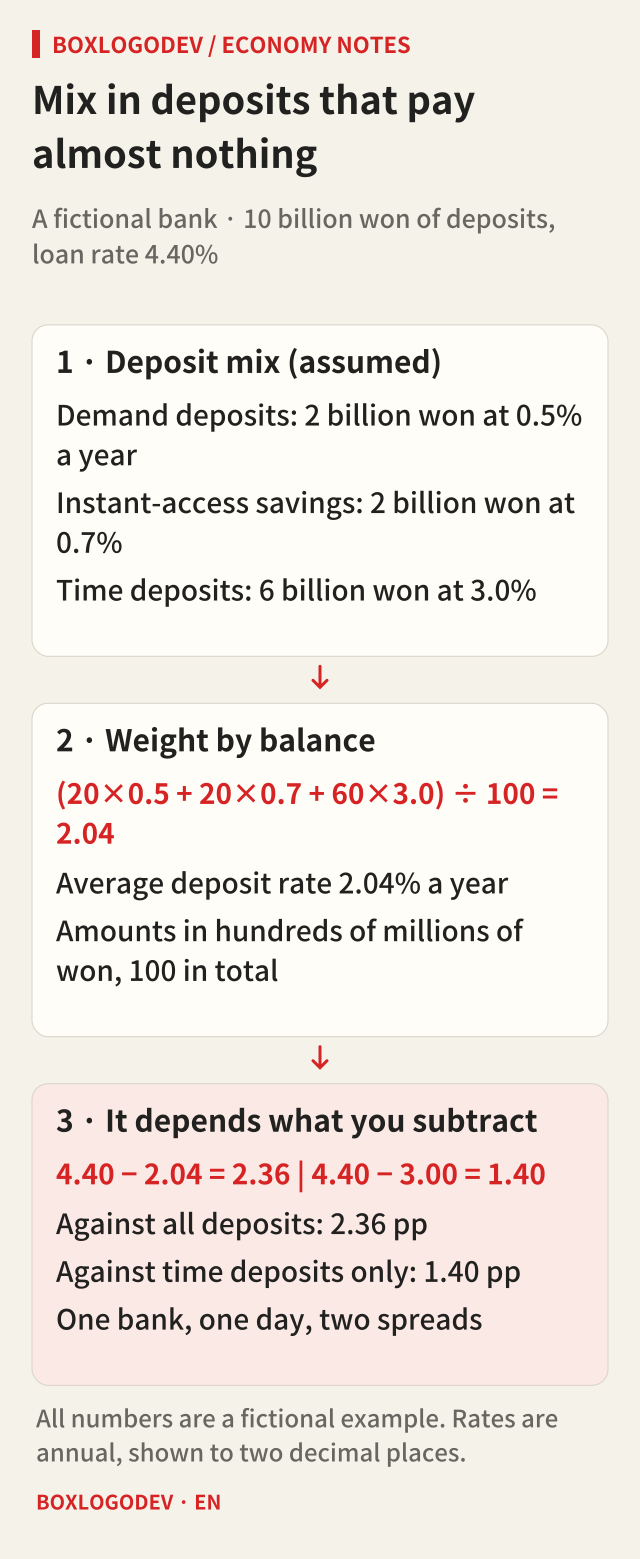
Try it with a small fictional bank. Of its 10 billion won of deposits, 2 billion won are demand deposits at 0.5% a year, 2 billion won are instant-access savings at 0.7% and 6 billion won are time deposits at 3.0%. Weighted by balance, counting in hundreds of millions of won, the average is (20×0.5 + 20×0.7 + 60×3.0) ÷ 100 = 204 ÷ 100, or 2.04% a year. With a 4.40% loan rate, the spread over all deposits is 2.36 points and over time deposits alone 1.40 points. Same bank, same day, and the spread differs by nearly a full point depending on what is subtracted.
Outstanding rates follow slowly
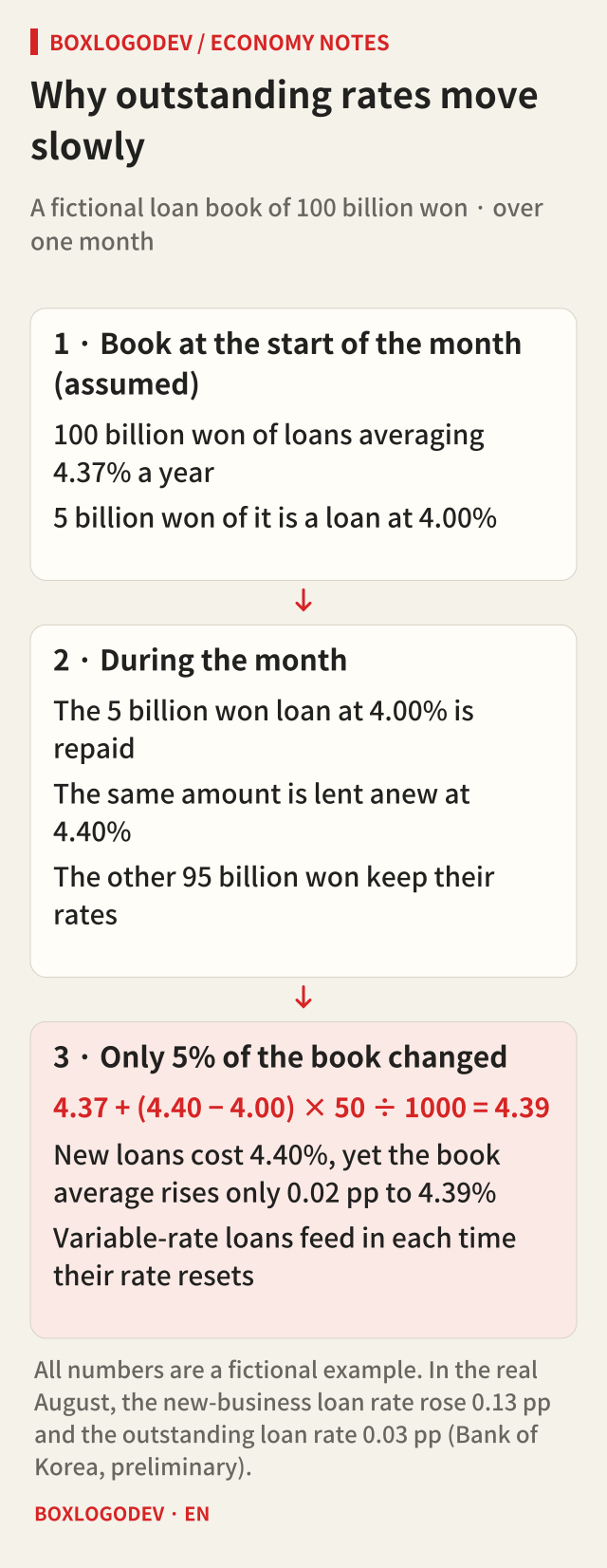
In August the new-business loan rate rose 0.13 points from July, while the outstanding loan rate rose 0.03. Outstanding balances are an average of loans built up over years, and only part of the book is replaced at new rates in any month.
Another fictional example. A bank has 100 billion won of loans averaging 4.37% a year. A 5 billion won loan at 4.00% is repaid, and the same amount is lent anew at 4.40%. Five percent of the book changed, by 0.40 points, so the average becomes 4.37 + 0.40 × 50 ÷ 1,000 = 4.39%. Although new loans cost 4.40%, the book average moves only 0.02 points. Fixed-rate loans stay on the book at their old rate until they mature or are repaid; variable-rate loans take on the new rate each time they reset. At the end of August, 42.7% of outstanding household loans were classified as fixed-rate (including periodic-reset loans whose rate changes every five years or less often).
Deposits work the same way: a time deposit already opened earns its contracted rate until maturity. So when rates rise, the new-business rate rises first and the outstanding rate follows, and the reverse when they fall.
Since 2016 the outstanding spread has been wider every month
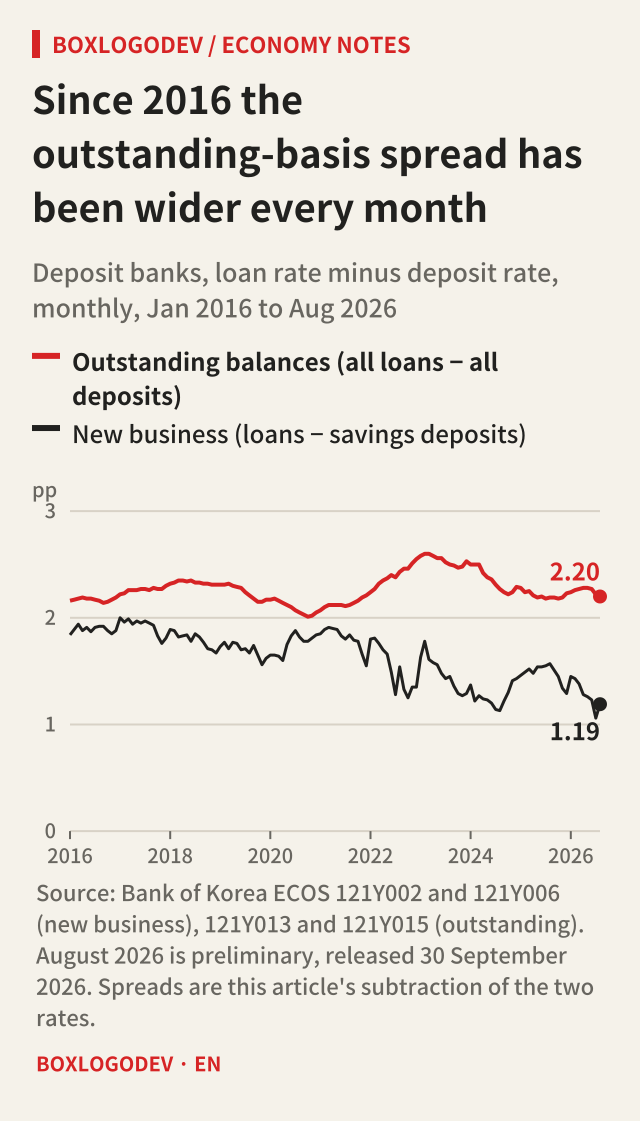
Calculating both spreads from the monthly series in the Bank of Korea's Economic Statistics System (ECOS) for the 128 months from January 2016 to August 2026, the outstanding spread ranged from 2.01 to 2.60 points and the new-business spread from 1.06 to 2.00, and the outstanding spread was the wider one in every month. The gap between them was narrowest at 0.19 points (July 2020) and widest at 1.28 (February 2024). The new-business low of 1.06 was July 2026.
The August 2026 values are preliminary and may be revised as source data are completed. Past movements do not mean the pattern will continue.
What to check when you read a spread
The loan-deposit spread is a difference between rates; it is not the interest income a bank actually earns. Deposit and loan amounts differ, and banks have income and costs beyond deposits and loans. A wider measure of profitability that also counts securities income is the net interest margin (NIM). This article does not recommend any deposit or loan product.
When you see a loan-deposit spread, check one thing first: is it on new business or on outstanding balances? The new-business spread compares loans and savings deposits arranged recently; the outstanding spread compares the whole book of loans with every kind of deposit. Mixing the two produces a gap of nearly a full point by itself. The release and its tables are at Bank of Korea, Weighted average interest rates of financial institutions, August 2026 (in Korean), and the monthly series are in the deposit-bank deposit and lending rate tables of the Bank of Korea Economic Statistics System (ECOS).
Add your perspective.
Share a question, another approach, or something you have tried.
Checking sign-in…
Loading comments…