"I close my eyes and paint what is inside."
The Norwegian painter Edvard Munch (1863–1944) was not simply an Expressionist.
He was an alchemist of emotion who put the deepest feelings of the human inner self, such as love, anxiety, death and madness, on canvas.
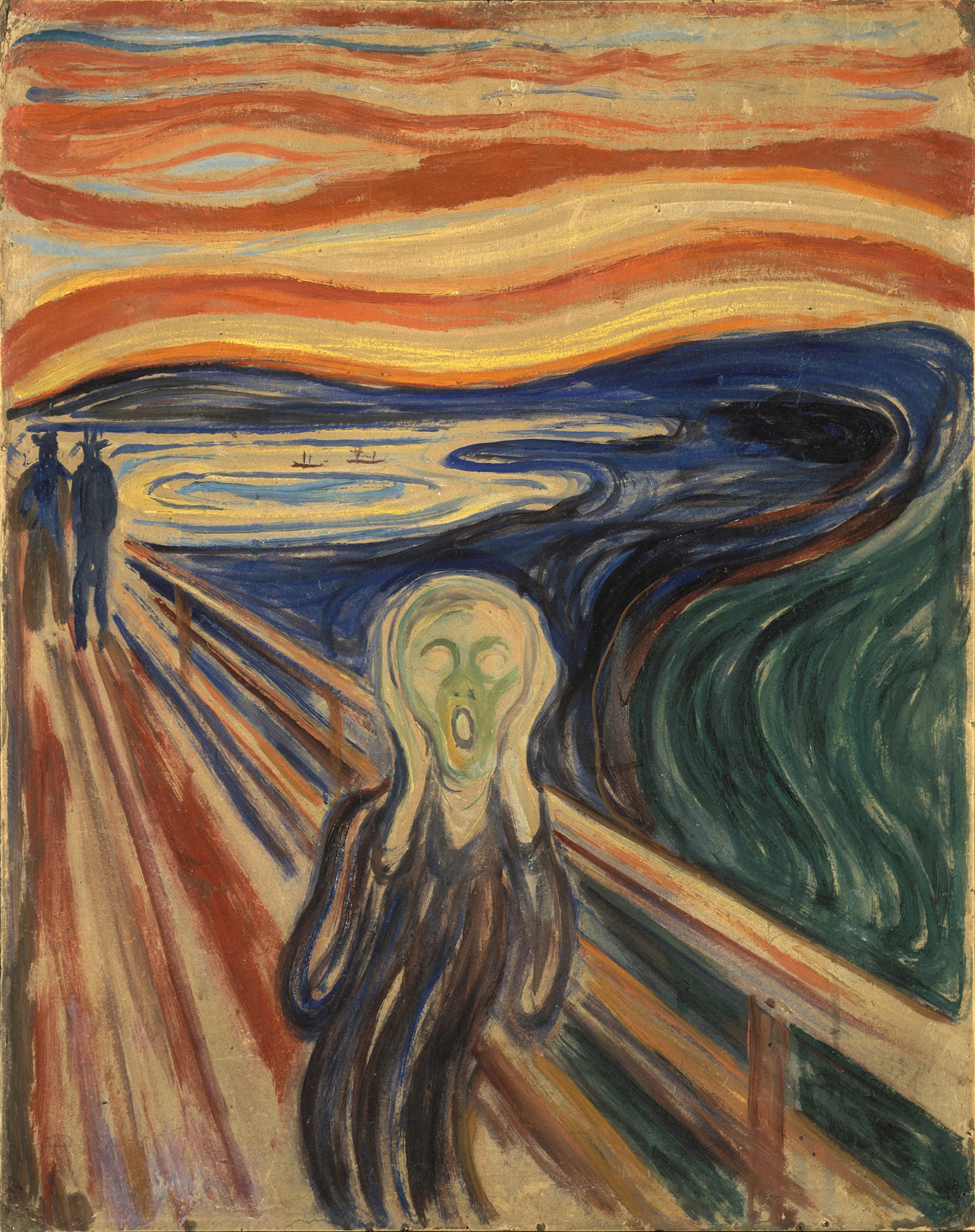
His best-known work is The Scream.
But his art is far too broad and deep to be explained by The Scream alone.
Today, let's look together at Munch's major works and the stories inside them.
😱 Major work 1: The Scream (1893)
One evening in 1893, Munch was walking along the Oslo fjord when he saw the sky turn red and felt a deep terror.
He wrote:
"I felt a great scream pass through nature."
That experience gave birth to The Scream. One version of this work contains a hidden inscription.
"Can only have been painted by a madman"
→ This message, discovered through infrared photography, was confirmed to be in Munch's own handwriting.
The figure cut off from the world, the twisted lines and the burning sky condense the anxiety, loneliness and madness Munch felt.
🧠 Major work 2: Anxiety (1894)
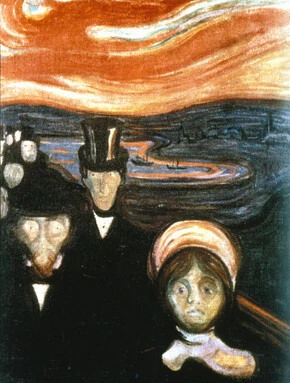
A sister work that shares the background of The Scream.
Several figures cross the bridge, but all of them are expressionless and do not connect with one another.
This work speaks of "loneliness in a crowd."
❤️ Major work 3: Madonna (1894–1895)
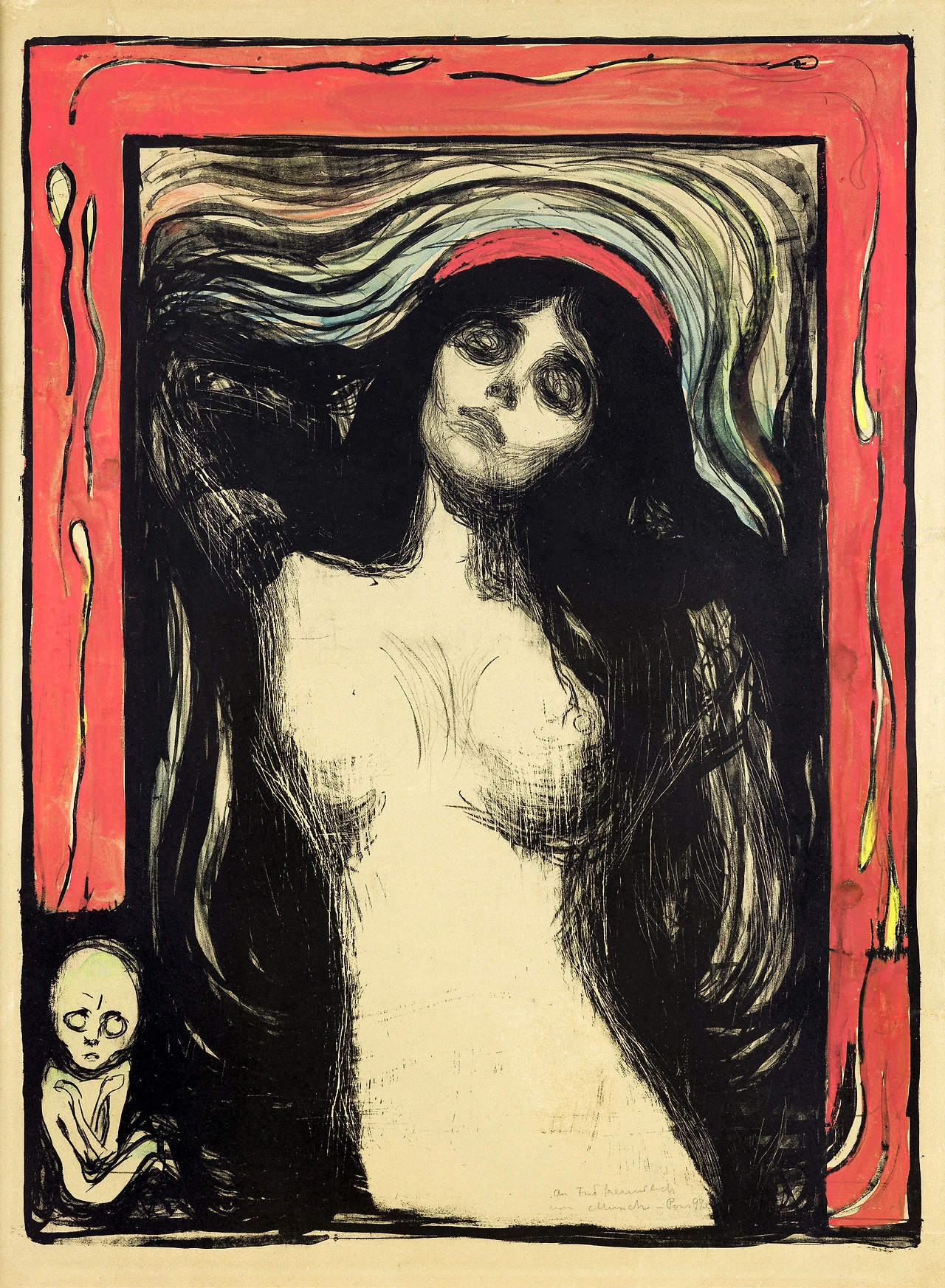
Not the traditional Virgin Mary, but an image of a woman where eroticism and death intersect.
Sensuality and mystery coexist in her calm expression, and the beginning and end of life exist at the same time.
🔄 Major work 4: The Dance of Life (1899–1900)
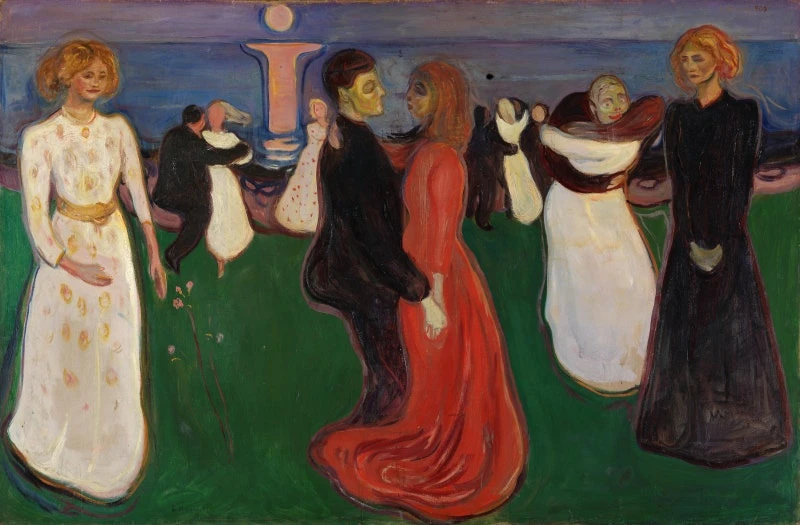
A series expressing the life of a woman.
▶ White dress (purity) → red dress (love) → black clothes (death)
It shows the cycle and transience of life, and the inescapable temporality of human existence.
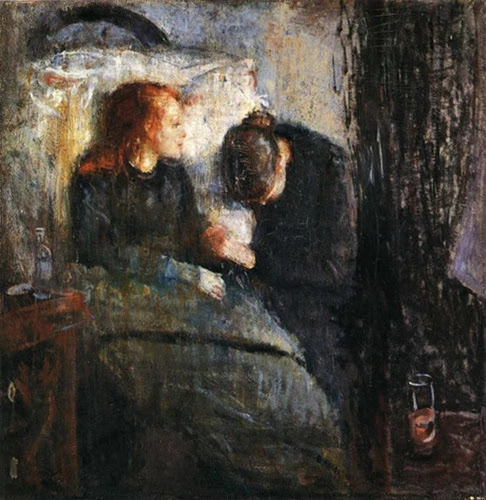
🩺 Major work 5: The Sick Child (1885–1886)
A work that holds the personal loss of his younger sister in childhood.
In the rough, repeated brushstrokes, the sadness and helplessness Munch felt are fully captured.
🦹 The Scream, Madonna and the theft
In 2004, masked robbers stole "The Scream" and "Madonna" from the Munch Museum.
It shocked the world, and two years later the works were safely returned.
Ironically, the incident reconfirmed how much symbolic weight Munch's works carry in modern society.
✍️ Why did Munch keep painting pain?
He lived his whole life with anxiety, depression and a sense of loss.
He lost his mother and sister to illness, and he himself spent time in treatment for mental illness.
For Munch, painting was therapy and confession.
"Illness, madness and death were the black angels that kept watch over my cradle."
He did not hide his emotions.
Instead, he brought them out as they were and tried to share them with the world.
🧭 In closing
The Scream is a painting of Munch's personal pain,
but it remains a valid symbol for us living in this era.
He was speaking through painting.
"My paintings depict the pain I went through, and your pain too."
So, where is your scream now?