The first species in this dinosaur guide is Tyrannosaurus. The name is famous, but the animal the record shows is a little different from the movie image: a skull longer than a person is tall, 60 teeth, and skin covered in scales. Alongside the basic record, this guide adds the animal's build, size comparisons and the story of its discovery.
The record at a glance
| Scientific name | Tyrannosaurus rex. Named by Henry Fairfield Osborn in 1905. |
|---|---|
| Name meaning | 'Tyrant lizard king' — from the Greek tyrannos (tyrant) and sauros (lizard), with the Latin rex (king). |
| Era | Late Cretaceous, about 68–66 million years ago. It lived through the last two million years of the dinosaur age. |
| Length | Usually estimated at about 12 metres. The largest known specimens, Sue and Scotty, reached about 13 metres. |
| Height at the hips | About 3.5–4.0 metres — standing on two legs, its hips were as high as a ground-floor ceiling. |
| Weight | Usually estimated at 5,000–7,000 kg, with the largest specimens over 8,000 kg. Estimates vary by specimen, so ranges are given. |
| Diet | Carnivorous. Sixty teeth, the largest up to 20 cm, could crunch through bone. |
| Found in | Late Cretaceous rocks of the USA and Canada. |
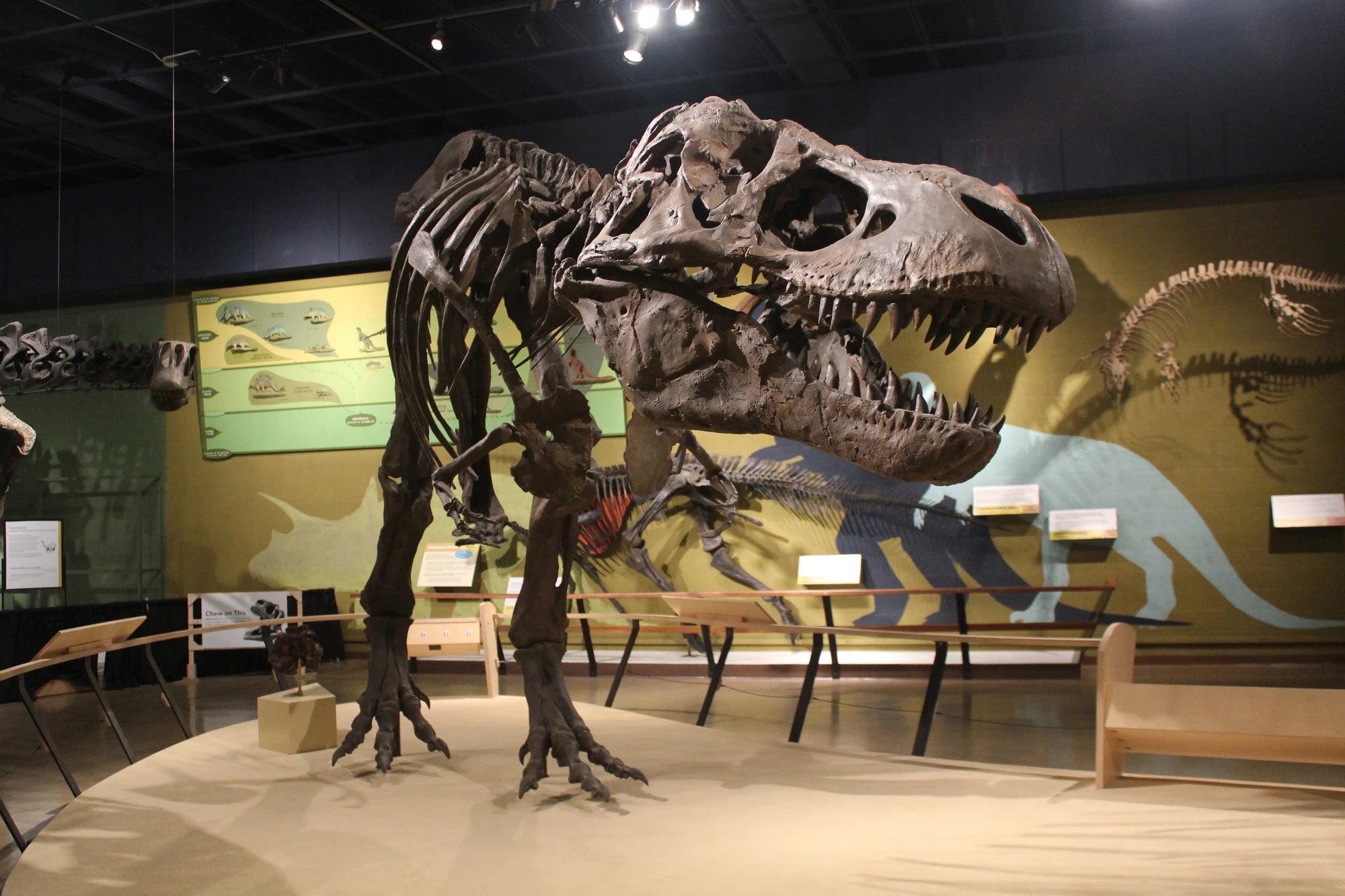

The build — weapons concentrated in the head
The Tyrannosaurus body concentrated its power in the head and the hind legs. In large specimens the skull measured over 1.5 metres, longer than a person is tall. The eyes faced forwards, well placed for judging distance to prey, and the short, thick neck carried the heavy head. Behind the body, the long tail balanced the head's weight, while two muscular hind legs did the walking.
Its standout sense was smell. A large part of the brain processed odours, so it could probably find prey — and dead animals — by scent over long distances. Speed, on the other hand, was not what the films suggest: an adult's top speed is estimated at around 22 kilometres per hour, with younger animals likely faster.

Size comparisons — a bus and an elephant
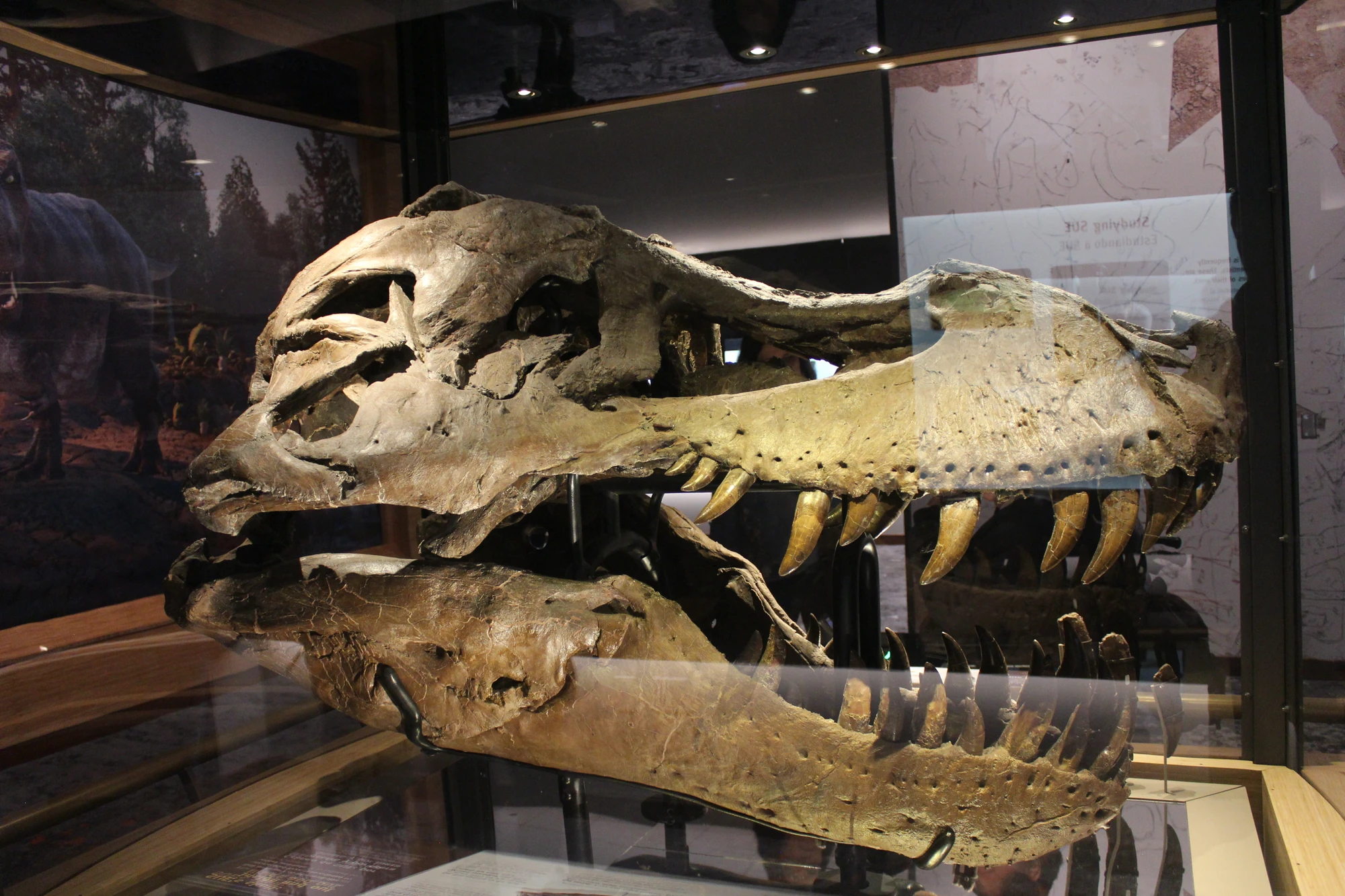
Numbers alone are hard to picture, so here are familiar yardsticks. A length of about 12 metres is about the length of a city bus, or a little more. A weight of 5,000–7,000 kg matches a fully grown male African elephant. The 1.5-metre skull is longer than an adult is tall, and the largest teeth, at 20 cm, are about the span of an adult hand. And with hips 3.5–4.0 metres off the ground, even the dinosaur's hips — not its eyes — were already at ceiling height.
Food and hunting — what the fossils show
The bite of Tyrannosaurus is rated the strongest of any known land animal — three to five times more powerful than a lion's. Its tooth marks have actually been found on Triceratops and Edmontosaurus fossils, and its fossilised dung contains pieces of crunched bone: it swallowed bone along with the meat.
How it hunted is not settled. Its sense of smell would have served it both for hunting live prey and for locating carcasses to scavenge. Whether it hunted in packs is unconfirmed. What fossils do show is that they fought each other: some Tyrannosaurus bones carry bite marks from other tyrannosaurs, though whether the fights were over food or something else is unclear.

Discovery — the king that nearly had another name
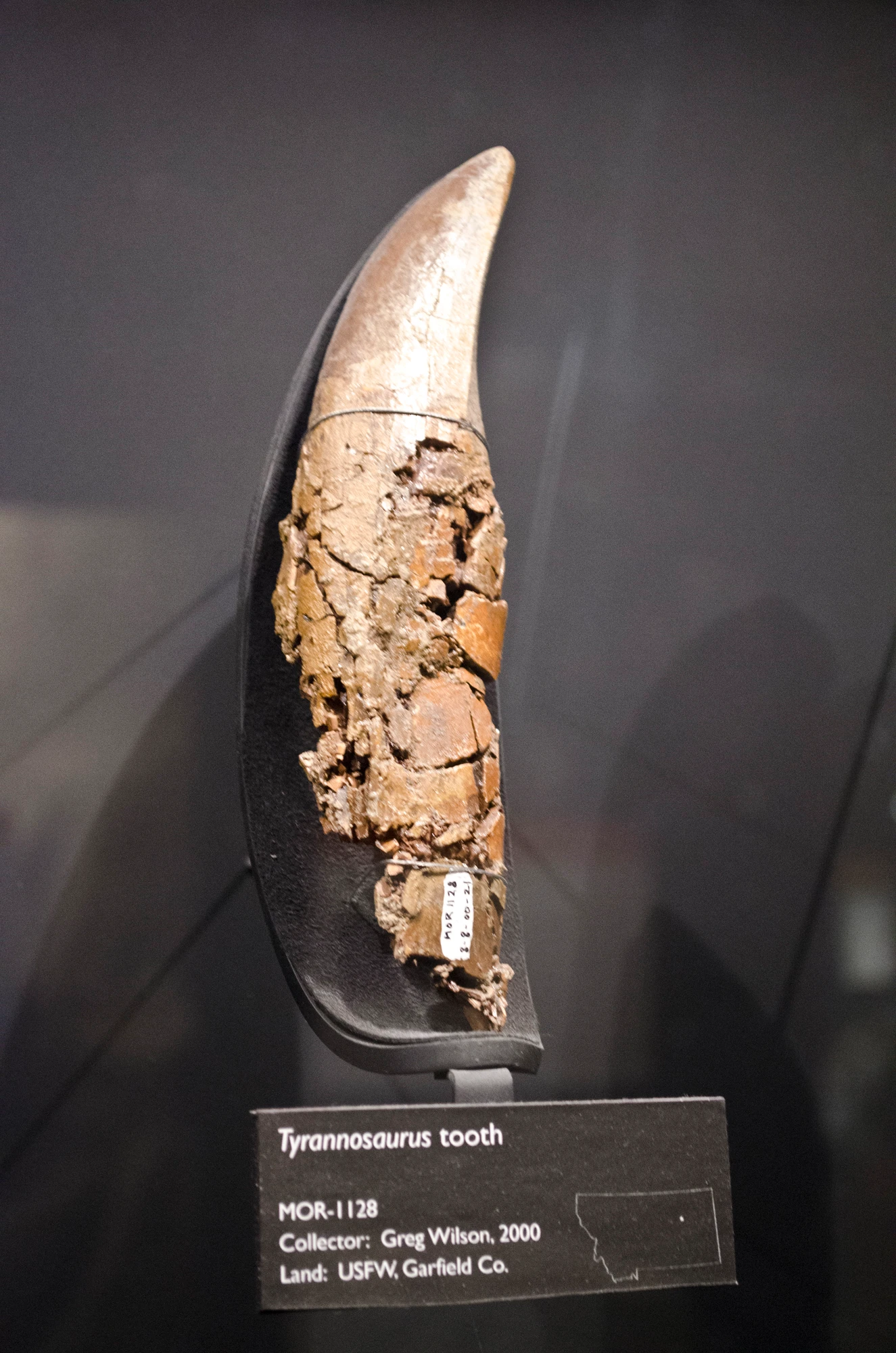
The name Tyrannosaurus was not a given. When some of the first bones were reported in 1892, they were thought to belong to a Triceratops-like dinosaur and were named Manospondylus gigas. The first real skeletons came in 1900 in Wyoming and in 1902, both found by the fossil collector Barnum Brown. Osborn named the animal Tyrannosaurus in 1905, and only later did scientists realise the two names belonged to the same dinosaur. Naming rules normally give priority to the earlier name, but Tyrannosaurus was by then so widely used that it stayed.
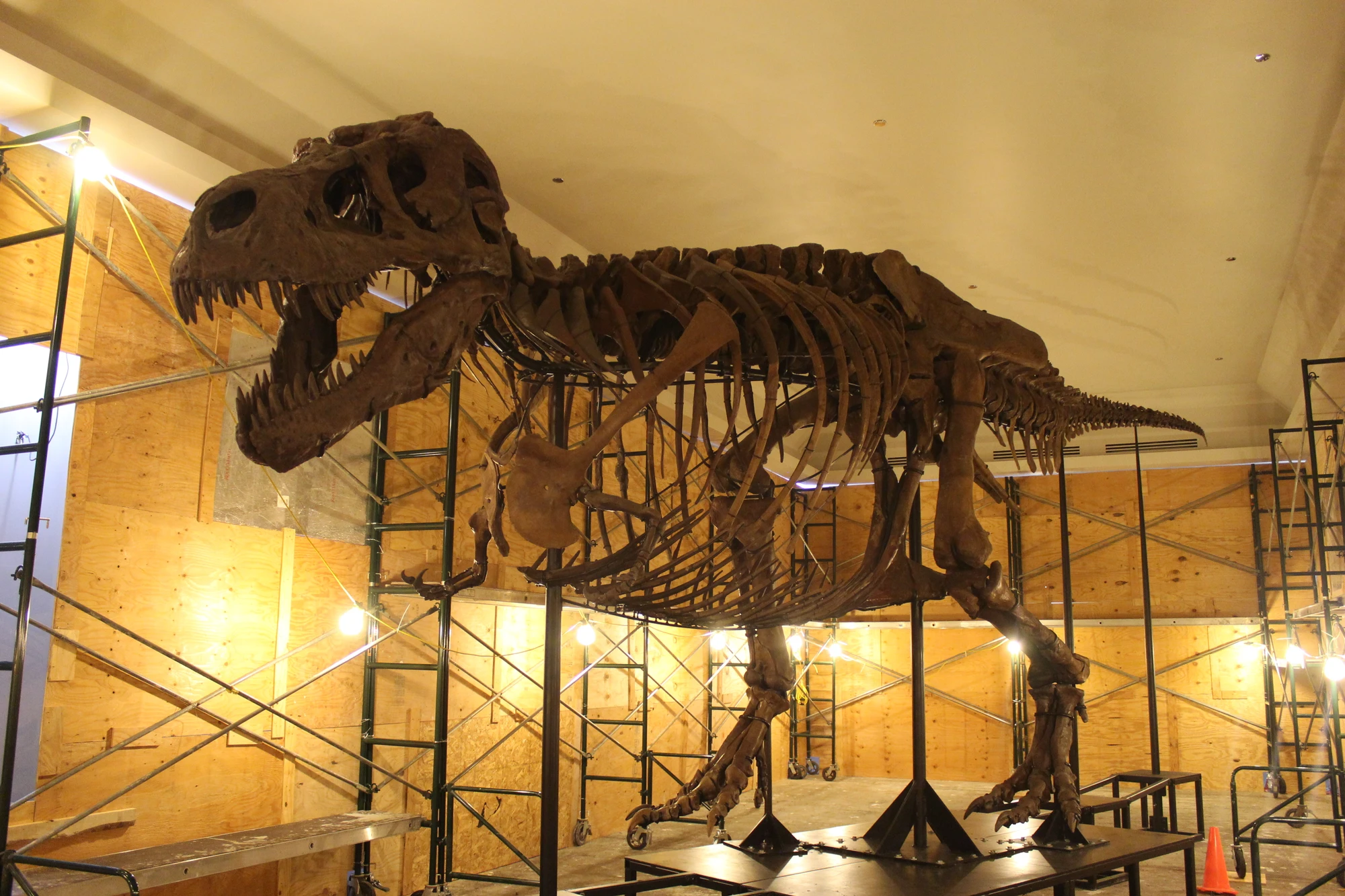
The largest known specimens, Sue and Scotty, were both about 13 metres long and over 8,000 kg, and jointly hold the size record for the species. Sue's mounted skeleton at the Field Museum in Chicago is the specimen most often used as the yardstick.

The short arms are still debated
Why a 12-metre animal carried arms barely a metre long is unresolved. They may have helped it push itself up after a fall, helped it grip food, or helped it hold a mate. Muscle scars survive on the bones, but no fossil settles the question. Given an estimated top speed of about 22 km/h, falls may have been common enough that getting up mattered. Young animals had arms that were larger in proportion to their bodies, which suggests the arms mattered less once the jaws took over the work of handling prey.
Scales, not feathers — on current evidence
Preserved skin shows scales. There is still no direct evidence of feathers on Tyrannosaurus itself; feathered relatives such as Yutyrannus are a different matter. Yutyrannus lived in a cold climate, where a feathery coat would have helped it keep warm, while Tyrannosaurus lived somewhere warm and humid and was big enough to hold its own heat. Full feather coverings in reconstructions remain in the realm of speculation.
Where to see one in Korea
A Tyrannosaurus specimen is on display in the central hall of the Geological Museum at the Korea Institute of Geoscience and Mineral Resources in Daejeon. The hall also holds Edmontonia, Maiasaura, Stegosaurus and dinosaur eggs, so the size comparisons above can be checked against real skeletons in one room. Admission is free (opening hours 10:00–17:00, checked on the museum's official page in October 2026). The official page does not say whether the specimen is an original fossil or a cast, so check the on-site labels as well.
Sources
- Natural History Museum, London — Dino Directory, "Tyrannosaurus" — nhm.ac.uk
- Geological Museum (KIGAM), central hall guide — kigam.re.kr