Volume 4 of Minumsa's World Literature series is Franz Kafka's The Metamorphosis and A Country Doctor. It is a collection of stories named after two of them: "The Metamorphosis," famous for its first sentence about a man who wakes up one morning as a huge insect, and "A Country Doctor," about a doctor called out on a winter night. After reading this, you will be able to see how the three parts of "The Metamorphosis" are built, follow how the family changes around Gregor after his transformation, and see why "A Country Doctor" is worth reading in the same book.
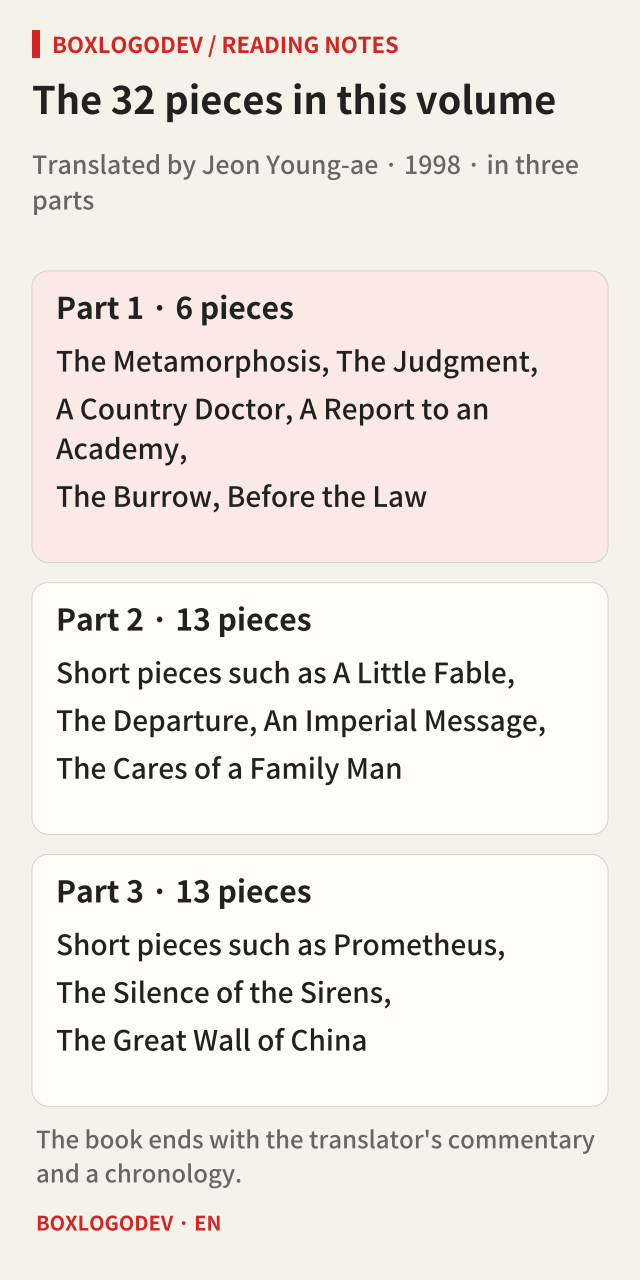
Translated by Jeon Young-ae, 32 pieces in three parts
The Minumsa edition was translated by the German literature scholar Jeon Young-ae, professor emerita at Seoul National University, and published in 1998. Its 288 pages hold 32 stories and short prose pieces in three parts. Part 1 contains six: "The Metamorphosis," "The Judgment," "A Country Doctor," "A Report to an Academy," "The Burrow" and "Before the Law." Parts 2 and 3 each continue with thirteen shorter pieces, many only a page or two long, such as "An Imperial Message" and "The Silence of the Sirens." The book ends with the translator's commentary, titled "The Way to Kafka, Kafka's Way," and a chronology of the author's life. The publisher says the selection was made to serve as a reliable guide to what is Kafkaesque.
Kafka was born in Prague in 1883, the son of a Jewish merchant, studied law, and wrote at night while holding a day job. According to the publisher's author note, "The Metamorphosis" was finished in December 1912 and appeared as a book in 1915. When he died in 1924 he left instructions that his remaining manuscripts be destroyed, but his friend Max Brod kept them and published them.
The transformation is over in the first sentence
"The Metamorphosis" has no scene of transformation. When the travelling salesman Gregor Samsa wakes from troubled dreams, he has already changed in his bed. The German original calls him only a "monstrous vermin" (Ungeziefer). The word does not name a particular insect; it covers small creatures thought of as useless and unclean. Later the charwoman calls him an "old dung beetle," but that is closer to teasing than to a description. When the book was being published in 1915, Kafka reportedly told his publisher that the insect itself must not be drawn.
So the story makes you follow not what he has become but what happens next. The first thing Gregor worries about is not his body but that he has missed the five o'clock train. He still has to catch the seven o'clock, and he frets about what his employer will say if he fails to turn up. Meanwhile the firm's chief clerk comes to the flat in person. Even on the first morning in his new body, his head is full of work and debt.
Three parts, three doors
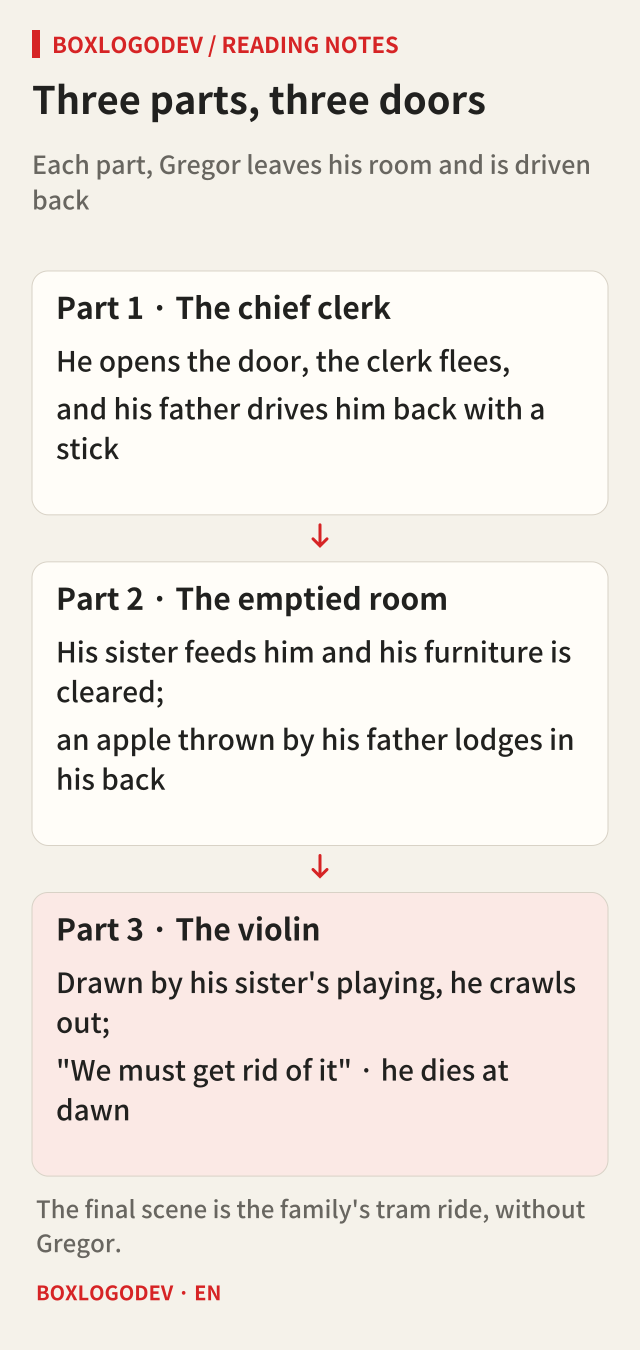
The story is divided into three parts, and something similar happens in each. Gregor comes out of his room, and the family drives him back in. In Part 1 he turns the key with his mouth and opens the door, but the chief clerk flees, and his father seizes the stick the clerk left behind and a newspaper and drives him back into his room. Stuck in the doorway, Gregor is shoved from behind by his father and flies into the room, bleeding.
In Part 2 his sister Grete spreads a choice of foods on an old newspaper to find out what he will eat, and tries to clear out the furniture so that he can crawl the walls more freely. When his father sees him outside his room, he throws apples one after another, and one lodges in Gregor's back. No one dares to remove it, and it rots there throughout Part 3. In Part 3 Gregor is drawn by his sister's violin into the living room, where the lodgers are. This time no one hits him. Instead his sister says they must get rid of him.
Who changed into what
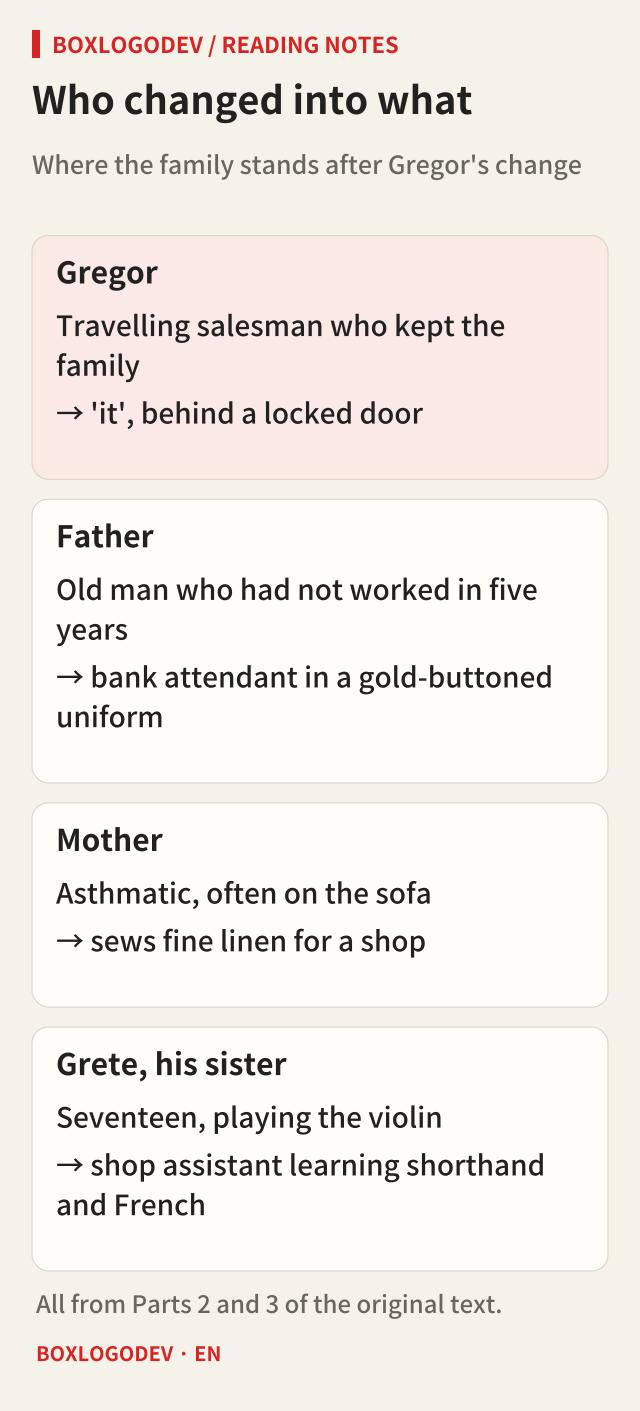
After Gregor's transformation, what changes most is the family's life. In Part 2, listening through the door, he learns for the first time that a little money survived the collapse of his father's business five years earlier, and that the money he brought home each month had not all been spent but had built up. He reflects that with it his father's debt to his employer could have been paid off sooner, bringing closer the day he could quit his job, yet he is still pleased by his father's prudence.
The money would last only a year or two, so the family goes out to work. The father, who had not worked for five years and had grown heavy and slow, appears upright in a bank attendant's uniform with gold buttons, and refuses to take it off even at home. The mother, who suffers from asthma, sews fine linen for a shop, and his seventeen-year-old sister, who loved playing the violin, becomes a shop assistant and studies shorthand and French in the evenings. Gregor's secret plan to send her to the conservatory is now useless.
The final pages of Part 3 make the change plain. On the day Gregor dies, the three of them leave the flat together for the first time in months and take the tram out into the country. In the sunlit carriage they find that their three jobs are better than they had realised, and they talk of moving to a smaller, cheaper flat than the one Gregor had chosen. And the parents notice, almost at the same moment, that their daughter has blossomed into a beautiful young woman. The story ends as she rises first and stretches her young body. It was Gregor who became vermin, but in the last scene it is the family who look newly born.
Why read "A Country Doctor" alongside it
"A Country Doctor" is a short story. On a snowy night an old country doctor must reach a gravely ill patient in a distant village, but his own horse died the night before. When he kicks open the door of a disused pigsty, a stranger, a groom, crawls out with two horses. The groom seizes the maid Rosa, and the doctor is carried to the patient's house in an instant. The boy first whispers, "Doctor, let me die." The doctor judges at first that the boy is healthy, and only on a second look finds a wound the size of a palm open in his right side. The villagers strip the doctor and lay him in bed beside the patient, and he ends up naked on one of the horses, the carriage trailing behind, wandering endlessly through the snow.
Set side by side, the two stories share a shape. In each, a person who worked for others loses his place after one night or one morning, a family watches, and a wound in the body will not heal. Gregor lies with the apple lodged in his back; the boy lies with the wound in his side. It is also worth remembering that the collection A Country Doctor, which Kafka published in his lifetime, carried the dedication "To my father."
What to mark as you read
First, what his sister calls Gregor. On the first morning in Part 1 she pleads through the door, "Gregor, open up," but at the family's final conference in Part 3 she says she will not speak her brother's name in front of this creature and calls him "it." Mark where that change begins.
Second, doors and keys. In Part 1 Gregor turns the key himself to open his door. From Part 2 on, the keys are on the outside, and in Part 3, as soon as he is back in his room, his sister locks the door with a cry of "At last!" In "Before the Law," also in Part 1, a man from the country waits his whole life before an open door he is never allowed through. In this book, doors keep standing in the same place.
Third, Gregor's own thoughts. He hardly ever blames his family. Even on his last night he is described as thinking of them with tenderness and love, perhaps even more convinced than his sister that he must disappear. Whether to read this as generosity or as a habit of erasing himself to the end is for the reader to decide.
If you try just one thing
As you read "The Metamorphosis," keep two separate lines in the margin. On one, note how Gregor's body changes; on the other, how the family's work, clothes and way of speaking change. In the first pages only the upper line fills up, but by the last pages the lower line will be much longer. The length of those two lines tells you whose metamorphosis the title is really about.
Add your perspective.
Share a question, another approach, or something you have tried.
Checking sign-in…
Loading comments…