Volume 5 of Minumsa's World Literature series is George Orwell's Animal Farm. It is the fable in which animals drive out their owner, run the farm themselves and end up worse off than before, and it is best known for the line “All animals are equal but some animals are more equal than others.” After this guide you will be able to track which of the Seven Commandments on the barn wall change, in which chapter and by which words. You will also see that what makes those changes possible is not force alone but the question of who writes and who has to rely on memory, and how to read the two essays printed in the same volume alongside the novel.
Translated by Do Jeong-il: one novel and two essays
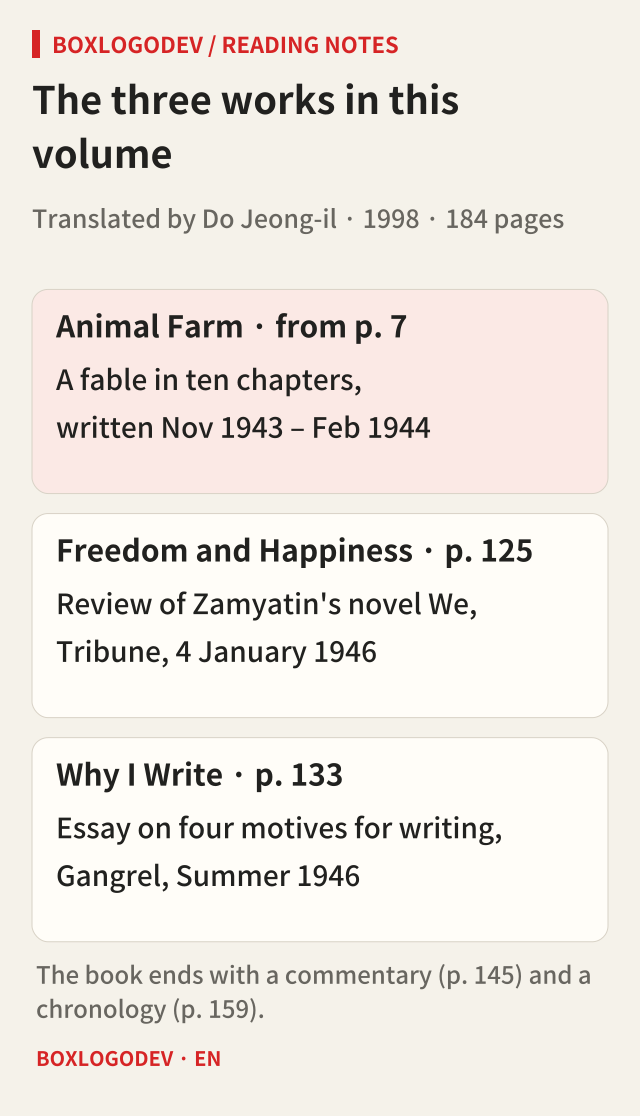
The Minumsa edition was translated by Do Jeong-il, a literary critic who taught in the English department of Kyung Hee University, and published in 1998. Its 184 pages hold the ten-chapter novel from page 7, followed by “Freedom and Happiness” on page 125 and “Why I Write” on page 133. “Freedom and Happiness” is Orwell's review of Yevgeny Zamyatin's novel We, published in the weekly Tribune in January 1946; “Why I Write” appeared in the magazine Gangrel in the summer of the same year. The book ends with a commentary and a chronology.
Orwell was born Eric Arthur Blair in Bengal, India, in 1903 and went to school in England. From 1922 he served in the imperial police in Burma, then resigned and lived through hard times in Paris and London before becoming a writer. He recorded his service in the Spanish Civil War in Homage to Catalonia, and, going by the dates at the end of the text, wrote Animal Farm between November 1943 and February 1944. According to the publisher's notes, the novel was turned down by several publishers before Secker & Warburg brought it out in 1945. Orwell died of tuberculosis in 1950.
Seven lines written as an unalterable law
The novel opens with old Major, a prize boar, addressing the animals at night. Their lives are miserable, laborious and short, he says, because almost everything their labour produces is stolen by human beings; remove Man and the root cause of hunger and overwork disappears. Major dies three nights later, but his song, “Beasts of England,” and his ideas remain. One midsummer weekend the farmer, Mr Jones, gets drunk in town and does not come back, and his men do not feed the animals either. By evening the hungry animals rise up and drive Jones and his men off the farm.
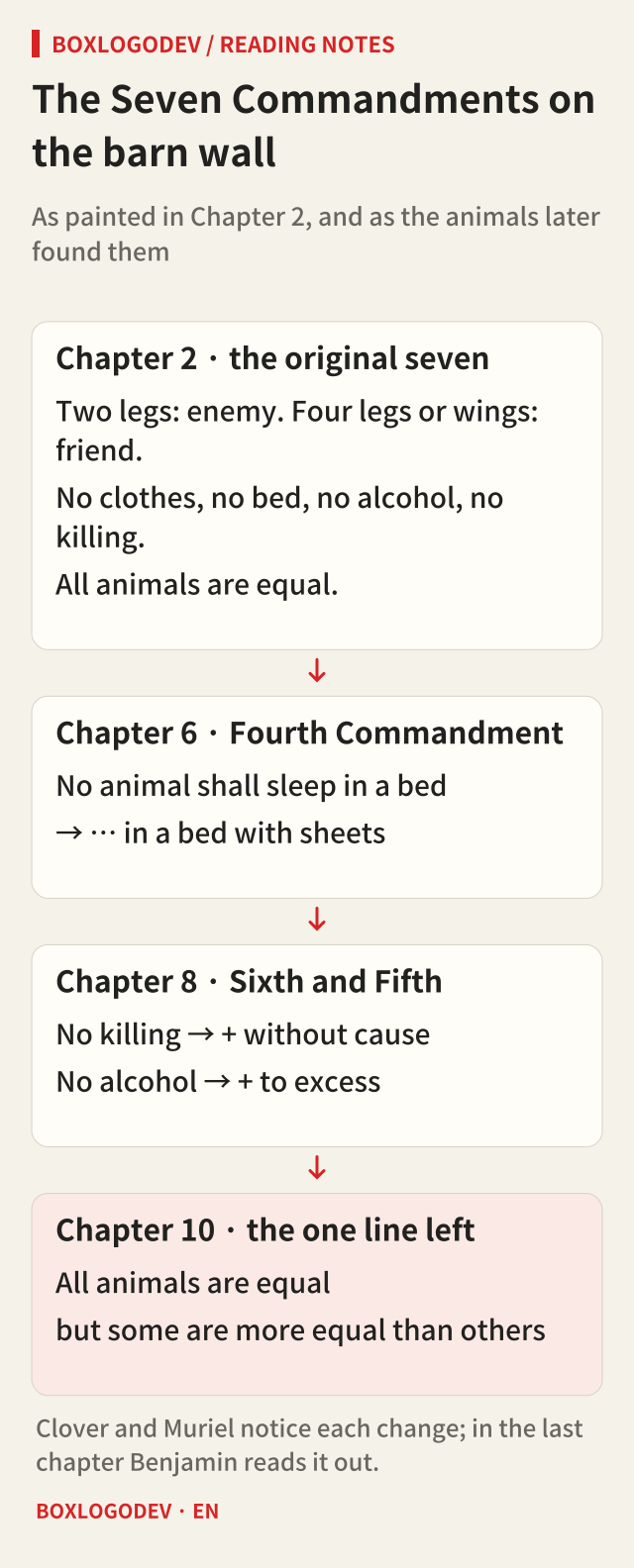
That day Snowball, one of the pigs, paints out MANOR FARM on the gate and writes ANIMAL FARM in its place. The pigs then reduce the principles of Animalism they have worked out to Seven Commandments and paint them in large white letters on the barn wall. Snowball climbs the ladder and writes; Squealer stands a few rungs below holding the paint-pot. The text says these commandments would form an unalterable law by which the animals must live for ever after.
The commandments are not erased, only extended
The thing most worth watching in this novel is how the commandments change. The pigs never erase them. They add a few words. In Chapter 6, when word spreads that the pigs have moved into the farmhouse and sleep in beds, Clover the mare thinks she remembers a rule against beds and asks Muriel the goat to read her the Fourth Commandment. The wall says: “No animal shall sleep in a bed with sheets.” Clover had not remembered any mention of sheets, but since it is on the wall, she accepts that it must always have been there.
In Chapter 8 the same thing happens twice. After the executions in Chapter 7, the animals recall the Sixth Commandment, “No animal shall kill any other animal,” but the wall now ends with “without cause.” Some time later there is a loud crash in the yard at midnight, and at the foot of the barn wall where the commandments are written the animals find Squealer sprawled beside a ladder broken in two, with an overturned pot of white paint. Muriel then notices that the Fifth Commandment, against alcohol, now ends with “to excess.” Before this, the pigs had found a case of whisky in the farmhouse cellar.
In the final chapter Clover, old now and with failing eyes, says the wall looks different and asks Benjamin the donkey to read it to her. Only one line is left: all animals are equal, but some animals are more equal than others.
Who writes, who reads, who repeats
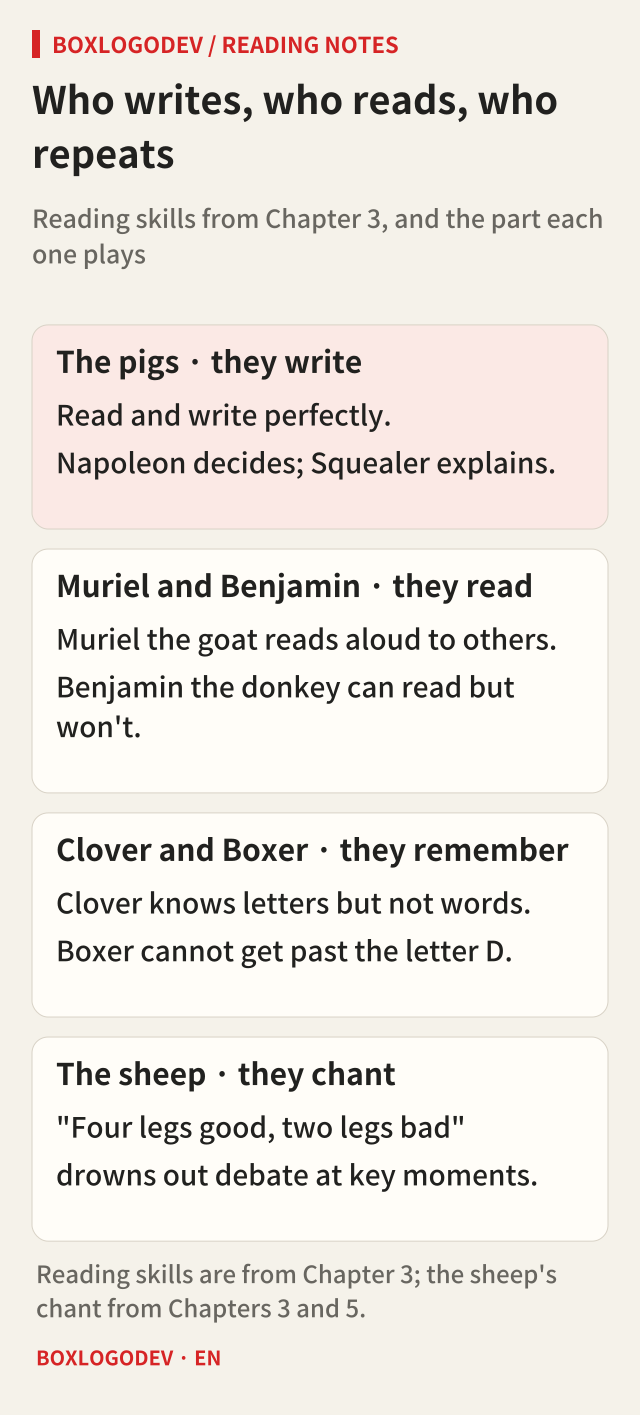
Why these changes work is set out in advance in Chapter 3. By the autumn of the first year the pigs can read and write perfectly. The dogs read fairly well but care about nothing except the Seven Commandments, and Muriel reads a little better than they do. Benjamin can read as well as any pig but never uses the ability, saying there is nothing worth reading. Clover learns the whole alphabet but cannot put words together, and Boxer, the strongest worker on the farm, never gets past the letter D.
Once the writers and the rememberers are different animals, the sentence on the wall beats memory. The text keeps saying that the animals remembered something, or thought they remembered it. The sheep support this arrangement in their own way. They take up “Four legs good, two legs bad,” the maxim Snowball boiled the commandments down to, and in Chapter 5 they break into it at crucial moments in the meetings, cutting off debate. Boxer adopts two sentences as his principles: “I will work harder” and “Napoleon is always right.” When he collapses in Chapter 9, the van that takes him away bears the name of a horse slaughterer, and it is Benjamin who reads it out. Squealer explains that the vet who bought the van simply had not yet painted out the previous owner's name.
Reading it as a fable, reading it as history
The publisher's notes map the characters onto the Russian Revolution one by one: Jones is Nicholas II, Major is Marx, Napoleon is Stalin and Snowball is Trotsky. With that key in mind, you can see which events the windmill or the executions are aimed at. But the story reads just as clearly without the map, because the changing commandments are not about one country; they are about how whoever holds the record rewrites the past.
The two essays in the volume show the author's own thinking directly. In “Why I Write” Orwell names four great motives for writing — sheer egoism, aesthetic enthusiasm, historical impulse and political purpose — and says Animal Farm was the first book in which he tried, with full consciousness, to fuse political purpose and artistic purpose into one whole. “Freedom and Happiness” deals with Zamyatin's future state, built on the principle that happiness and freedom are incompatible. Read the novel first and the essays afterwards, and the bargain the pigs offer the other animals comes back into view.
What to mark as you read
First, the phrase “unalterable law” appears twice. In Chapter 2 it describes the Seven Commandments; in Chapter 10 it is what Benjamin calls hunger, hardship and disappointment, the unalterable law of life. Work out what changes and what stays the same between those two sentences.
Second, the animal holding the brush. In Chapter 2 it is Snowball who paints the farm's name and the commandments, but on that night in Chapter 8 it is Squealer lying beside the ladder. Each time a commandment changes, note who was there.
Third, the final scene. Napoleon tells the neighbouring farmers that the farm will be called the Manor Farm again, and the animals at the window look from pig to man and from man to pig until they can no longer tell which is which. Put the sign on the gate in Chapter 2 next to this announcement and you can measure the distance the ten chapters cover.
If you do just one thing
When you reach Chapter 2, copy the Seven Commandments onto a separate sheet of paper. Then, as you read on, each time a change comes to light, write the chapter number and the animal who noticed it next to the line. None of the animals in the novel had a sheet like that. By the last chapter, yours will show how much a single written record in your own hands can protect.
Add your perspective.
Share a question, another approach, or something you have tried.
Checking sign-in…
Loading comments…