Volume 6 of Minumsa's World Literature series is Mark Twain's Adventures of Huckleberry Finn. Huck, a boy escaping his drunken father, and Jim, an enslaved man who has run away rather than be sold, float down the Mississippi on a raft. It is known as an adventure story, but at its centre is a scene in which Huck tears up a letter he has written himself. After this guide you will be able to follow why Huck says he will “go to hell” as he tears it, and which earlier scenes build up to that moment. It also sets out how to approach the long-running argument over the last twelve chapters.
Translated by Kim Wook-dong from the “comprehensive edition”
The Minumsa edition, translated by the English literature scholar Kim Wook-dong, came out in 1998 and runs to 672 pages. According to the publisher, the translation is based on the so-called comprehensive edition published by Random House in the United States in 1996. That edition was assembled after the handwritten manuscript of the novel's first half, long thought lost, was found, and it includes episodes and wording missing from the earlier text. The book ends with the translator's commentary and a chronology of the author's life.
Mark Twain was born Samuel Langhorne Clemens in Missouri in 1835 and grew up in Hannibal on the Mississippi. He worked as a typesetter, a steamboat pilot and a newspaper reporter before becoming a writer. Adventures of Huckleberry Finn appeared in Britain in December 1884 and in the United States the following February; Twain died in 1910. The novel is told entirely in Huck's own voice. From the first sentence Huck introduces himself as the boy from a book called The Adventures of Tom Sawyer and remarks that Mr. Mark Twain, who wrote it, told the truth, mainly.
Four settings: the town, the river, the swindlers, the farm
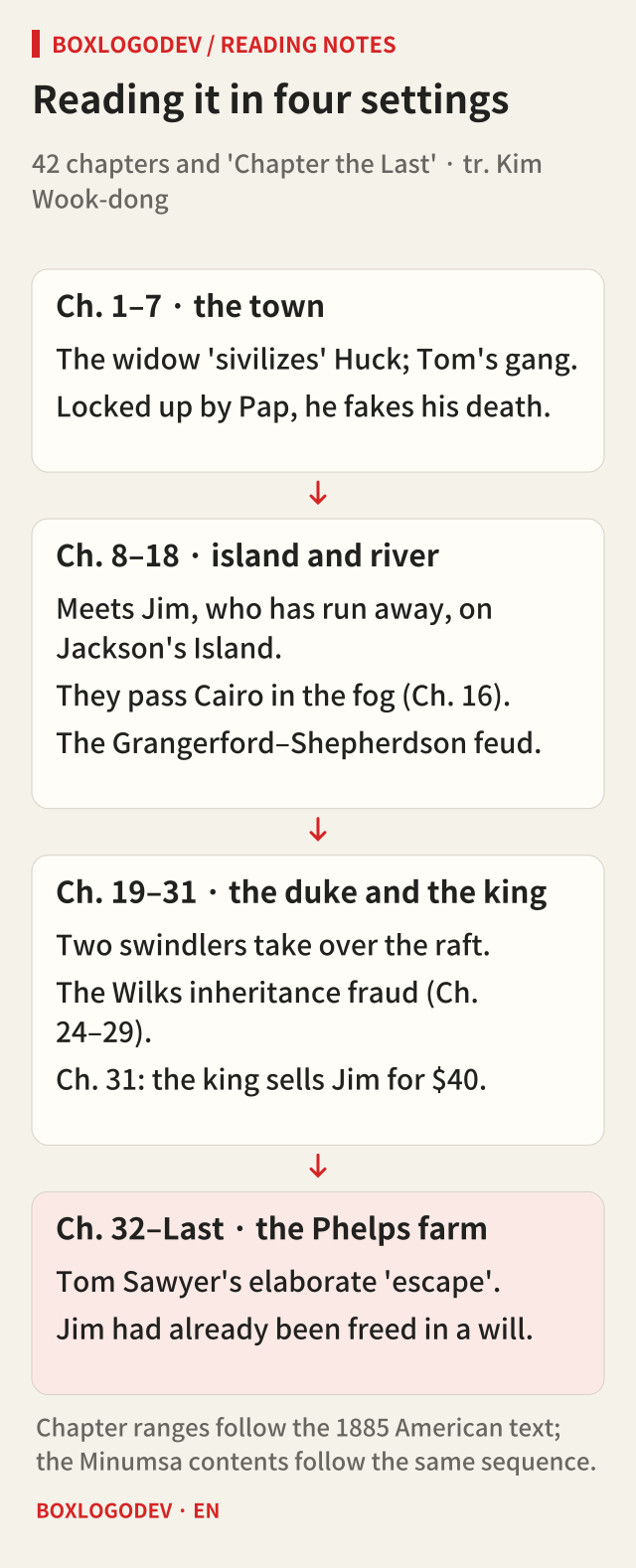
It is a long novel of forty-two chapters plus “Chapter the Last,” but dividing it by setting makes the shape clear. Chapters 1–7 take place in a river town. The Widow Douglas and her sister Miss Watson try to “sivilize” Huck, and his father, who turns up when he smells money, locks him in a cabin across the river. Huck kills a wild pig and uses its blood to make it look as if he has been murdered, then escapes.
Chapters 8–18 are the island and the river. Hiding on Jackson's Island, Huck finds Miss Watson's slave Jim, who ran away after overhearing that she could get eight hundred dollars for him and meant to sell him down the river to New Orleans. Their plan is to reach Cairo, where the Ohio meets the Mississippi, and go up the Ohio into the free states, but in Chapter 16 they pass Cairo in the fog. In Chapters 19–31 two swindlers calling themselves a duke and a king climb aboard and work their tricks in one riverside town after another, until the king sells Jim for forty dollars. From Chapter 32 the setting is the Phelps farm, where Jim is held. The family mistakes Huck for Tom Sawyer, and when the real Tom arrives the story changes tone completely.
The road to “All right, then, I'll go to hell”
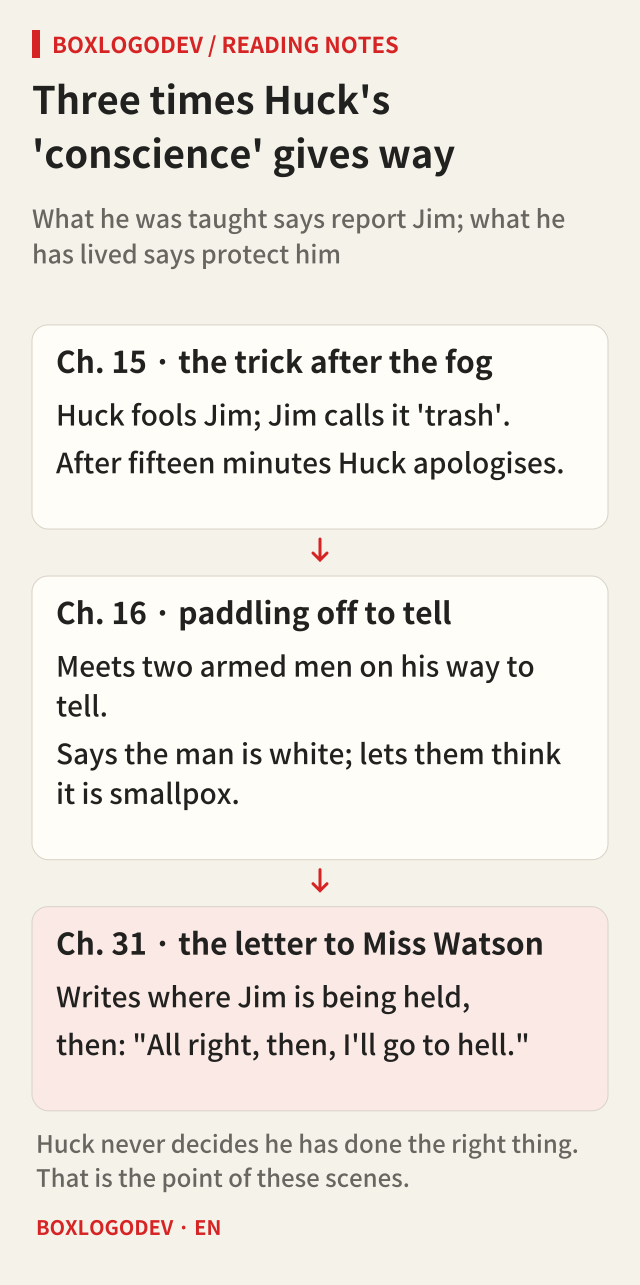
The letter scene in Chapter 31 does not come from nowhere. In Chapter 15, after the two lose each other in the fog and find each other again, Huck tells Jim it was all a dream. Jim says how heartbroken he was when he thought Huck was lost, then says that people who make their friends ashamed are trash, and goes into the wigwam without another word. It takes Huck fifteen minutes to bring himself to apologise, and he says he never played Jim a mean trick again.
In Chapter 16, when they believe Cairo is close, Huck's “conscience” starts tormenting him. For Huck, conscience is the voice that scolds him for helping to make off with Miss Watson's property. He decides to go ashore at first light and tell, and paddles off in the canoe. But when two men hunting runaway slaves ask about the man on the raft, he says the man is white, and stammers about a sick father until they decide it must be smallpox and back away.
In Chapter 31 Huck finally writes to Miss Watson that Jim is being held by Mr. Phelps. Once it is written he feels washed clean for the first time. Then, just as he is about to pray, he thinks back over the trip down the river: Jim standing his watch so he could sleep, Jim's joy when he came back out of the fog, Jim calling him the only friend he had after the smallpox lie. Huck picks up the letter, trembling, holds his breath for a moment and says: “All right, then, I'll go to hell.” And he tears it up.
What matters in this scene is that Huck never concludes he is right. He calls the rules of a slave-holding society his conscience and believes he is a wicked boy for breaking them. Even so, he chooses the time he has spent with Jim. The reader, one step ahead of Huck, sees that what he has thrown away is not his conscience but his society's prejudice.
On the raft and on shore
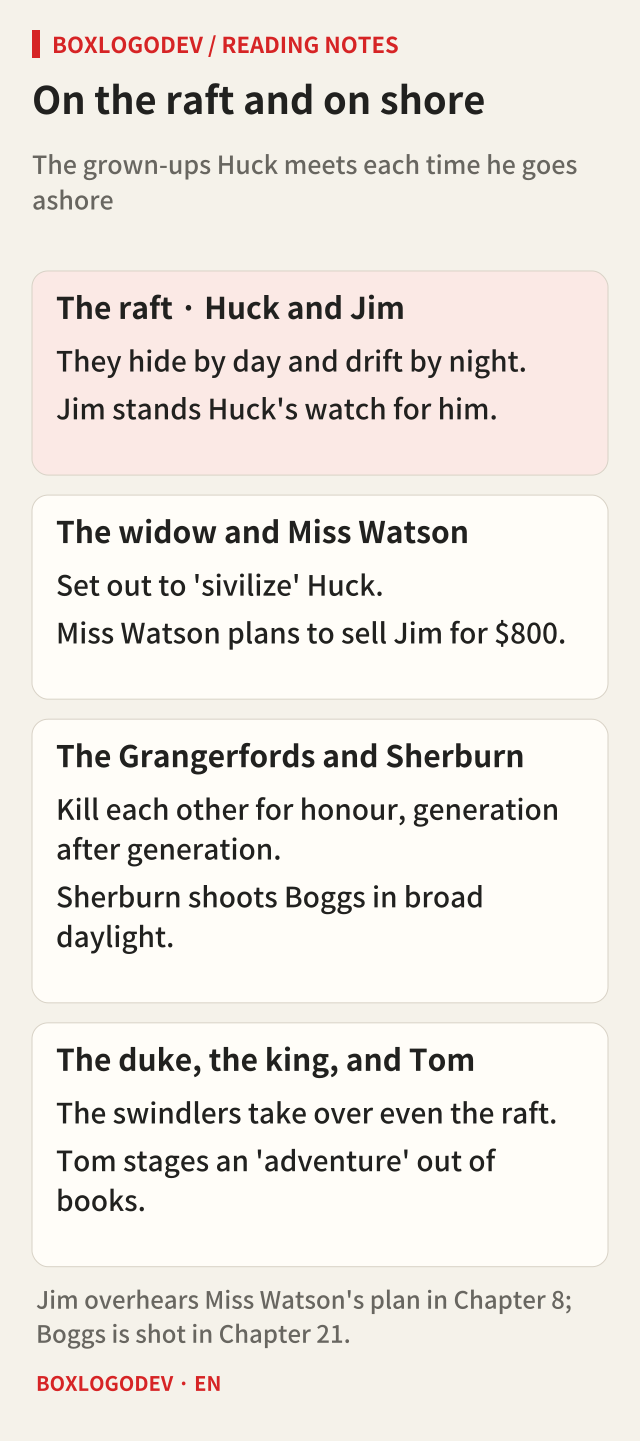
Huck and Jim hide the raft in the brush by day and drift at night. On the raft they talk, sing and laugh. But the grown-ups Huck meets each time he goes ashore are different. Colonel Grangerford's household is polite and cultivated, yet it has been trading gunfire with the Shepherdsons for a generation, and even boys are killed. In the town of Chapters 21 and 22, Colonel Sherburn shoots Boggs, a loud-mouthed drunk, in broad daylight, then faces down the mob that comes for him with contempt. Once the duke and the king come aboard, even the raft is run by the shore's frauds and lies.
How to read the last twelve chapters
At the Phelps farm, instead of simply getting Jim out, Tom Sawyer stages an elaborate escape modelled on adventure books: digging a tunnel, baking a rope ladder into a pie, making Jim keep a journal. Tom is shot in the leg. Jim refuses to move a step without a doctor, then comes out of hiding to help the doctor nurse Tom, and is caught again. Then it comes out that Miss Watson died two months earlier and set Jim free in her will, and that Tom knew it all along.
This ending has long been argued over. In Green Hills of Africa (1935) Hemingway praised the book as the source of all modern American literature, but advised readers to stop at the point where Jim is taken from the boys, calling the rest cheating. It can also be read the other way: Huck, having made a decision in Chapter 31 as if his soul depended on it, is drawn straight back into Tom's game once Tom appears, and that itself shows the power of the shore. Which reading to take is up to the reader.
What to mark as you read
First, the two short texts at the front. The author added a mock notice threatening anyone who looks for a motive, a moral or a plot, followed by a note explaining that he deliberately distinguished several dialects, including the Missouri Black dialect and the backwoods Southwestern dialect. Notice how each character's speech sounds in the translation you are reading.
Second, the language. The original uses the period's slur for Black people more than two hundred times, and a derogatory Korean word for Black people, geomdungi, appears even in the contents of the Minumsa edition. The American Library Association counted the book as the fifth most frequently challenged in the United States in the 1990s. Marking who uses the word, to whom and in which scene shows how the novel exposes the language of its time.
Third, the word “sivilize.” In Chapter 1 Huck says he left because the widow meant to sivilize him. In the novel's last sentence he says he will have to light out for the Territory ahead of the rest, because Aunt Sally is going to adopt him and sivilize him. The book begins and ends on the same word.
If you do just one thing
Put bookmarks in Chapters 15, 16 and 31. When you reach the letter in Chapter 31, do not turn the page straight away; find the moments Huck remembers with the letter in his hand at your first two bookmarks and read them again. Seeing that his decision is not a passing mood but the weight of the days on the river is the best key to this one scene.
Add your perspective.
Share a question, another approach, or something you have tried.
Checking sign-in…
Loading comments…